




Farmers who want to keep supplying the world’s biggest quick-service restaurant chains can expect more scrutiny of their methods going forward. That’s because the chains’ customers appear to be looking for more sustainably-produced food — so companies such as McDonald’s in turn are looking for third-party verification to prove the ingredients they source make the

Guenther: McDonald’s sustainability goals to reach beyond beef

Cheaper crude clouds Canada’s economic fortunes
While dropping oil prices have boosted the U.S. economy, how the price slump will affect the outlook north of the border remains a question mark from where Canada’s largest lender sits. “In Canada, it’s a little bit less clear-cut. And the reason is our energy sector is much larger as a share of the overall

Guenther: Indigenous ag summit cultivates global ambition
Elmer Eashappie is an idea man. And on his mind today is an agricultural summit connecting First Nations groups worldwide to network and learn, all under the umbrella of Canadian Western Agribition. And that idea is closer to reality than one may think. Eashappie, an Agribition board member, is chairman of the Indigenous Agriculture Summit,

Clock ticking on FNA-led group’s proposed play for CWB
Farmers of North America (FNA) executives are pleading for more time from the federal government to help farmers hammer out a deal to buy the former Canadian Wheat Board. FNA has created a new organization, Genesis Grain and Fertilizer LP, to build a farmer-owned grain handling and fertilizer sales and distribution company. As of Tuesday,
Hybrid rye to be tested in Manitoba
FP Genetics and Paterson Grain are rolling out a demonstration program for a new hybrid fall rye in Manitoba. The new hybrid, dubbed Brasetto, yields about 25 per cent higher than existing varieties, says Ron Weik, seed portfolio manager with FP Genetics. Brasetto is also four to six inches shorter than Hazlet, he adds. “And

Whether to spray for fusarium: flowering period is key
Wet weather in eastern Saskatchewan and much of Manitoba means farmers likely have fusarium head blight risk on their minds. But cereal grades are only at stake risk if environmental risks match up with flowering, a crop pathologist says. Vikram Bisht, field crop pathologist with Manitoba Agriculture, Food and Rural Development, says two or three
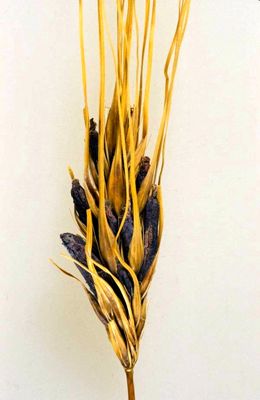
Guenther: Cereal crops hit with ergot needed for livestock project
Saskatchewan Agriculture wants to hear from farmers who find ergot in their cereals this summer. The ministry is asking producers to start scouting for the disease a week after crops start flowering and report ergot to their regional offices as soon as it’s detected. It’s all part of a new project designed to help livestock

Guenther: Wanted for science: Southern Alberta canola fields
Reward: Better industry-wide strategies for managing blackleg
Dr. Dilantha Fernando, a University of Manitoba researcher, is leading a group of researchers who intend to pinpoint avirulence genes in blackleg found in farmers’ fields. Researchers with Agriculture and Agri-Food Canada and Alberta Innovates – Technology Futures are also involved. Researchers will also study how the fungus adapts to different canola cultivars and how

Guenther: Wanted for science: Southern Alberta canola fields
A University of Manitoba researcher will lead a group of researchers who aim to pinpoint avirulence genes in blackleg found in farmers’ fields. The group will also study how the fungus adapts to different canola cultivars and how agronomy affects blackleg populations. They’re currently looking for farmers in southern Alberta to allow them to collect samples once or twice a year during the four-year study.
Crops in northwestern Sask. faring relatively well
While crops in southeast and east-central Saskatchewan struggle against surplus moisture, fields in the province’s northwest generally look good. “As long as nothing silly happens between now and harvest we should be good,” said Dave Shepherd, manager of AgriTeam Services at Glaslyn, 67 km north of North Battleford. Errin Tollefson, agronomist with Cavalier Agrow at