


Manitoba is now on the map — and this isn’t good news for farmers. It’s the risk map for the pea leaf weevil published by the Prairie Pest Monitoring Network, and this weevil, a pest that zeroes in on faba beans and field peas, now calls Manitoba home. “The first year we found it in

Pea leaf weevil of growing concern
This newcomer is still a small problem here but it could thrive under Manitoba’s wetter conditions

Annual forages best in dry years
Trials show better production during drought, says provincial livestock specialist
When you think of forages, you often think of perennials like alfalfa, clover or timothy, which are there for the long haul and perfect for baling or silage. While they have many strengths, one weakness became evident last year. They don’t do well when it’s really hot and dry. [READ MORE] Nitrate risk comes from
Teff a promising forage in dry year
Results so far are from small plots in short trials
James Frey of the Parkland Crop Diversity Foundation stands in a plot of teff grass, an African annual that’s new to the province and to the Parklands. In a small plot trial, it shows promise as a warm-season forage. “It originally comes from northeastern Africa, sort of in the Ethiopian area, where it is grown
Nitrate risk comes from variety of sources
It’s not just a drought that increases risk to the herd
When a forage crop is stressed, it can accumulate nitrates. Elizabeth Nernberg, provincial forage and livestock specialist, says this can occur in any season and from a variety of conditions. “Last year we did see some higher levels because any kind of plant stress can cause that.” she said. “Typically hail or frost are the

New uses drive hemp fibre market
U.S. builders are using hempcrete more frequently due to its insulating properties and moisture tolerance
The market for hemp fibre may be on its way up again and Jeff Kostuik of Verve Seed Solutions says it’s based on a part of the plant that used to be considered waste. At a crop demonstration for the Parklands Crop Diversity Foundation in Roblin, he pulled apart a hemp stem and showed the

Lupin variety shows promise
Could be used for livestock feed, human consumption
James Frey of the Parklands Crop Diversification Foundation points at a stand of low-growing plants in a test plot south of Roblin. It’s a legume with potential as a feed crop for humans and livestock. “This is a variety called the blue lupin,” he said. “It falls out on the same lines with faba beans,

Hemp seed company tackles faba bean challenge
A new variety low in anti-nutrients makes the high-protein crop more palatable to all
Faba beans are an excellent source of protein, but they’re not for everyone. About four per cent of the human population can’t make the most of them because of two compounds they contain, vicine and convicine. These anti-nutrients prevent those people from efficiently absorbing the beans and may cause mild illness. One Canadian seed company

Soybeans early signal of soil issues
Most affected spots frequently in high-traffic areas in fields
It was just over 10 years ago that Marla Riekman started getting the phone calls on a new soil issue. The provincial soil specialist with Manitoba Agriculture and Resource Development suddenly started to hear from growers in the Red River Valley who were alarmed at the appearance of salinity in places they’d never seen it

How to improve your soil architecture
Cover crops can help form better soil aggregates and soil structure
A lot of architecture is about bearing weight and many of the buildings on your property do this with two basic shapes. The triangle, that you see in your rafters, or the arch, as in the double 2×4 header over your garage door, are important weight distributors. They allow you to have large amounts of
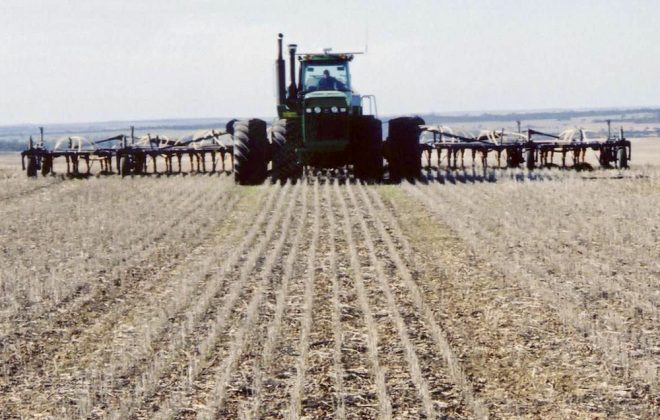
The straight and narrow of CTF
Tramline farming can limit compaction, reduce costs, increase production and improve soil health
Adam Gurr heard of controlled traffic farming (CTF) about 15 years ago and dismissed it at first. He felt living in a freeze/thaw climate like ours would break up any soil compaction in his fields so it wasn’t necessary here. Still, when he looked closely at crop growth on the previous year’s combine tracks the
Cyber-Savvy Farmer
