


Canadian canola growers should consider selling new-crop canola soon and perhaps more than they would normally this early, says Thomas Mielke, executive director of Oil World, a German-based publication covering world vegetable oil and meal markets since 1958.
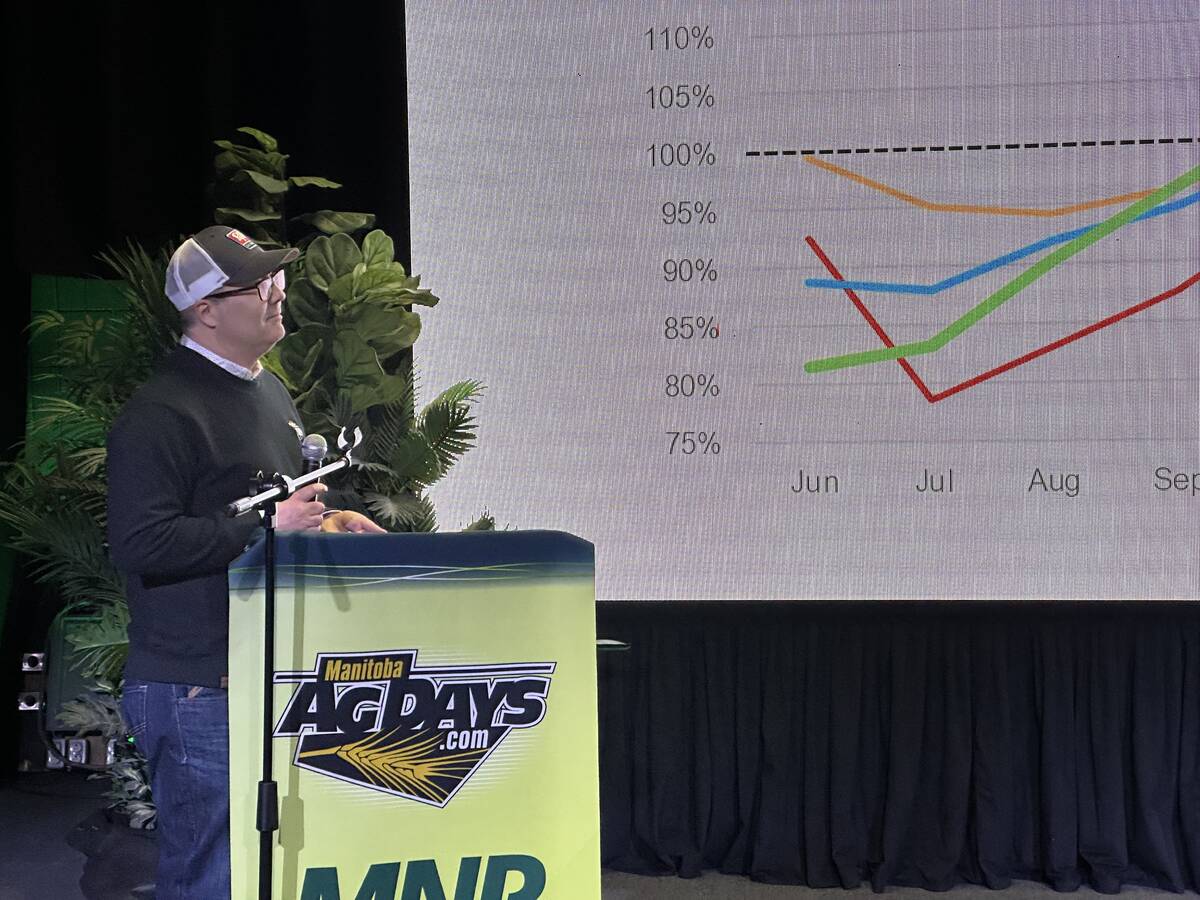
“We all know these high prices (of around $500 a tonne on the Winnipeg futures market) cannot persist forever,” Mielke told farmers attending Ag Days here Jan. 17.
“There is a risk if you are becoming, or I am becoming, too greedy I may forget to sell it before prices go down.”
Read Also
MANITOBA AG DAYS: Don’t wait to buy fertilizer, farmers warned
Higher fertilizer prices likely ahead, says Ag Days speaker. Farmers waiting until spring to buy fertilizer might end up eating the cost.
Global vegetable oil markets are still tight following “an unprecedented shortage in supplies” due to a big drop in palm oil production, he said.
An El Niño weather pattern brought dry conditions to many parts of Southeast Asia in 2015 and early 2016.
“For the first time ever world (vegetable oil) production declined by almost four million tonnes from a year ago in calendar year 2016, as consumption continues to rise,” he said.
Many countries, including China and India, that want to rebuild vegetable oil stocks now can’t, Mielke said.
“If (canola) prices go a little bit higher — another $10 or $15 (a tonne) — you should consider selling part of your crop — probably a larger-than-usual part of your new canola crop — simply because the world market is changing,” he said later in an interview.
“This (supply shortage) is supporting vegetable oil prices at the moment and this is likely to continue to support vegetable oil prices in February and March, probably also in April… but there will be a point at which the market… will react in a bearish way to the prospective improvement in world supplies (due to increased palm oil production),” Mielke said.
He sees lower new-crop canola prices by summer.
“I think the real bearish impact on prices will occur in 2018,” he added.
Mielke stressed his forecast assumes normal weather. If bad weather affects world oilseed production, canola prices could stay up, he said.
Canadian canola plantings will rise 10 per cent this spring, Mielke said.
“This is required in the market because it looks like the world supplies of rapeseed and canola are tight in the moment,” he said. “It is reflected in the price. And I think they will stay relatively tight also in 2017-18. Nevertheless canola prices will be influenced by a surplus in palm oil.”
Last year, Canadian farmers planted 20.4 million acres of canola, their fourth-largest area ever for the crop, according to Statistics Canada. Canola planting is typically in full swing in May.
Chicago soybean prices, another major influence on canola values, touched a six-month high on Jan. 17, lifted by floods during Argentina’s soybean-planting season. The price increase may be premature until damage is confirmed, Mielke said.
Planting and early crop development have been thrown off by heavy storms in key soybean areas in southern Santa Fe and northwest Buenos Aires provinces.
With files from Rod Nickel, Reuters