
Small-scale producers who sell mostly direct to consumers will meet next week to decide whether they have enough in common to form a new Manitoba farm organization.
A good turnout for the meeting Nov. 24 is expected, but it remains to be seen whether they can unify under an umbrella organization, one of the organizers said in an interview.
“I think the meeting will be well attended. Getting them to agree… that could be interesting,” said Phil Veldhuis, who served on a provincially mandated 17-member working group for the small-scale sector last year.
Read Also
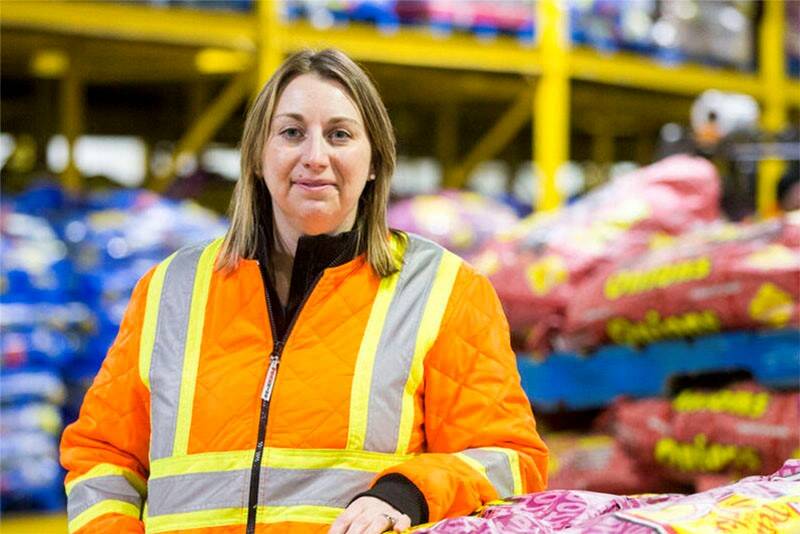
Peak of the Market named to industry award
Peak of the Market was recently recognized for strengthening the link between Manitoba farmers and local food service kitchens.
Their report tabled in January — Advancing the small-scale, local food sector in Manitoba, delved into the multiple challenges faced by this province’s burgeoning number of farmers who produce primarily for a local market.
The 65-page report, authored by retired chief provincial veterinarian Dr. Wayne Lees identified an emerging sector of highly diversified, entrepreneurial farmers and smaller-scale processors, plus several grassroots organizations that all claim to represent them.
That’s likely going to present its share of challenges when it comes to creating any sort of umbrella organization or “unifying organizational structure” the report recommended to engage policy-makers.
Without it, this sector will continue having a tough time engaging government which “will continue to struggle with demands from individuals, who may or may not represent what the entire sector wants,” the report said.
“If anyone is speaking for them at all right now it’s probably the marketing groups, like the farmers’ markets, or groups that are organized around a mode of marketing but not a mode of production,” added Veldhuis, who is the president of Farmers Markets Association of Manitoba (FMAM).
But organizations like theirs aren’t in a position to engage the province on issues related to quota or regulatory matters or provincial slaughter capacity, he said.
“The FMAM works hard on the marketing side but we have very little if any expertise or knowledge or mandate, quite frankly, to work on the upstream end of things, what do we do for producers who’ve been told you can only have so many chickens, or you can’t get permission to slaughter an animal in a certain way,” he said.
What complicates things further is that smaller-scale farmers tend to represent many forms of production, he added. They don’t connect with existing commodity groups for that reason.
“People have a little bit of this and a little bit of that, and have a more integrated form of production,” he said.
“So someone with 10 goats has more in common with someone with 30 chickens than either do with the scaled-up farmers in the same commodity and production.”
The direct-to-consumer sector does have its own business models and ways of working and “it’s not the same as other commodity groups,” added Bruce Berry, who also served on the provincial working group representing those who operate community supported agriculture (CSA) farms.
And while there have been various grassroots groups coalesce around issues related to production and marketing of local food, these aren’t producer groups per se, he continued.
“There are producers in those groups, but I think I’m fair in saying that none of those groups is an advocacy or producer group,” he said.
He said the report found these farm voices were inadequately represented and advised the province to facilitate forming an organization if that is what producers want. “So this is a chance for the producers to get the ball rolling.”
The day-long meeting November 24 at the St. Norbert Community Centre is being facilitated by a professional consultant hired by Manitoba Agriculture, Food and Rural Development.
Two MAFRD staff reassigned earlier this year to focus on the needs of small-scale farms and processing businesses will also attend.
Veldhuis said he expects discussion to be productive and that farmers attending will form a new organization to represent them.
“If you have some willing people and a clear objective it’s amazing what you can do.”