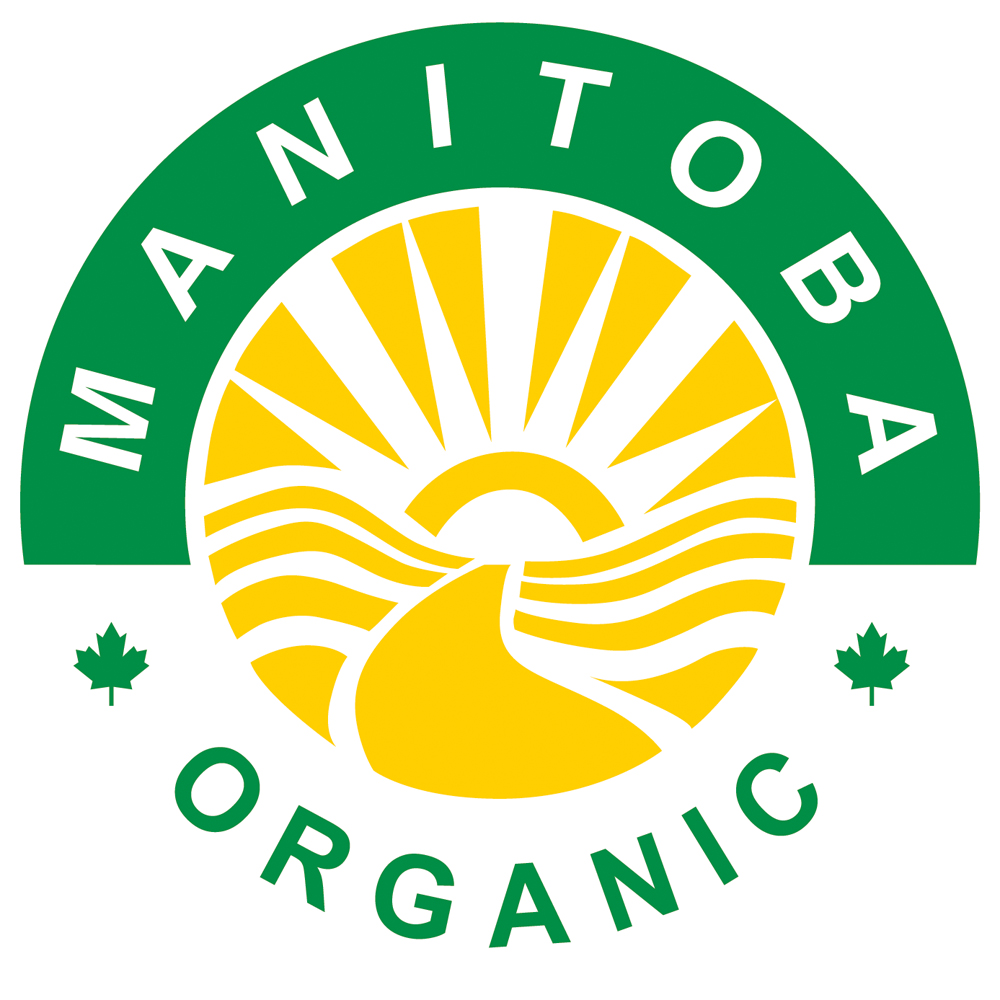
The Manitoba organic community kicked off National Organic Week launching a new logo to help food shoppers more easily identify organically and locally grown Manitoba foods.
The Manitoba Food Processors’ Association (MFPA) rolled out its new Manitoba Organic brand in Winnipeg last weekend.
The logo will be very similar to the association’s own Manitoba Made, which identifies a product as locally produced.
The new organic logo will help MFPA members producing certified organic products to identify them as both locally and organically produced, said MFPA executive director Dave Shambrock.
Read Also
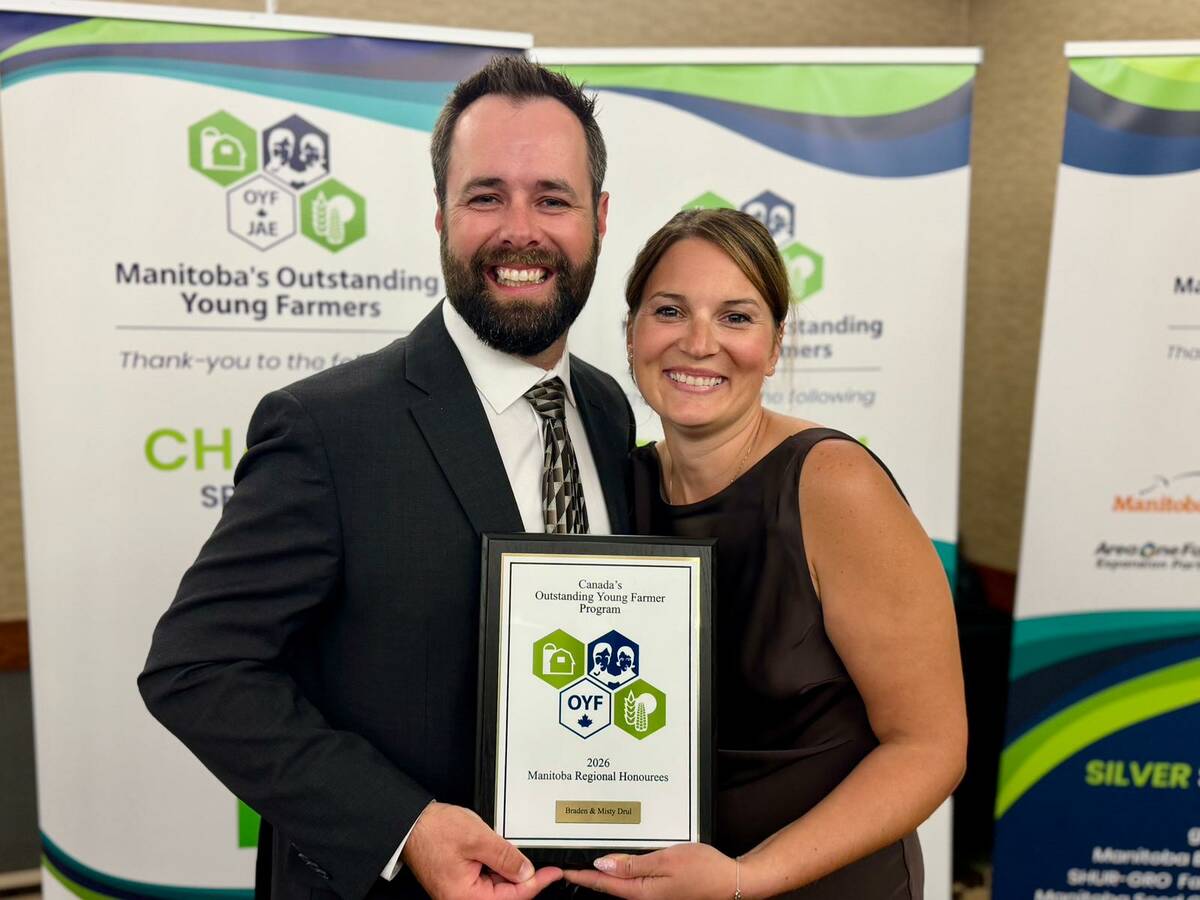
Manitoba’s Outstanding Young Farmers built success through diversification
Braden and Misty Drul of Oakburn, Man., earned Manitoba’s Outstanding Young Farmers 2026 award for building a multi-generational operation through diversification. With land prices rising, they launched an equipment assembly business and Pioneer seed dealership to create revenue streams that support two families.
“We’re really excited about it,” he said. “Hopefully what it will do is create more sales opportunities for Manitoba organic producers and manufacturers and processors and make it easier for consumers to identify those products in the stores.
Laura Telford, Manitoba Agriculture, Food and Rural Development’s organic specialist, said the organic industry in Manitoba approached the MFPA this spring after talking over the idea with its members at the Manitoba Organic Alliance annual meeting.
Manitoba consumers would buy more locally produced organic food if they could more easily distinguish it from imports in grocery stores, said Telford.
“The whole point of this new logo is to allow shoppers to recognize Manitoba organic product rather than just a national or international product in the store,” she said.
B.C.’s launch of an organic logo in the 1990s as a clear identifier of B.C.-grown organic food is widely seen as contributing to the healthy growth of the sector in that province, she said.
Manitoba has about 60 organic processors and food handlers, but most at this time only minimally process their products, she said.
The goal with an recognizable organic brand is to be able to grow the market and help spur more value-added production in the organic sector. Right now, much of this province’s organic production has been in grains and grain exports, said Telford.
“We’d really like to see producers keep more of that value at home. And that’s done by creating a local market for value-added foods,” she said. “This logo is a first step.”
Globally, annual sales of organic products are worth US$72 billion, while domestically, these sales are worth $4 billion. Some reports say up to 70 per cent of organic food products are imported.
Meanwhile, demand for organic food by Canadians has risen 170 per cent since 2002. According to the Canada Organic Trade Association 58 per cent of Canadians now report buying some organic food products weekly.
National Organic Week Sept. 19 to 27 has been celebrated by the Canadian organic industry since 2010.