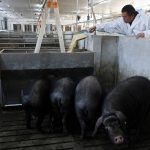
Most hog farms could save significant amounts of money on energy, says Mike Armstrong after 15 years of experience checking hog and poultry barns.
For example, he cites one hog farm that saved $661 a year by changing lights from incandescents to fluorescents. Another farm saved $1,500 a year by improving fan management.
Armstrong, who works for Agviro at Guelph, was the leadoff speaker at the annual swine seminar here.
Farmers could tackle their energy issues by beginning with an audit that determines how much energy is being used, how efficiently and at what cost. That might include monitoring some equipment, he said.
Read Also
Where’s the water? RISMA knows
National soil moisture sensor network gives real-time data for Manitoba farmers fighting more frequent drought or flood.
That data could then be measured against some standard, such as the 150 farms involved in the local Agriculture Energy Co-operative.
The energy use of those members ranges from a low of 11 to a high of 44 kilowatt hours per 100 kilograms of hogs marketed per year, Armstrong said.
Among other possible energy-saving tweaks, he noted electric or water heat pads that are more efficient than heat lamps; diode and/or dimmer switches on lighting; installing solar walls on the barn; and putting hoods over fans so they continue circulating air when it’s windy outside.