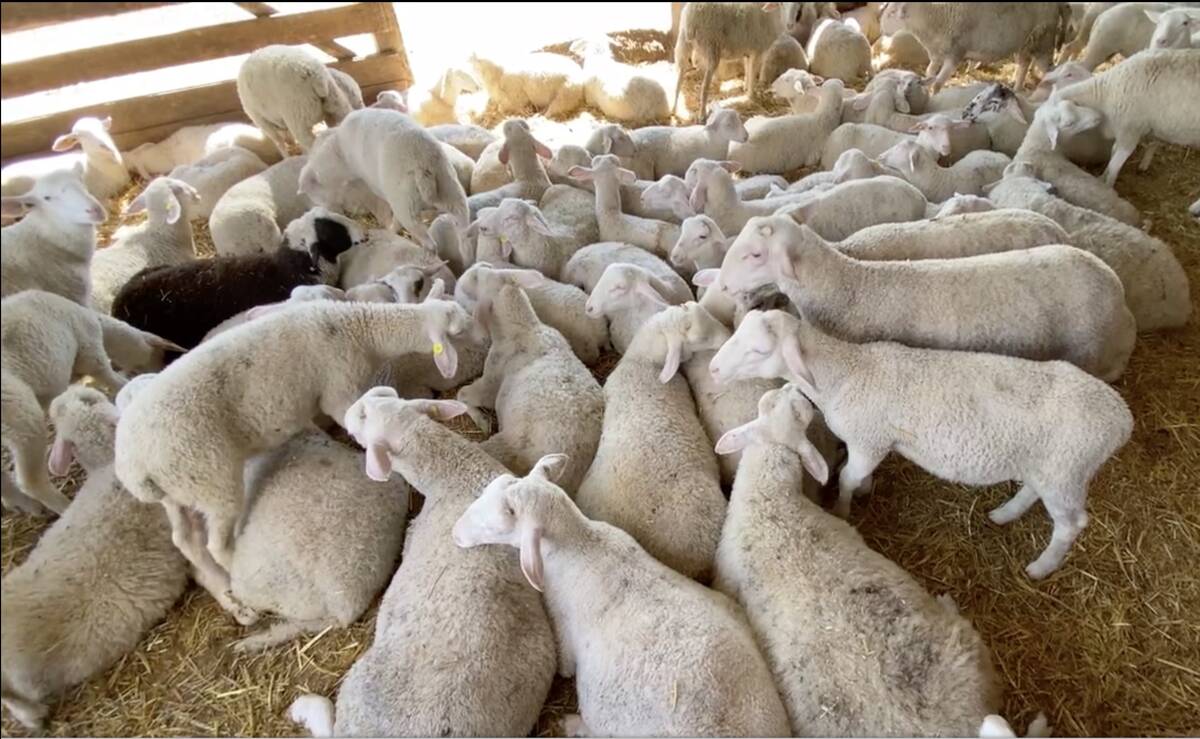
For Manitoba sheep producers, 2026 is shaping up to be a strong year.
“There’s a lot of optimism in our market right now, with prices where they are,” said Simon Atkinson, chair of the Manitoba Sheep Association.
Read Also
CALVING 2026: Keep those newborn beef calves healthy
Healthy beef calves don’t happen by accident: Biosecurity, vaccines, vitamin injections and colostrum play a part in newborn calf care.
WHY IT MATTERS: Like the cattle industry, Manitoba’s sheep sector has seen prices for their animals surge.
The market was also strong in 2025 before tailing off mid-year said Scott Anderson, manager with Winnipeg Livestock Sales.
Prices began to pick up in December and have risen since then.

“The market was poor, a lot of guys were sour, and weren’t happy that their lambs weren’t worth much. … It’s probably doubled again since last summer.”
Scott Anderson
Winnipeg Livestock Sales, manager
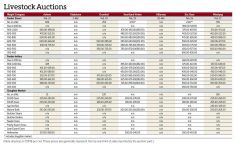
Light lambs around 50 pounds will sell for about $5 per pound. Lambs that are about 100 pounds can bring in about $3.75/lb. Finished lambs around 120 pounds are about $3.50/lb. according to Winnipeg Livestock Sales data.
Culled sheep are also selling for good prices. Culls used to sell for about 50 cents/lb., but their current market value is around $2.50/lb.
Anderson said the strength of prices in the sheep industry is comparable to the strength of prices in the cattle industry.
The demand is driven by ethnic markets that regularly consume lamb as part of their diet. Cultural holidays drive lamb consumption and markets rise around those dates. Around Easter, producers can expect a dollar more per lamb.
Lack of processing plants
Atkinson said the sheep industry in Manitoba is challenged by a lack of slaughter capacity. Saskatchewan is also in the same boat.
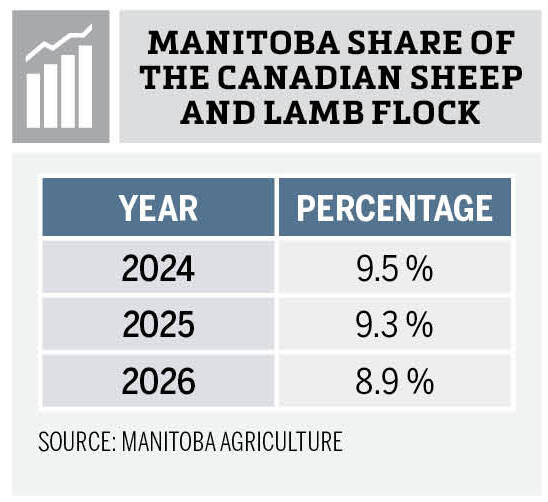
Manitoba and Saskatchewan do not have large lamb processing plants, so a lot of their lambs go to Ontario, which is the hub of the Canadian sheep market. According to Statistics Canada, about 73 per cent of Canada’s sheep and lamb flock was in Alberta, Ontario and Quebec, as of 2024.
There are a few small plants in Manitoba, and backyard killing can be practiced if slaughter requirements are met. A list of federal slaughter plants though shows none registered for sheep or lambs in the province.
Atkinson is a commercial livestock dealer who buys from Saskatchewan, Manitoba, and northwestern Ontario. Everything he purchases ends up in Ontario.
Producers who have large numbers of lambs tend to market to Ontario, but it is nearly impossible for small producers with 20 to 30 lambs to find someone to haul them out east.
Anderson said the average producer in Manitoba has about 50 to 200 sheep, but there are bigger producers with thousands of animals.
Small flocks dominate despite strong demand
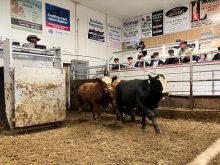
Even though the demand is high, the supply is low, said Brad Kelher, market manager and auctioneer with Grunthal Livestock Auction Mart.
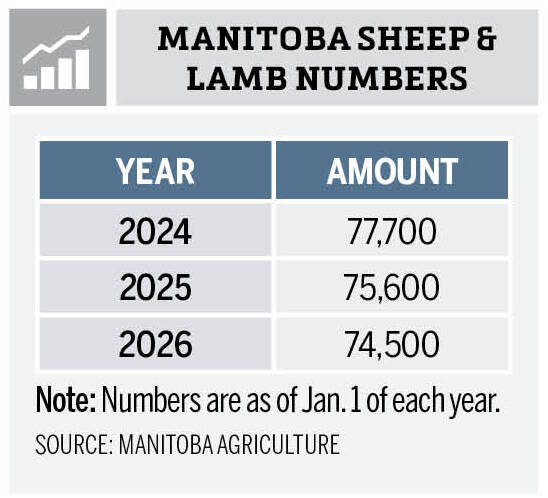
“I think we’ve lost a lot of producers. It seems like the lamb numbers are down,” Kelher said.
“The marketplace is strong. (Lambs are) trading well and selling for decent money.”
He said demand has been growing steadily over the last five years. The sales at Grunthal vary in size. Sales have started at 100 sheep, up to 400 sheep.
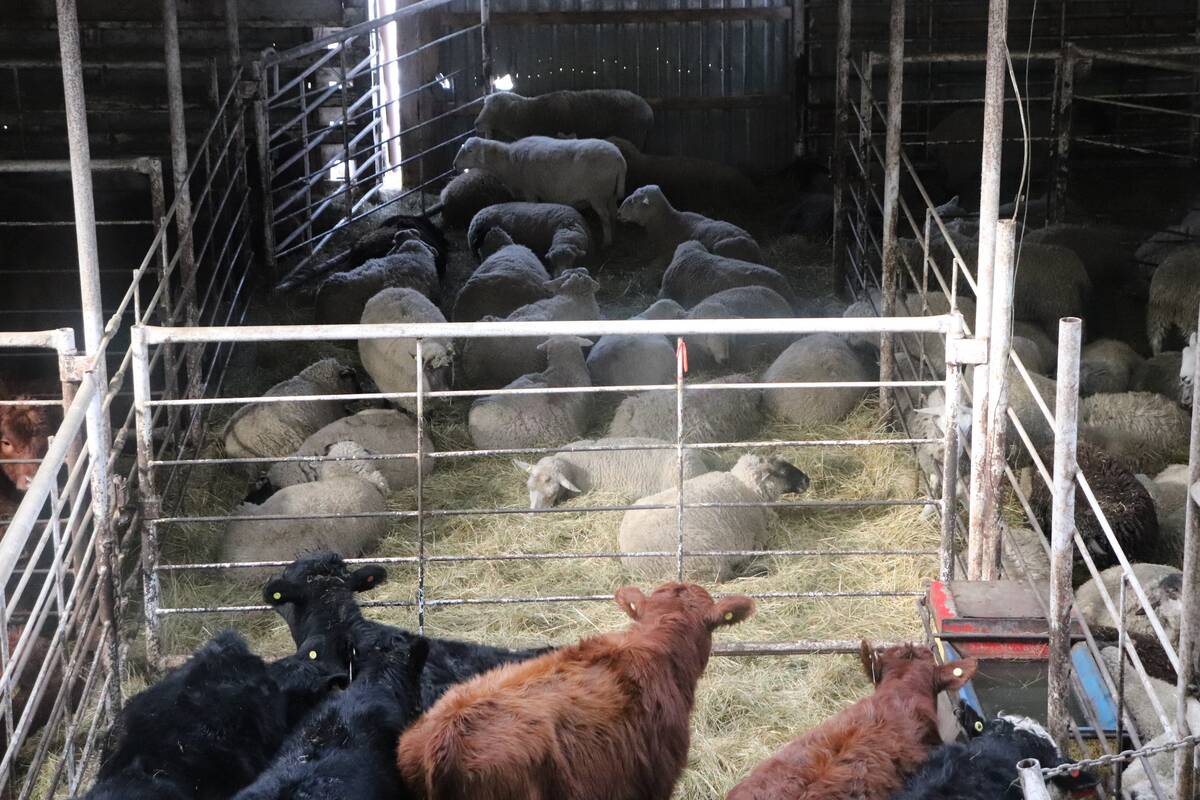
Atkinson said he is not sure how many producers there are in the province. Some farmers are those who’ve bought small plots of land and are keeping 10 or 20 sheep. Many producers have small flocks. They can also exit the industry easily.
“The only real way we have to track producer numbers is tag sales,” said Atkinson.
Only a few sheep producers farm full time.
“We have some intensive operations that are barn-based. The animals never see pasture,” he said.
These barn-based operations have about 1,000 to 3,000 ewes. Other producers are running 500 to 1,000 pasture ewes.
Sheep producers are spread throughout the province with many intensive operations in the southeast corner.