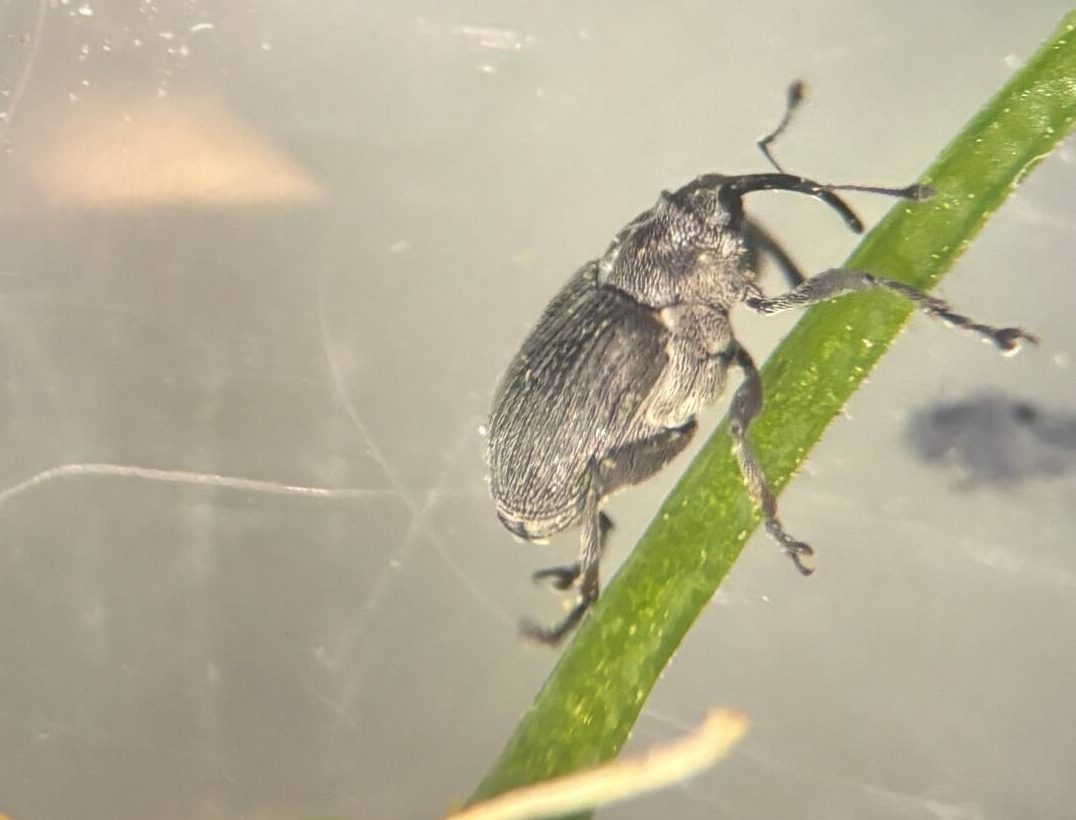
Manitoba canola farmers may be unacquainted with the cabbage seed pod weevil, but an entomologist says it’s time to learn how to scout for them.
The tiny, grey weevil was the greatest pest problem of the 2025 growing season, said Manitoba Agriculture entomologist John Gavloski.
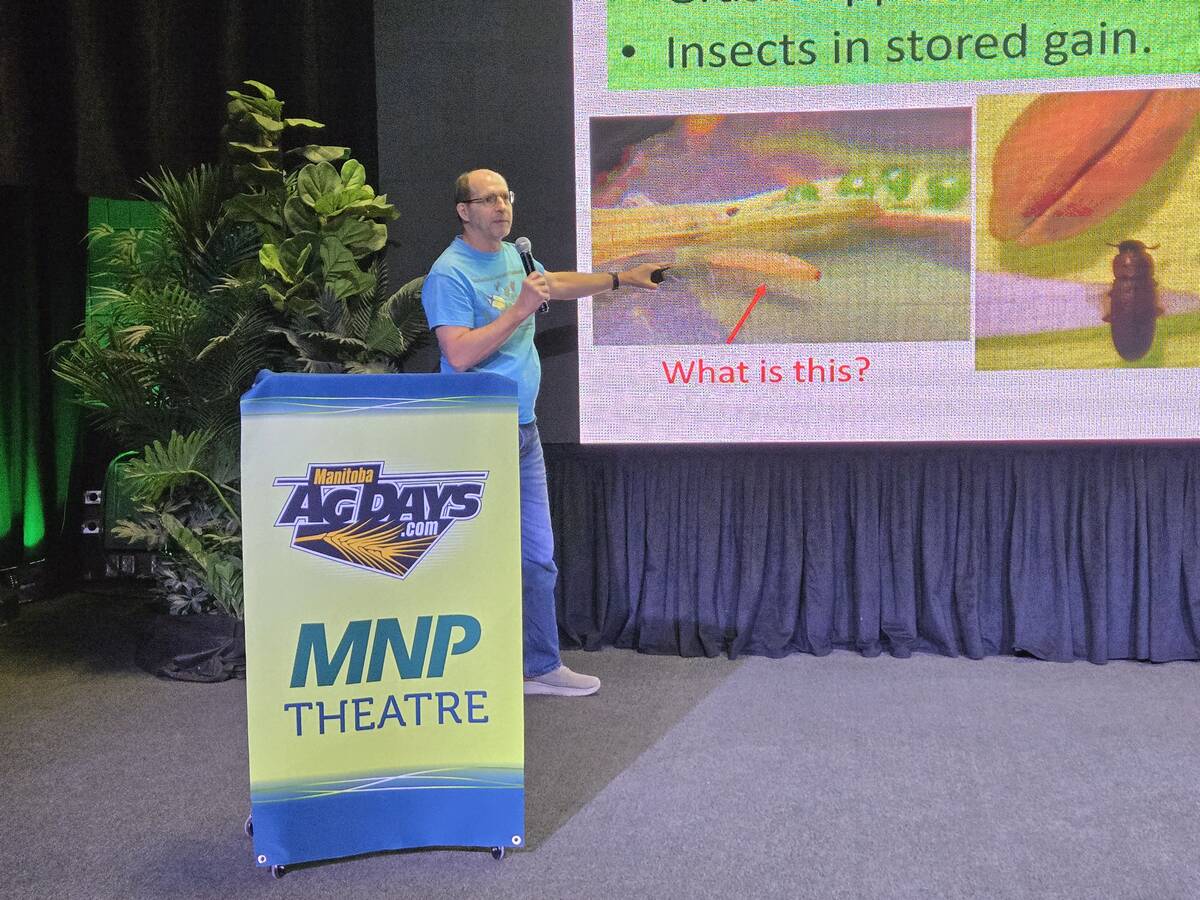
“My poor summer students this year [found] 1,739 weevils in our 27 fields,” Gavloski told an audience at the 2026 Manitoba Ag Days in Brandon in January. “They were over double the economic threshold.”
Read Also

VIDEO: Manitoba inventor designs tool to remove hitch pins from tractor seat
A Manitoba inventor wants to take his farm safety tool from prototype to production.
WHY IT MATTERS: After a few years of minimal presence in Manitoba, cabbage seed pod weevil populations boomed in Manitoba in 2025 — in one case to twice the economic threshold.
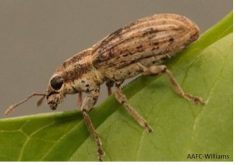
Cabbage seed pod weevil is a three- to four-millimetre insect that lays its eggs inside young canola pods where its larvae feed on seeds. It overwinters as an adult under leaf debris and moves into flowering canola fields in late June and early July.
Gavloski’s survey results showed a dramatic population boom in 2025. In one field north of Carman, the count was as high as 226 weevils in a 25-sweep sample.
The economic threshold for cabbage seed pod weevil damage is 25 to 40 weevils per 10 sweeps, or 63 to 100 in the 25-sweep samples Gavloski’s survey uses. That Carman-area field was more than double the economic threshold and was treated once the population was confirmed.
Prior to 2025, the highest single-sample count Gavloski had recorded in his surveys was six weevils.
The pest has also been spreading eastward across the province. While populations were historically confined to southwestern Manitoba, weevils were detected as far east as the Ste. Anne area in 2025.
Scouting the critical first step
The weevil arrived in Manitoba from Alberta, where it had spread after an introduction to southern British Columbia in the 1930s. By 2017, it was first detected in Manitoba near Morden.
Survey counts remained very low for years before last season’s surge.
“We went from low counts to really high counts in the Carman area, going from 2024 to 2025,” Gavloski said.
“So bottom line, watch your fields. Start learning how to scout your fields.”
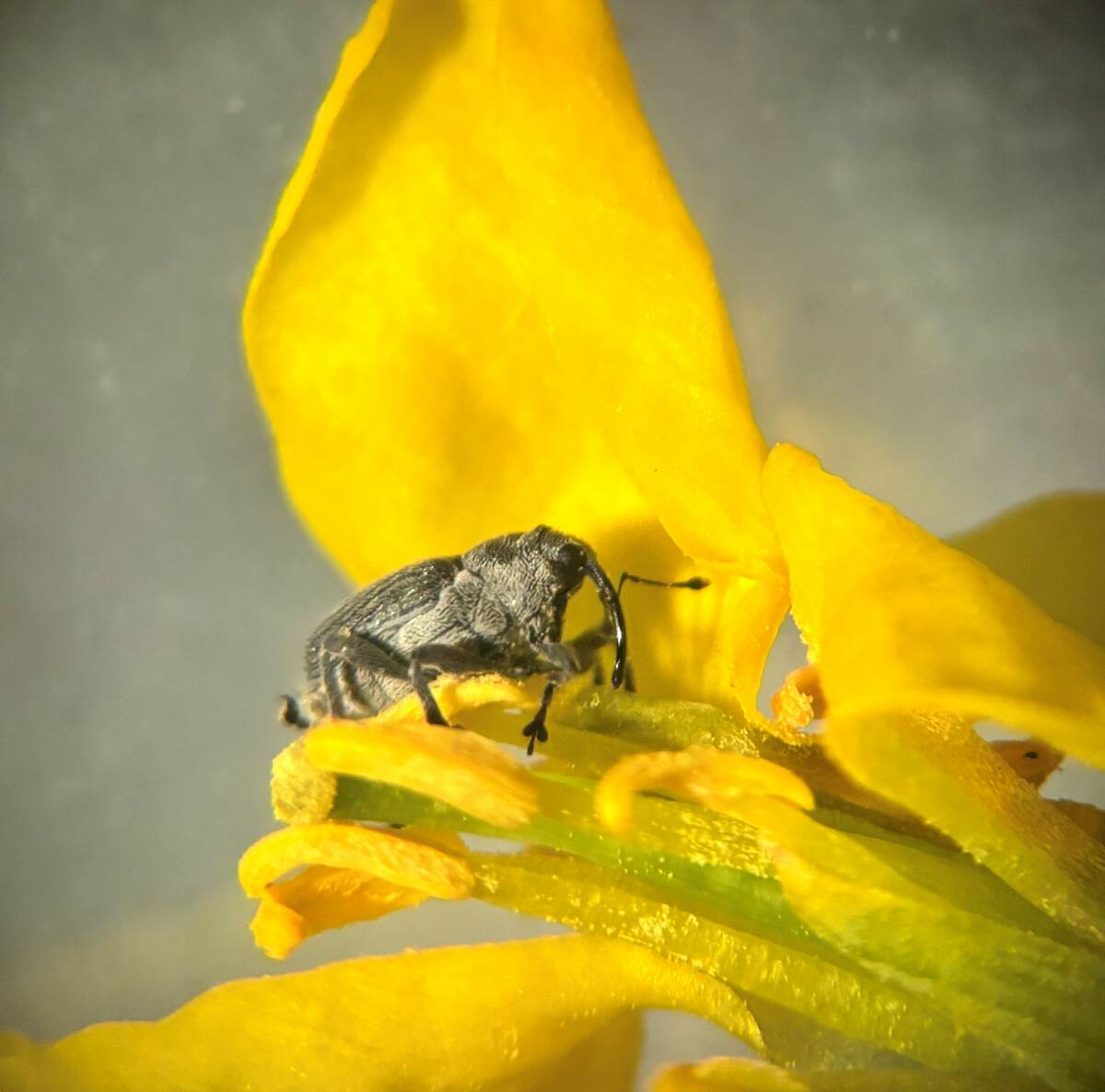
Scouting is complicated by the weevil’s defence mechanism: when disturbed, it drops to the ground and plays dead. Finding a three-to-four-millimetre grey insect on bare soil is no easy task.
“Just walking the field without a net, you could have a lot of them there and really not know it,” Gavloski said.
He recommends producers use a sweep net and conduct 10 sets of 10 sweeps: five near the field edge, five farther inside, during the flowering period in late June and early July.
Research from Alberta suggests that trap cropping (seeding the outside rows of a field one to two weeks earlier than the main crop, then spraying only those edges) can concentrate weevil populations and provide effective control while protecting pollinators in the main field.
Seeding date is another factor. Earlier-seeded canola, which flowers first, attracts significantly more weevils than later-seeded crops.
While cabbage seed pod weevil dominated the conversation, Gavloski noted several other insects that warranted attention across Manitoba during the 2025 season.
Flea beetle damage lessens, cutworms trend down
Flea beetles remained a concern but caused less economic damage than in recent years — largely due to a warm, moist spring.
“I don’t think it was because the flea beetle populations crashed,” Gavloski said. “I think it was because we finally got a season where people seeded the canola, it came up, and it seemed to have enough moisture and enough heat to get you from seedling to three to four leaf stage relatively quickly.”
Cutworms were still present and some fields were treated, but Gavloski said populations appear to be on the downward side of a cycle. He compared cutworm population dynamics to a bell curve: populations build, peak for a few years, then taper off, often driven by natural parasitoid activity. The worst years were 2020 and 2021.
“We’re kind of on that downward curve,” he said. “Populations have dropped off a little bit.”
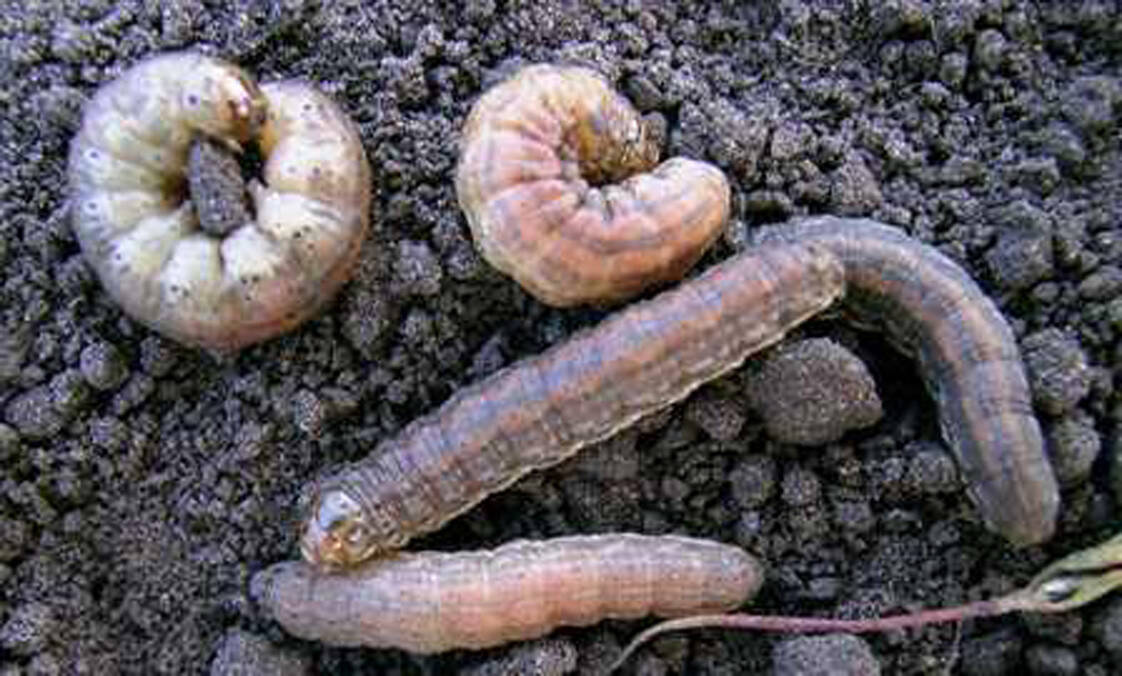
Western and southwestern Manitoba bertha armyworm hotspots
Bertha armyworm became a regional concern, particularly in the western and southwestern parts of the province around Gladstone, Neepawa, Holland and Brandon. Some activity extended toward the central region.
Traps Gavloski monitors showed many locations crossing into the “uncertain risk” category during the summer. He noted some positive signs, however. There were reports of armyworms found dead on top of plants — a sign that naturally occurring viral and fungal pathogens had gotten into the population.
“If they’re up on the top of the pods in the day and they’re not moving, that’s a good thing. They’ve got pathogens. You want that,” he said.
Diamondback moths of low concern
Diamondback moths stayed relatively quiet in western Manitoba but caused some problems in the eastern part of the province in late summer. Populations are believed to have blown in on winds in late May and early June.
“They don’t overwinter well in the Canadian Prairies,” Gavloski said. “They’re just kind of getting blown in almost randomly on winds, and they get dumped wherever the winds dump them.”
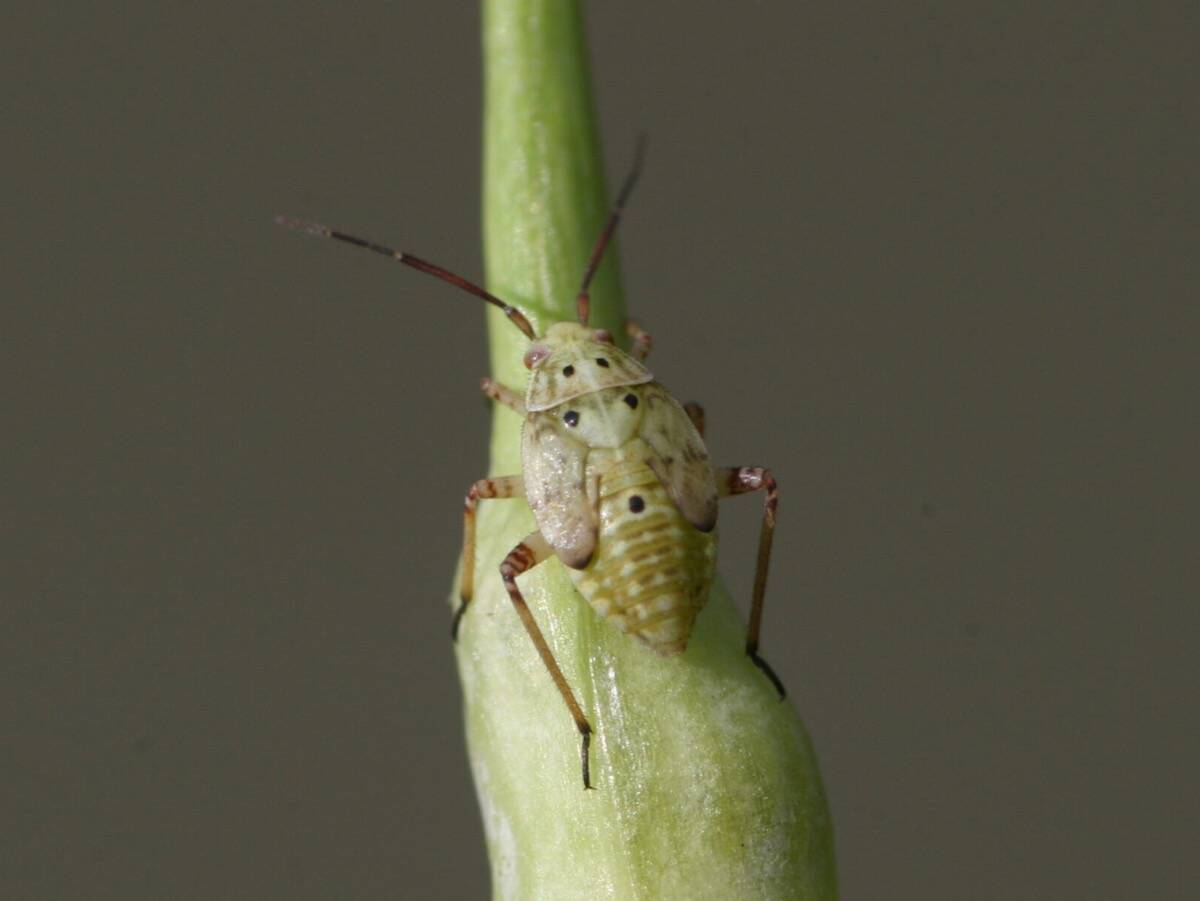
Lygus bugs caused scattered economic-level infestations, primarily in the Interlake, and some fields were treated. Unlike the chewing insects on the list, lygus bugs pierce plant tissue with a beak-like mouthpart, inject enzymes and feed on the juice. They particularly target buds, flowers and young seeds.
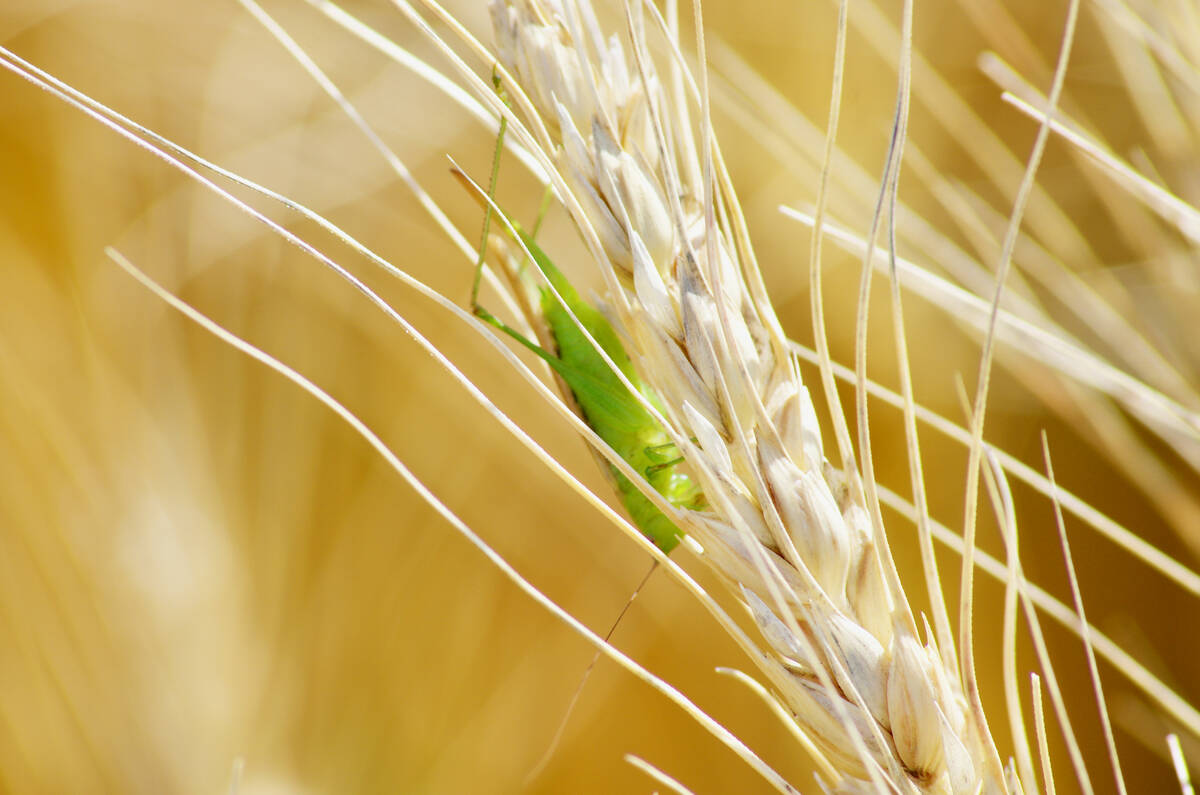
On the positive side, Gavloski said that grasshoppers and aphids were largely non-issues across the province in 2025, with very little spraying required for either pest.
“Every year, weather drives things,” Gavloski said. “We get things that go up, we get things that go down.”