Are nitrogen-fixing bacteria like a commune of hippies?
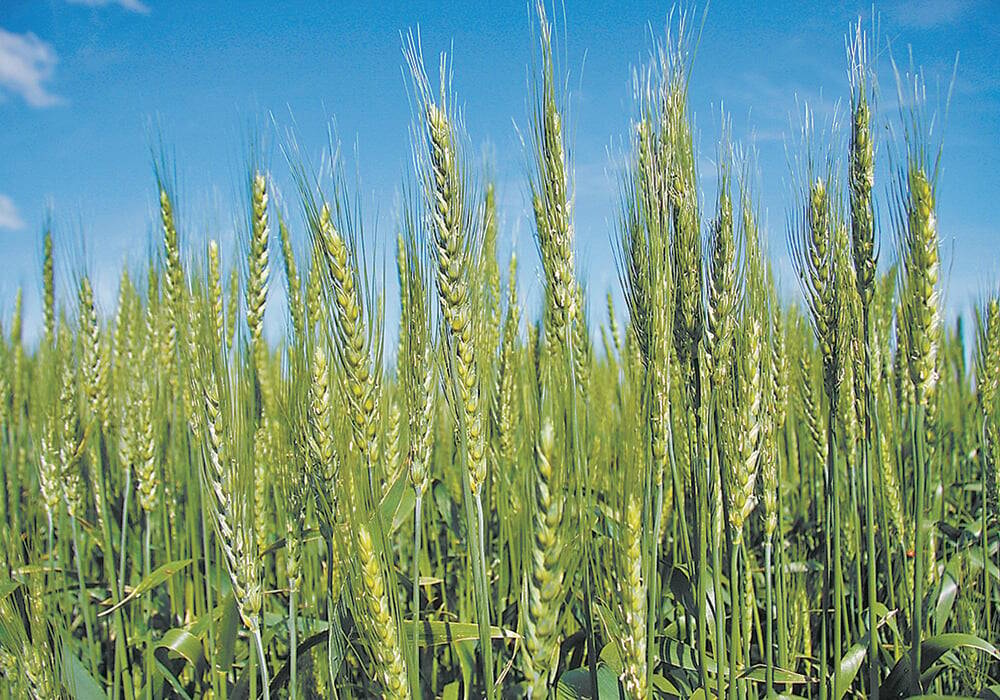
Eduardo Blumwald is a distinguished professor at the University of California, Davis. His lab recently made the news for growing wheat plants that could fix their own nitrogen.
Or, Blumwald explained, more specifically they could make nitrogen-fixing bacteria want to be hippies — and through “biological socialism,” produce usable nitrogen in the soil. Non-legume crops that can do the same are a bit of a holy grail of plant science.
Read Also
New Leader introduces ‘high-output’ NL710 fertilizer applicator
New Leader Manufacturing’s new NL710 single-bin precision fertilizer spreader is billed as comparable to its dual-bin NL720 in productivity.
While Blumwald’s work is a breakthrough, commercial viability is probably years away.
WHY IT MATTERS: Nitrogen fertilizer is an enormous expense for Canadian farmers.
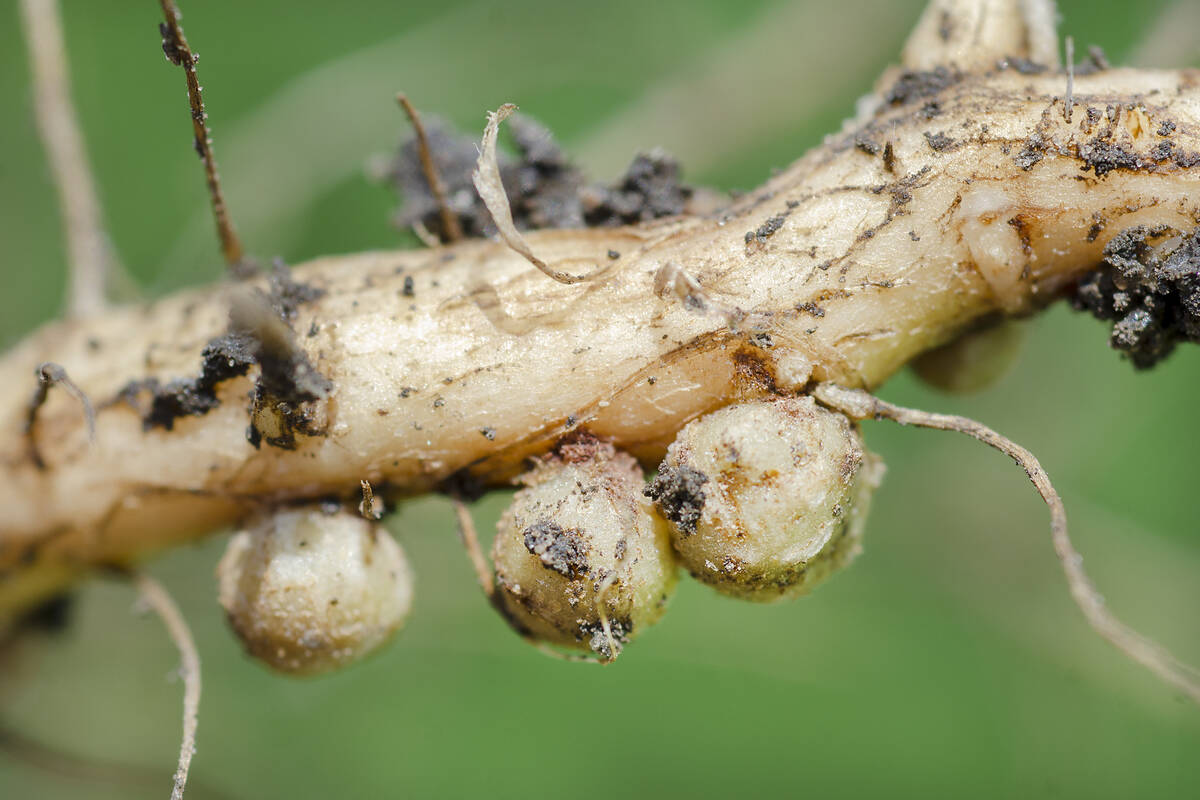
Legume plants fix their own nitrogen through the formation of symbiotic nodules on their roots. The plants invite helpful bacteria into these nodules and provide all the energy that these bacteria need to multiply and make usable nitrogen.
Research into developing non-legume crops with this root nodule symbiosis is ongoing, though highly challenging — for example at Wageningen University led by René Geurts.
For about the past 50 years, scientists have been either trying to create a cereal crop with root nodules or colonize cereals with a nitrogen fixing bacteria. Blumwald’s lab took a different approach.
“They have not had much success,” Blumwald said in an Aug. 27 article from UC Davis.
“We used a different approach: We said, the location of the nitrogen-fixing bacteria is not important, so long as the fixed nitrogen can reach the plant, and the plant can use it.”
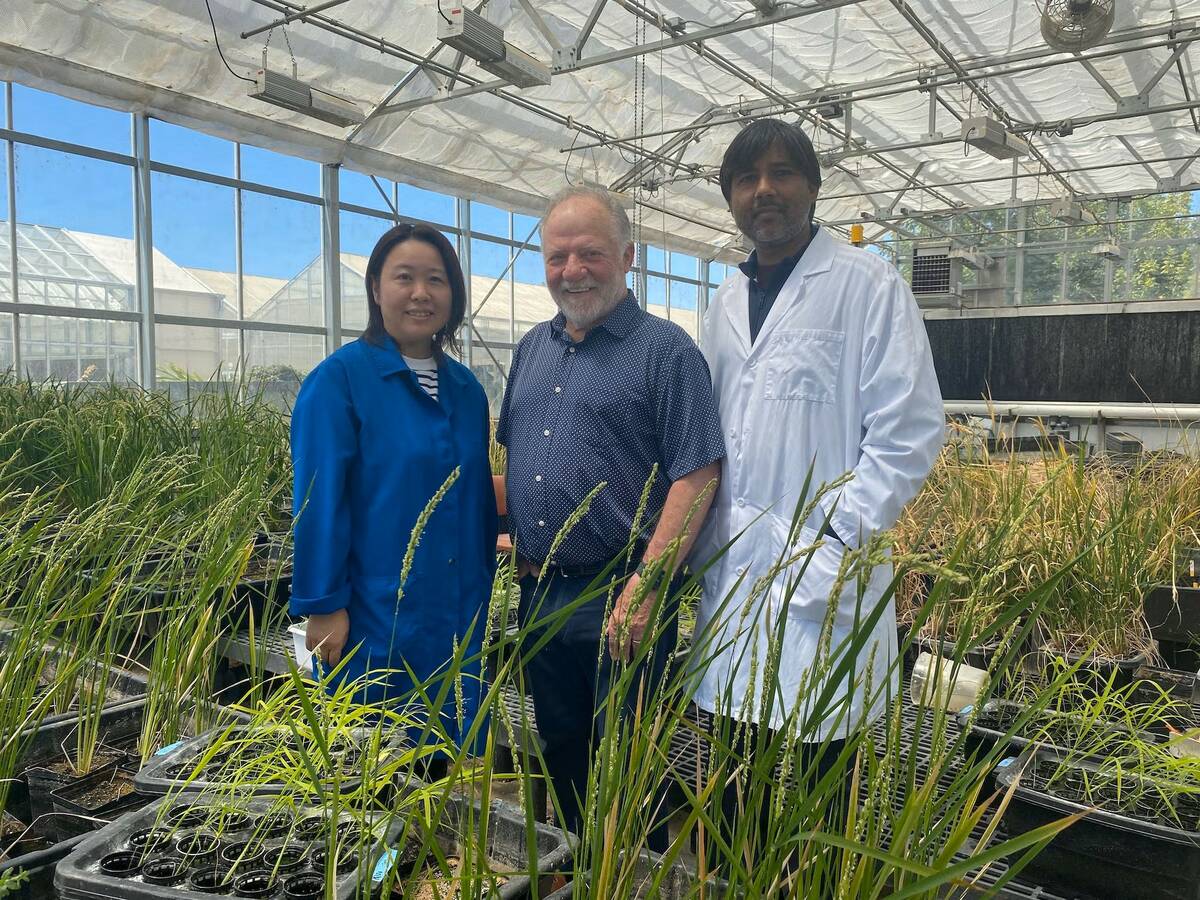
“Plants are exquisite factories,” Blumwald said, speaking over video call from California.
“They produce thousands of chemicals that, if you were an investor trying to make a factory, you would need hundreds of millions of dollars to make.”
Many of these chemicals are exuded into the soil. Researchers at UC Davis tested to see if any of these chemicals would send signals to soil bacteria to create biofilms.
Why biofilms?
Bacteria sometimes decide, “Let’s make a commune. Let’s be hippies,” Blumwald said.
They cover themselves in a layer of extracellular polysaccharides — a film that contains DNA, RNA, protein and sugar. Under this “tent” they share chemicals and — crucially — create a low-oxygen environment.
In a low-oxygen environment, nitrogenase enzymes — which the bacteria produce, and which are key to nitrogen fixation — can thrive. These produce ammonia. The plant can then capitalize on the nearby ammonia.
Blumwald’s lab used CRISPR gene editing to create wheat plants that produce more of a compound called apigenin which, when exuded into the soil, gives bacteria the urge to create biofilm-covered communes.
How much nitrogen does this produce? Blumwald didn’t give a specific answer. Presumably, a lot of that is left to be worked out in field trials and eventual variety development.
It’s in the mucus
Research into making corn produce its own nitrogen may be the closest to bearing fruit said Agriculture and Agri-Food Canada researcher Krzysztof Szczyglowski.
Corn was domesticated in Mexico about 10,000 years ago according to a 2018 UC Davis article. Some domestic varieties were developed by Indigenous people in the Sierra Mixe region of the country where the soil fertility was low.
This tropical corn can grow more than 16 feet (4.9 metres) tall and produces a series of aerial roots that secrete a jelly-like mucilage. This provides the low-oxygen, sugar-rich environment that attracts nitrogen-fixing bacteria, the UC Davis article says.
“They estimate that 30 to 80 per cent of nitrogen needs for this specific corn variety is provided by those nitrogen-fixing bacteria which are residing within the mucilage,” Szczyglowski said.
“Now the group in Wisconsin realize this is a relatively simple trait … which can be introgressed into an elite corn variety in North America.”
Altruistic bacteria
The University of Wisconsin and Blumwald’s lab are trying to increase the plant’s ability to attract nitrogen-fixing bacteria.
A parallel branch of research looks to make bacteria better at giving up its nitrogen, said Szczyglowski.
“Biology works based on the feedback mechanism,” he said.
If there’s a lot of nitrogen fertilizer in the soil, the bacteria don’t need to make their own and shut down the fixation process. One avenue of research, therefore, is making bacteria that’s “blind” to this feedback mechanism.
However, the bacteria are fixing nitrogen for themselves.
“They’re not altruistic,” Szczyglowski said. Another goal is then to make them more altruistic by making them less efficient in the use of their nitrogen so more is secreted into the environment.
These specifically developed bacteria could then be applied to the soil via a microbial fertilizer. Some of these are already on the market.
“The problem with that is that they sometimes work, sometimes don’t,” Szczyglowski said, as they’re vulnerable to environmental conditions.
An inside job
Another method of engineering nitrogen fixation in non-legume plants is to take advantage of bacteria that already live inside the plant.
Every plant has its own population of bacteria residing inside its tissues, Szczyglowski explained. It’s a relatively small group compared to the bacteria living among the roots, but it is intimately associated with the plant. The catch is, they don’t fix nitrogen.
The task, then, is to put the necessary genes into these bacteria so that they can fix nitrogen and share it with the host plant.
Other efforts involve introducing nitrogen-fixation genes into the plant themselves — primarily into the plant’s mitochondria, which contribute to energy production in the plant’s cells.
This method is being used by researchers at AAFC Lethbridge, led by Alicja Ziemienowicz. They’re working on improving nitrogen-fixing traits in wheat, triticale and canola.
Ziemienowicz, through an AAFC spokesperson, said she didn’t have any updates on this research to share but said she hoped to present some results in the next year or so.
The devil is in the details
What makes it so difficult to develop a nitrogen-fixing non-legume crop?
First, this process does not involve only one complex organism — the plant. It also involves thousands of bacteria.
Researchers must select for nitrogen-fixing bacteria, which are themselves complex and are part of dynamic microbial communities, Szczyglowski said. They must also ensure proper interaction between the plant and these bacteria.
For example, if researchers are trying to create plants that attract more nitrogen-fixing bacteria — what if, at the same time, this also attracts pathogenic bacteria?
The important thing is “to be able to steer those processes in the right direction, without derailing everything,” Szczyglowski said
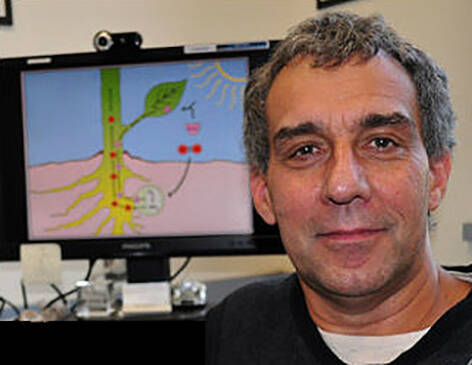
In the case of introducing nitrogen-fixing genes directly into a plant — this requires a set of genes, not one gene. The functioning of these genes also must be well-coordinated and protected from oxygen, which is detrimental to the nitrogenase enzyme needed for the fixation process
Finally, this process must be tuned up to the plant’s metabolism, Szczyglowski said. The plant will have to divert a lot of energy to the nitrogen-fixation process. Can it do that without compromising productivity?
“Possibly, but we really do not know this yet,” he said
It’s a challenging process, but Szczyglowski said he thinks these projects are important even if commercial results are years away.
This line of research is teaching scientists how to harness biological processes to support plant productivity and environmental health.
“Let’s say all of this will fail,” Szczyglowski said. “We’re still going to benefit from learning how plants interact with the beneficial bacteria.”
“We are learning more and more how to tailor plant microbe interaction to the benefit of plant productivity,” whether for nutrients, or protection against pathogens and environmental stress.