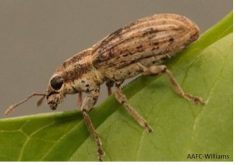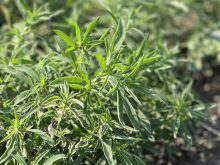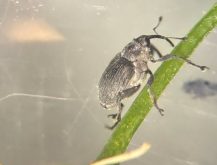
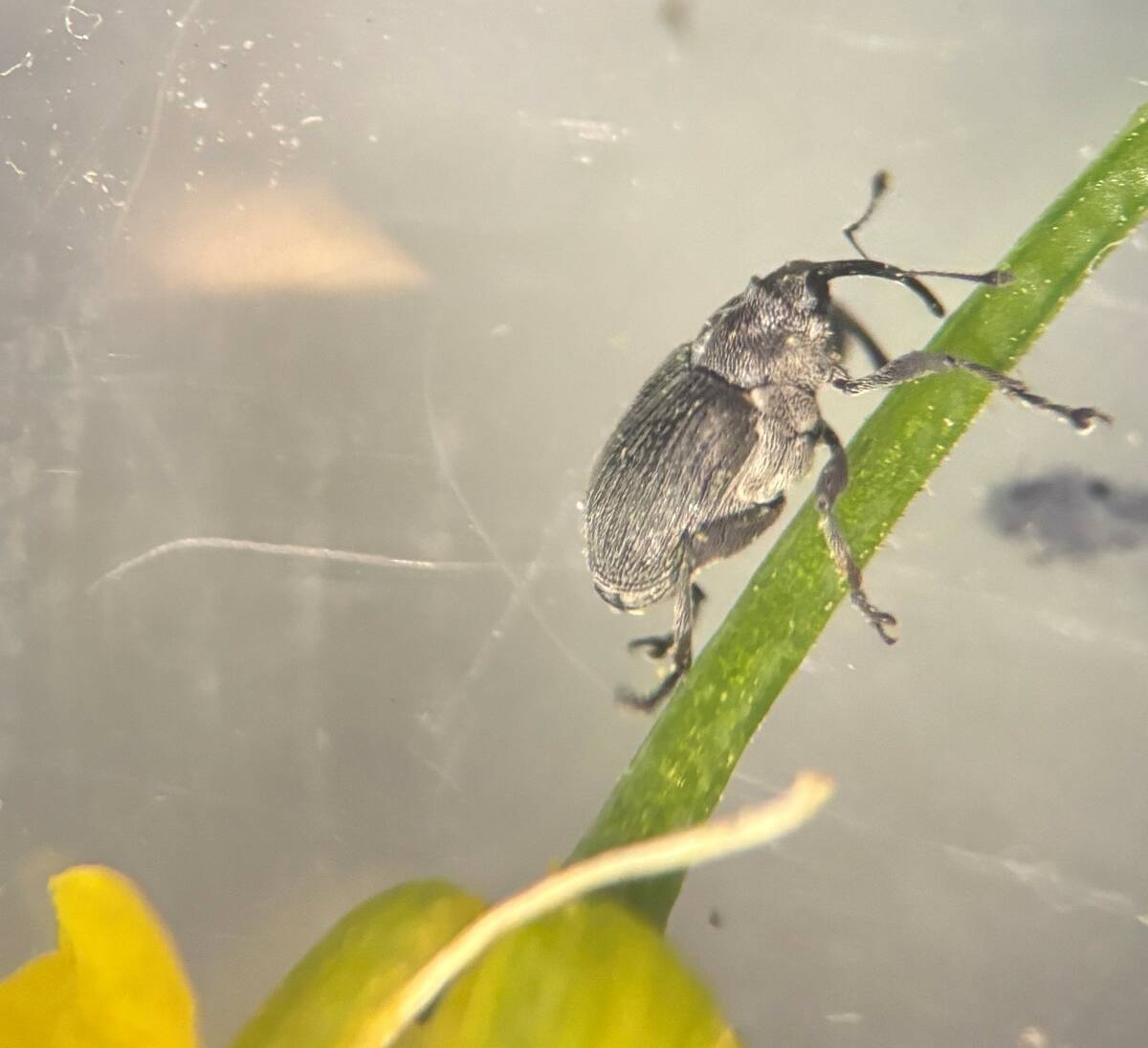
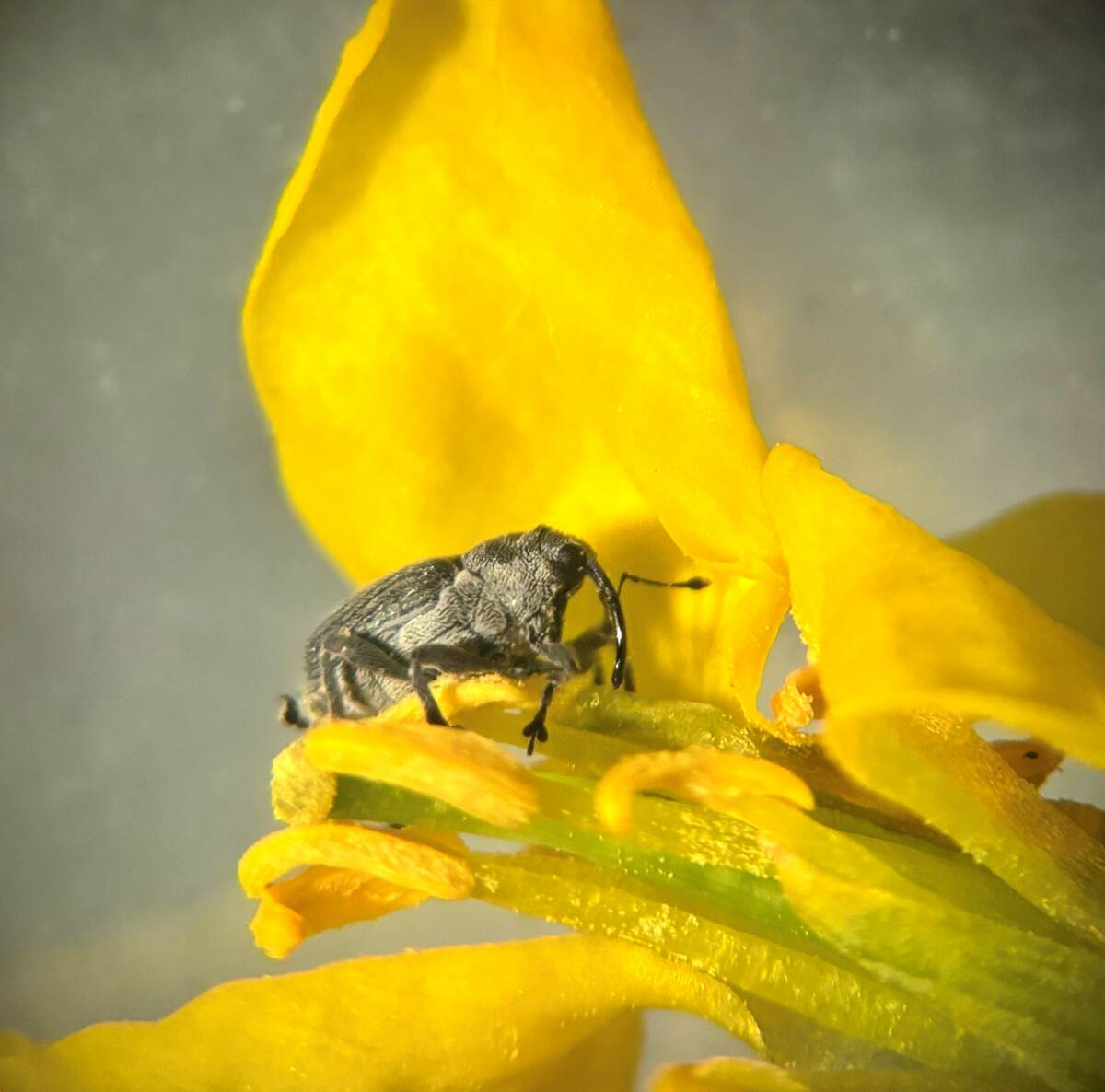
Cabbage seed pod weevil is a problem insect for canola growers, but experts warn that farmers might be hurting their own yields if the good bugs get taken out with the bad.
Pollination and yield are linked, farmers were reminded during a morning of canola speakers at Manitoba Ag Days. Keeping farm management friendly to pollinators can pay off at the bin.
“You will get a decent canola yield without pollinators … (but) you will get a better yield with the pollinators,” said Manitoba Agriculture entomologist John Gavloski.
Read Also
In defence of eating oats
Forget any social media fear mongering about oats — Oats are a healthy, nutritious, Prairie-grown option to add more whole grains to your diet.
Most studies show yield increases of 10 to 15 per cent or more, he added.
Pollination boosts production by as much as 46 per cent, and the quality of the seed set also markedly increases, according to research data from Melanie Dubis of Agriculture and Agri-Food Canada in 2021.
WHY IT MATTERS: Controlling cabbage seed pod weevil needs to be more deliberate than blitz spraying all the bugs out of your canola, attendees heard at Manitoba Ag Days.
Cabbage seed pod weevil became surprisingly abundant in some areas of Manitoba in 2024, marking a relatively new concern for producers. The pest was first detected in the province in 2017.
It had previously spread across the Prairies after first being found in British Columbia in the 1930s.
The weevils overwinter as adults under leaf debris and emerge in early to mid-spring, attracted to early flowering crucifer plants. They lay eggs on young canola pods. Larvae then feed on seeds inside the pods before dropping to the ground to pupate and emerge as adults later in the summer.
Grain farmers versus beekeepers
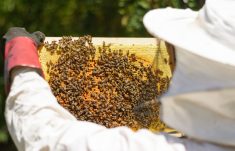
Commercial beekeepers who also farm grain feel the tension between pest control and pollinator protection.
On one hand, pest insects are munching away profit. On the other, bees can easily get caught accidentally in the cross hairs of a spray pass.
“It’s huge,” said Ian Steppler, a beekeeper near Miami, Man.
Steppler farms about 4,000 acres himself and manages roughly 1,800 bee colonies, putting him on both sides of the issue.
“I think it’s something that producers in general are becoming more aware of,” he said. “We’re exposed to the same type of conflict in regards to having to manage pests.”
Broad-spectrum sprays raise the stakes
The challenge, Gavloski said, is that all available insecticides for cabbage seed pod weevil are broad spectrum; they’ll kill beneficial insects along with the pest.
Available products include:
- lambda-cyhalothrin
- Matador
- Silencer
Also included are combination products like Voliam and Silencer Dual, which contain both a pyrethroid and chlorantraniliprole.
“They will kill cabbage seed pod weevil. They will also kill any other insects in the field at the time, and you are spraying a crop that is flowering,” Gavloski said.
That timing means crop is being sprayed at the very time that pollinators are being drawn most into the kill zone.
Part of the answer, Gavloski said, is proper scouting. The economic threshold for cabbage seed pod weevil is 25 to 40 weevils in 10 sweeps with a sweep net.
“You may have to treat the field if you are well above threshold. But again, you may lose some of that pollinator bump,” he said.
Producers paying pollinators more attention
Changes in land use and crop diversity are making these trade-offs more visible to producers, Steppler said.
“Guys are starting to pay a little more attention to all this because they’re becoming aware of the way we’re managing our land … they’re noticing a lack of diversity which we were all familiar with when we were younger and growing up, and I don’t think they like that,” he said.
Pesticides can directly affect colony health by weakening bees and making them more susceptible to disease, he added, but Steppler stressed that he does not advocate eliminating chemical pest control.
“I’m not going to stop you from controlling the pests, because you need to manage those. That’s your bottom line. … Just consider managing the use of that spray a little bit differently, so you have less impact on bees,” he said.
Scouting how-tos
Gavloski recommends taking 10 sets of 10 sweeps throughout the field to get an accurate weevil count, though he acknowledged that may not always be practical.
At the very least, he advised, farmers should pick two spots along the field and, at each, take 10 sweeps near both the field edge and 50 metres into the field, for a total of four counts.
For borderline populations, around 25 weevils per 10 sweeps, additional sampling is recommended to ensure the right decision.
Timing and technique matter
Timing and targeted application can also reduce impacts on bees, Steppler said. He advised farmers to spray in the evening, when the bees are away.
“That chemical product they use is able to work all evening, all night, and then in the morning, when the sun comes out, the sun will biodegrade the insecticide product, so its actually more effective if they use it in the evening,” he said.
Gavloski acknowledged the temptation to add insecticide when already spraying for other issues, but warns that it could backfire.
Targeted control and trap cropping
Both Gavloski and Steppler pointed to cultural controls as another way to manage pests while protecting pollinators. Alberta research has shown success with trap cropping, including seeding field edges earlier than the main crop and using that as the trap crop, or using earlier-maturing varieties on outside rows. The earlier flowering attracts and concentrates weevils, allowing for targeted edge spraying.
Steppler uses similar strategies on his own farm, particularly for flea beetles.
“We’ll go around and spray the margins where it’s really bad, and interrupt that migration of flea beetles into the field, and just monitor to see if the inside of the field needs to be done also,” he said. “Sometimes we do, but sometimes all we need to do is control the margins.”
The Canola Council of Canada also recommends growers talk to hive owners and also use an app called BeeConnected, which allows them to share their pest management plans with local honey producers.