The organic sector says the loss of research at Swift Current, Sask., will set the industry back, and it urged the federal agriculture minister to walk back the cuts.
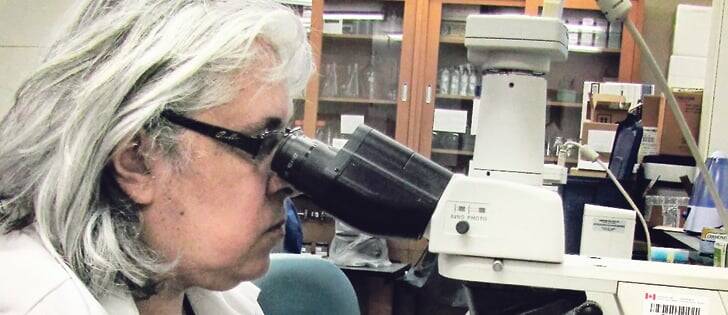
The Organic and Regenerative Research Program, led by Myriam Fernandez, was a casualty of the federal agriculture cuts announced last month that included several research farm closures.
Fernandez started looking at low-input farming and organics about 20 years ago.
Read Also
Student agronomy challenge coming to Assiniboine College
The Prairies’ first agronomy competition brings together post-secondary ag students for hands-on crop advising challenges at Assiniboine College in Brandon, Man.
SaskOrganics said the long-term field trials and data provided value that can’t easily be replaced. It was the only program of its kind within Agriculture Canada.
In a joint statement, Canadian Organic Growers and the Organic Federation of Canada said the decision to close research centres and wind down programs is alarming.
They urged agriculture minister, Heath MacDonald, to stop the closures, preserve and protect ongoing research, invest more in research and extension and continue to fund the Organic Science Cluster 4.
WHY IT MATTERS: Organic crop research doesn’t attract as much financial backing as conventional crops, and Fernandez’s program was seen as meeting a strong need for the industry. The program also had plots at other locations, including Lacombe, Alta., which is closing.
SaskOrganics said Fernandez’s work on such areas as intercropping, biocontrol and living mulch was relevant to more than just low-input and regenerative producers because it sparked innovation.
“Closing a program focused on these production approaches at a time of growing interest and adoption is short-sighted and counterproductive,” it said.
President Will Oddie said the data from the program can only be obtained through applied research on land managed organically for the long term. Program plots at Swift Current have been in organic production for 19 years.
The associations said public research is critical for the organic sector because it doesn’t have a check-off system to raise research funds.
They are also concerned about the effect on public plant breeding, which is key for the organic sector to deliver region-specific, low-input and climate-resilient varieties.
“Efficiency does not come from dismantling the very programs designed to help farmers do more with less,” said COG executive director Karen Murchison.
“At a moment of strong organic demand in Canada and globally, we need more, not less, public research to ensure Canadian farmers can succeed.”
The organizations also noted the uncertainty about multi-year research trials that might be abandoned mid-cycle and how that will affect future scientific work.
“Research on agroecosystem resilience is essential infrastructure; cutting frontline capacity now will cost far more in the long term,” they said.
Meanwhile, Fernandez said she hoped to somehow save her program.
She said she wasn’t worried about her own job but that of young colleagues who had just begun what they thought would be a career in organic research.