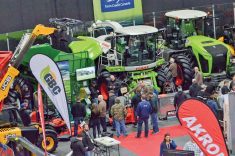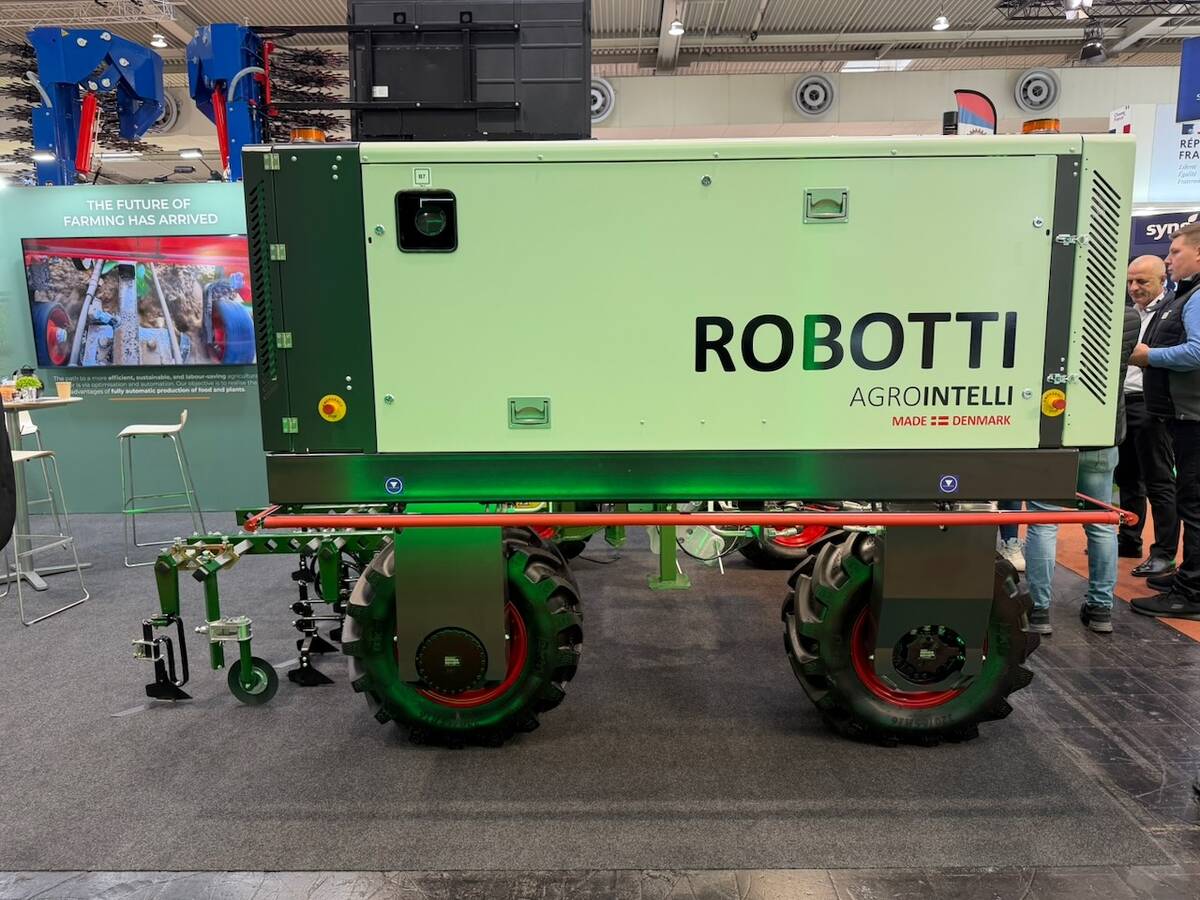
Everywhere you looked at Agritechnica 2025, there were machines that run without human intervention.
They included mowers and small sprayers at one end of the spectrum to numerous units that do everything from tillage to sensing high-value crops to row-crop units with more than 200 horsepower.
WHY IT MATTERS: The glut of options and innovation in autonomy feel like a tipping point, and over the next few years, the most valuable uses of autonomy will be sorted out.
Read Also

Manitoba canola variety trials axed
Industry reluctance killed the program designed to give farmers unbiased comparisons of seed performance across the province.
Then there are the big players, that continue to work toward autonomous operation of their largest cabbed equipment.
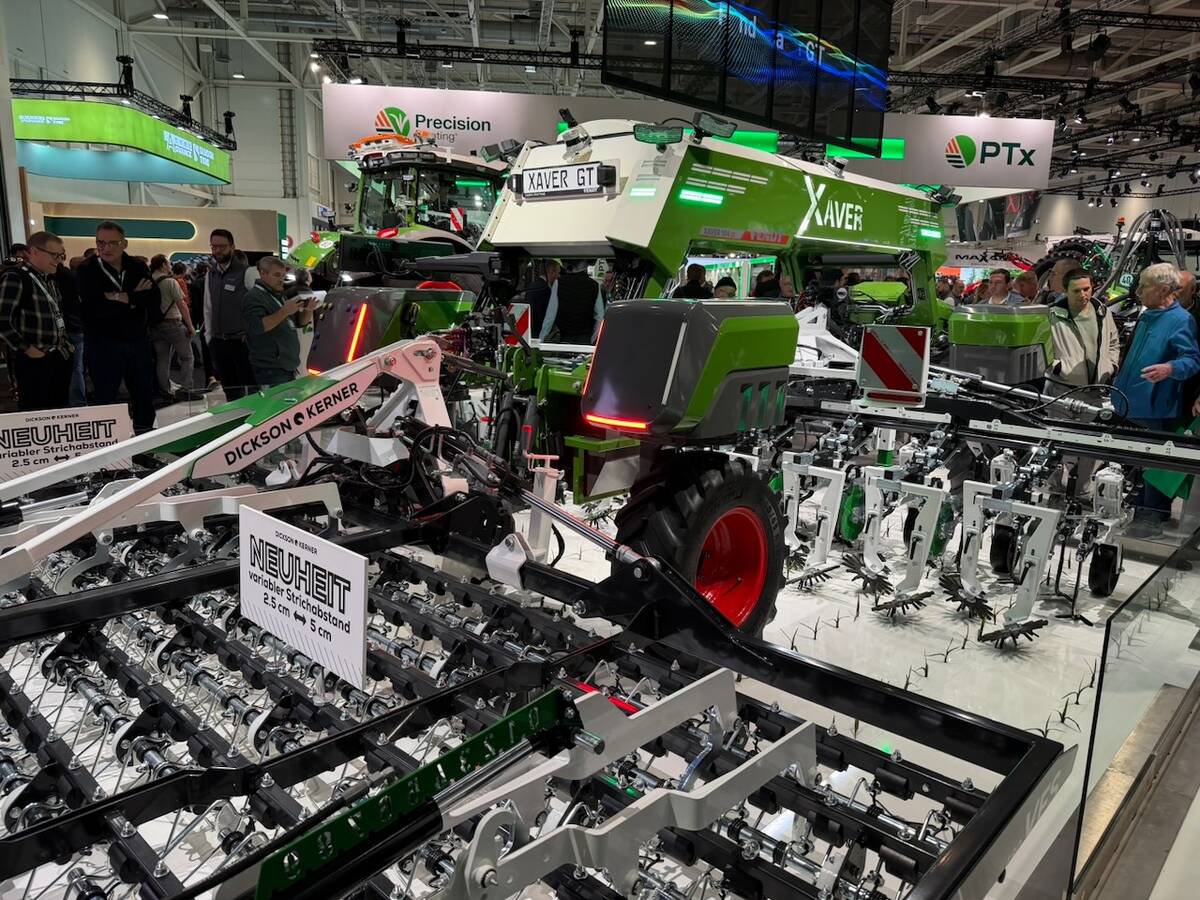
The biggest companies, such as John Deere, Claas and Amazone, were clear that each year they announce something new, it’s a step in the continuum to autonomy.
All the major companies are working on autonomy, but a common question is if the implements will be ready to help the power units make the decisions needed to fully replace a human.
Market leaders in autonomy
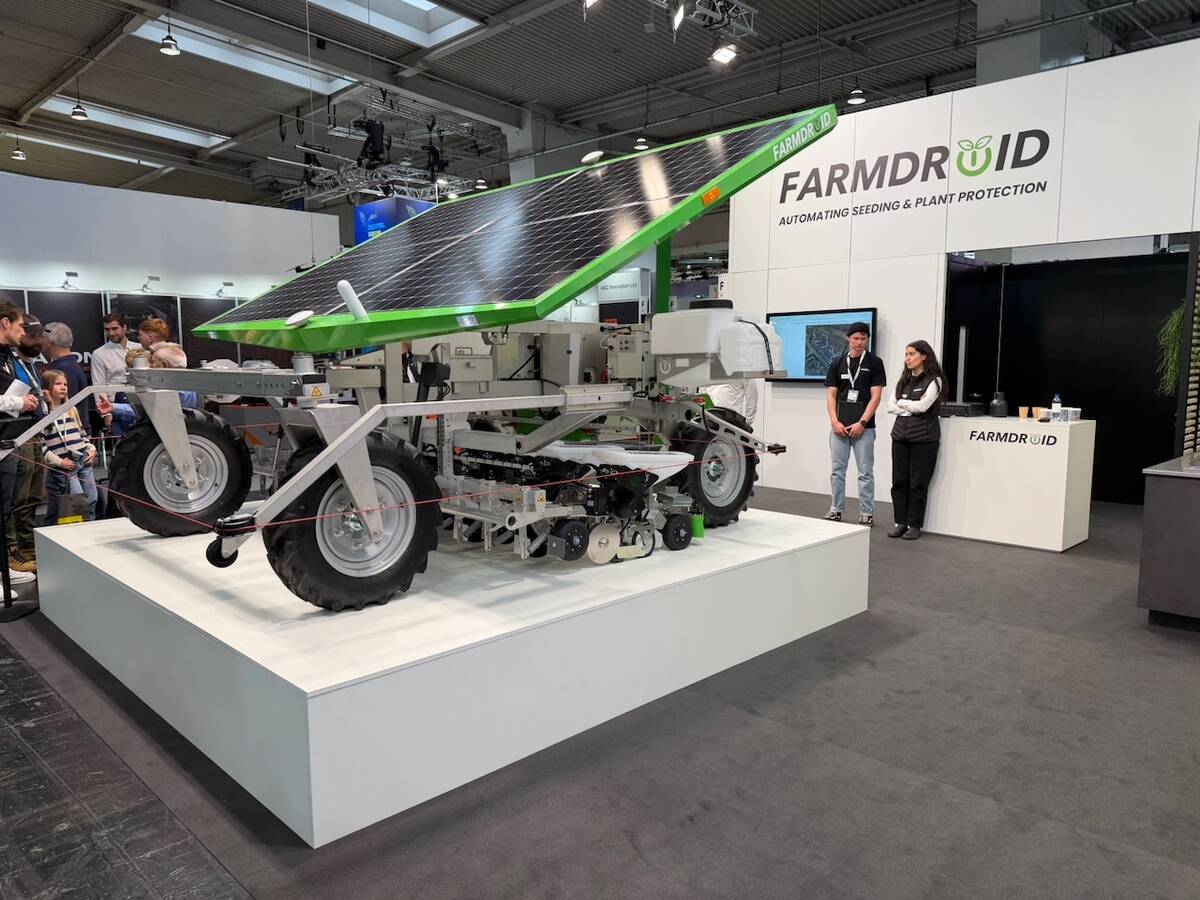
AgXeed reportedly has more than 100 units in the field, SwarmFarm has 150 and FarmDroid has sold close to 1,000 of its solar-powered, slow-moving vegetable planting, weeding and tilling machines.
AgXeed and SwarmFarm are power units, similar to conventional tractors, which pull implements similar to those now used in the field, whereas FarmDroid is an all-in-one system.
SwarmFarm, an Australian company, works directly with implement makers, especially in the spraying and spreading areas to build an ecosystem in which the implements are designed for autonomy.
AgXeed, a Dutch company, is closely tied to German agriculture equipment leaders Claas and Amazone in a partnership called 3A, and it’s no surprise to see AgXeed autonomous units running the field with Amazone implements.
Slow and deliberate progress
Jahmy Hindman, John Deere’s senior vice-president and chief technology officer, said at Agritechnica that the company’s work over the past almost 30 years has been a pathway to autonomy, from the beginnings of GPS tracking with the company’s acquisition of NavCom in the 1990s.
Since then, parallel tracking, AutoTrack, section control, AutoTrack turning control and AutoPath, planning software for autonomy, have been steps toward autonomous operation of farm equipment.
John Deere has made acquisitions where it could more easily purchase technology than create it, such as Bear Flag Robotics, GUSS automation and artificial intelligence visioning company Light.
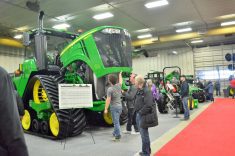
John Deere is working to automate its largest tractors, with the 9R and 8R tractors being the first with in-field autonomy in limited production.
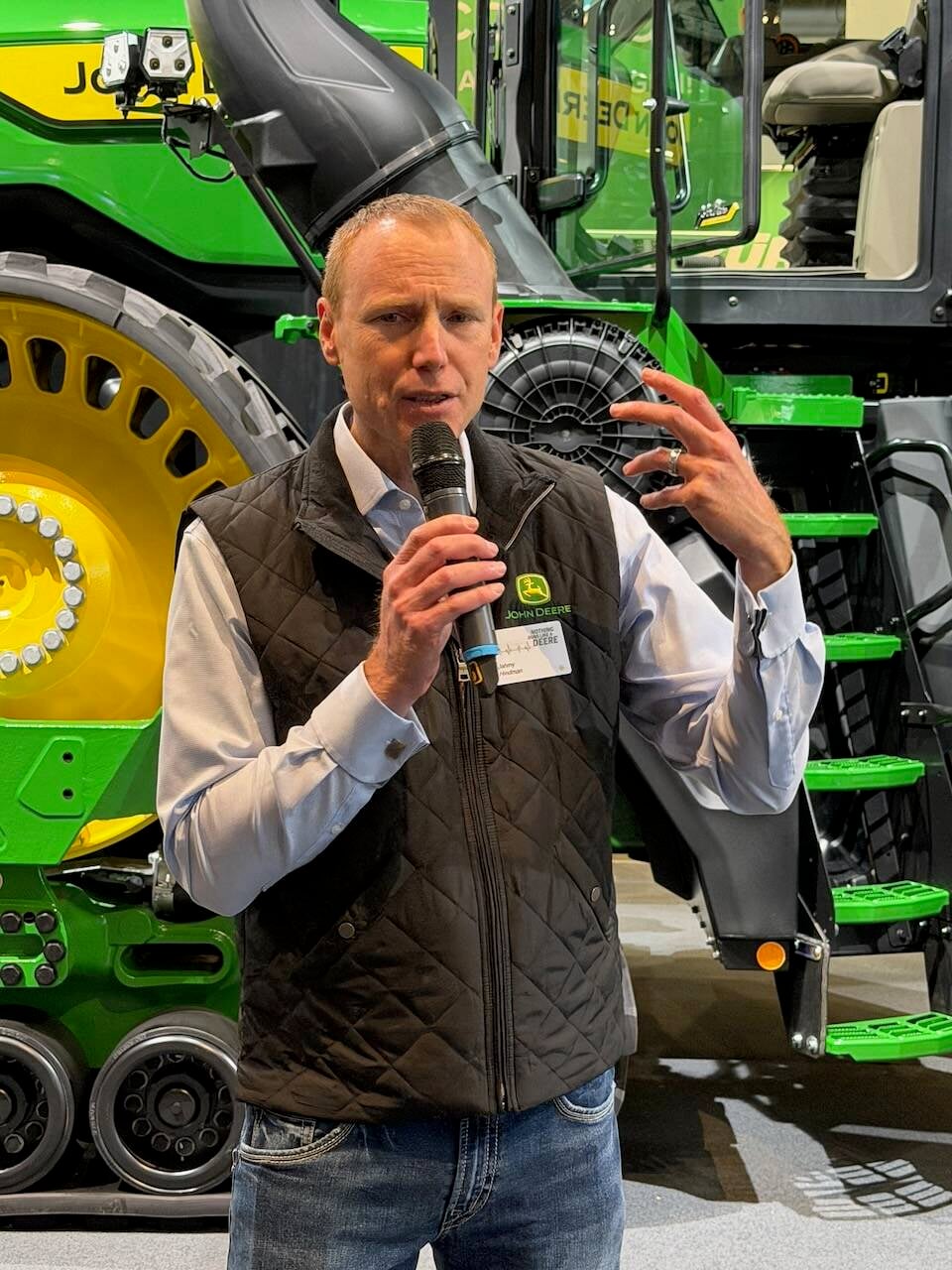
Hindman spoke to media in front of an autonomy-enabled 9R tractor at Agritechnica. Cameras and sensors sprouted from the top of the machine, which also includes significant in-field processing capabilities.
Claas’ s new Axion 9 tractor includes autonomous operation options, as long as the operator is in the seat. The routing can be pre-planned. That means it’s a Level 2 autonomous vehicle.
The tractor includes Claas’s Auto Load Anticipation, which helps the tractor learn when more engine power and r.p.m. will be needed. The tractor automatically adjusts for those situations, such as when implements are about to be lowered after turning on a headland.
It also has some autonomous guidance features, created with the co-operation of AgXeed.
However, a Claas spokesperson said during an international press tour that full autonomy is another leap for large tractors, including the need for specialized braking systems and more sensors on board.
“Level two is the next step for many farmers, from the current system with automation like asset management to the next step here with task management,” he said.
John Deere’s 8R and 9R tractors are at Level 4 and can be used without an operator in the seat.
The operator would get the tractor ready in the field to pull a tillage tool, unfold the tillage tool, leave the tractor cab and from the ground start up the autonomous operation that’s been preplanned in John Deere’s Operation Center, says Hindman.
“When it’s done, it will notify the operator that the operation is done and will come and park itself in a location,” he said.
Sixteen cameras cover 360 degrees around the tractor. The automation software recognizes vehicles, humans and fences and learns what it should do to manage around those objects, says Hindman.
John Deere runs Graphics Processing Units with Nvidia chips, running at about 80 watts of processing power to interpret all the information coming from the cameras.
Kubota is taking a difference approach, becoming an investor, supporter and dealer for some autonomous solutions. A Kubota-orange Robotti unit was on display in the Kubota booth, as the Robotti are now available through European Kubota dealerships.
Earlier in the development process, with Kubota as a partner, is the Kitler robot from Norway, which does autonomous spot spraying of high-value crops.
Kubota also had a cab-less orchard sprayer and an M7004 conventional tractor set up for autonomy on display at the show.
Getting implements ready
Amazone, the large German manufacturer of fertilizer spreaders and sprayers, also highlighted its march to autonomy at Agritechnica.
The company has won awards at the past nine Agritechnicas for its increasing automation, including a silver award in 2025 for its AutoSpread technology, which detects fertilizer spread and makes adjustments so the optimal spread is achieved.
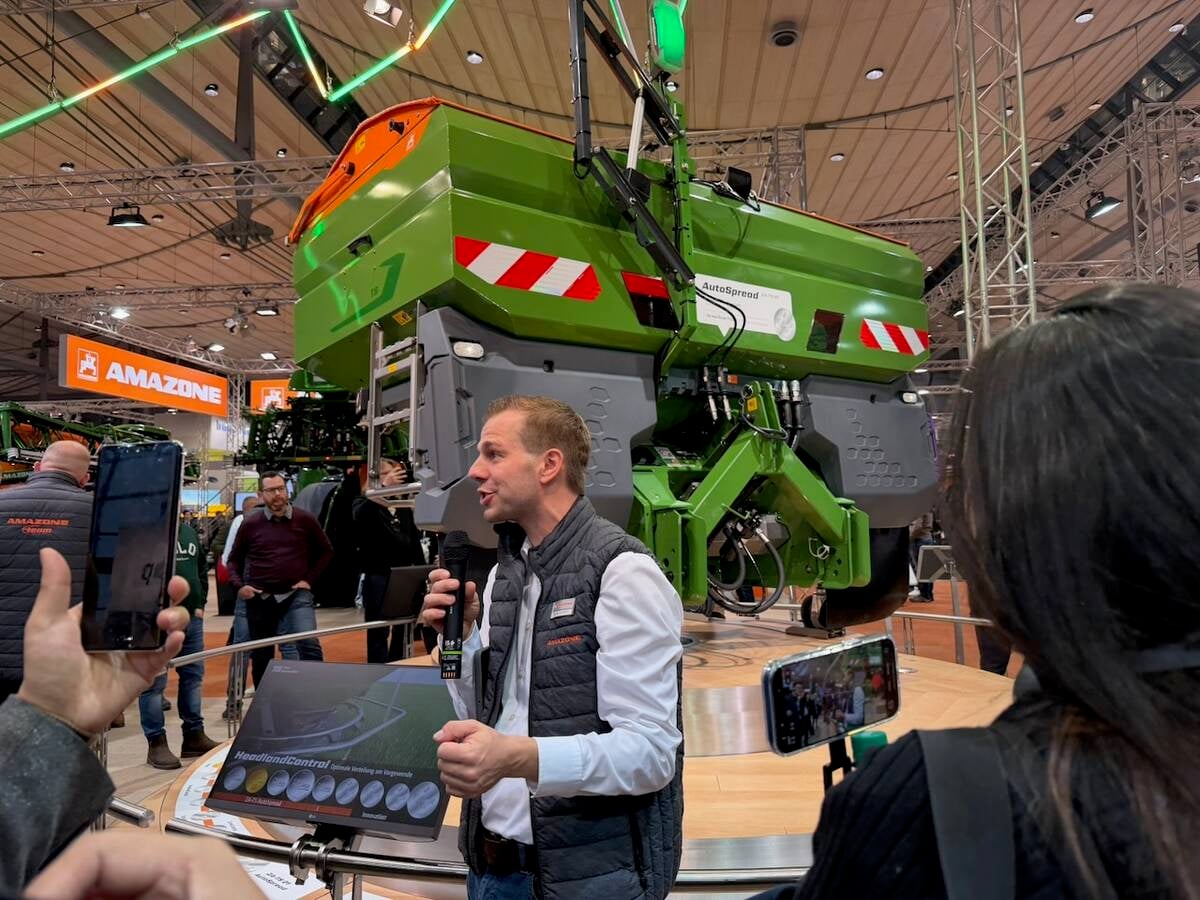
“All the research in there is optimized for a perfect pattern in the field,” says Markus Strobel-Froschle, the head of Amazone’s spreader application service.
He’s spent years with the company refining spreader technology to get to the AutoSpread level, including other innovations that manage wind, headlands and edge of field automatically.
A fertilizer spreader with AutoSpread is equipped with radar that monitors the spread of the fertilizer and automatically adjusts it for uniformity. The spreader software knows the usual spreading range of many kinds of fertilizer, so it will tell the operator to check to type of fertilizer if there’s been a mistake.
Who wasn’t there?
It’s worth noting that two of the companies with the most-developed autonomous products at Agritechnica 2023 were not exhibiting at the 2025 show because of financial difficulties.
Naio, which makes several autonomous tools for farms — the Ted and the Oz were the ones most seen in the Canadian market — looks like it is emerging from court supervision in France but wasn’t at Agritechnica.
Monarch tractors, one of the most mature electric and autonomous tractors in the global marketplace, has laid off staff and stopped manufacturing tractors. Its assembly partner, Foxconn, sold its Ohio plant, and it’s becoming a data centre.
The company is also being sued by a dealer, claiming that the tractor did not function autonomously as claimed.
Looking head
The next few years will be fascinating in the autonomy space with the current rate of innovation. The overexuberance can’t last, and there will be a rationalizing of the companies that will be around to supply autonomy in the long term.
There will be some surprises, but there will also be tough times for some companies, as the fortunes of once-market-leaders Naio and Monarch illustrate.
For farmers, this will mean a clearer choice about how autonomy will fit on their farm.