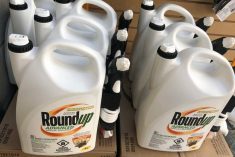
The retraction of a major study about glyphosate’s safety is raising questions about the widely used agricultural herbicide.
The journal Regulatory Toxicology and Pharmacology withdrew the 2000 review after Elsevier, its publisher, concluded the article failed to meet authorship and disclosure standards set out by the Committee on Publication Ethics (COPE), which establishes best practices for academic publishing.
The investigation found undisclosed industry involvement, reliance on unpublished Monsanto data and omissions of conflicting evidence.
Read Also
Split nitrogen application: Manitoba farm puts timing to the test
Manitoba farmers say splitting nitrogen fertilizer has helped their farm be more flexible and risk-proof.
“The scientific concerns … regarding (ghost-) authorship(s) and potential conflicts of interest, none of which have been responded to, are sufficient to warrant this action,” the retraction authors said.
WHY IT MATTERS: Glyphosate is a key weed control chemistry that underpins systems such as minimal tillage on Canadian farms.
The move has drawn wide attention because the paper circulated heavily in policy debates in the early 2000s, helping to shape public confidence in a product that later became the backbone of no-till and reduced-tillage systems across Western Canada.
But for regulators, the withdrawal does not alter current risk assessments.
Health Canada said the retraction does not change its position on glyphosate.
“While this review was previously considered in our assessment, it is important to note that the primary data sources were independently evaluated by the Pest Management Regulatory Agency (PMRA),” the department said.
“Therefore, the retraction of this review does not affect our previous review conclusions.”
The department said its 2017 re-evaluation considered more than 1,300 studies and remains consistent with the most recent 2023 review by European regulators. The PMRA will continue monitoring international assessments and new scientific research, it added.
Bayer, which acquired Monsanto in 2018, said it continues to stand behind glyphosate’s safety and pointed to widespread regulatory consensus. It also disputed several of the claims made in the retraction notice.
The company argues that Monsanto’s contribution to the article “did not rise to the level of authorship and was appropriately disclosed in the acknowledgments.”
It also highlighted Health Canada’s 2019 re-evaluation conclusion that “no pesticide regulatory authority in the world … considers glyphosate to be a cancer risk to humans at the levels at which humans are currently exposed.”
Bayer added that modern assessments look at a far larger evidence base than anything available when the retracted review was published.
What this means for farmers
Nothing changes in the field. No follow-up review has been triggered in Canada, and none is expected.
The retraction does not touch maximum residue limits, tank mixes, fall or pre-seed applications or crop-stage restrictions. However, it does sharpen an already polarized debate, and it comes at a time when global regulatory views are diverging.
While regulators say the decision has no bearing on glyphosate’s current registration, the retraction arrives at a sensitive moment. The herbicide remains under intense legal, scientific and political scrutiny, and any crack in the historical record attracts attention. As well, because few products are as woven into Prairie farming as much as glyphosate, anything that shakes confidence draws attention.
Grain shipped to Europe already faces much tighter glyphosate residue limits and more aggressive monitoring than other jurisdictions, and shifts in public opinion can influence how European Union officials approach pesticide rules — a factor that can complicate market access for Canadian crops.
Public pressure is also intensifying in North America.
The recent appointment of U.S. Health Secretary Robert F. Kennedy Jr., a longtime critic of glyphosate, has kept the herbicide in the public spotlight.
While his claims do not reflect the conclusions of regulatory agencies, movements such as the Make America Healthy Again campaign he spearheads can shift public sentiment and add political weight to calls for tighter pesticide rules.
As the Western Producer reported earlier this year, a proposed Canadian class action lawsuit alleges a link between glyphosate exposure and non-Hodgkin lymphoma. This case mirrors thousands of U.S. lawsuits that have resulted in billions of dollars in settlements and judgments.
Signals over recent months suggest the legal battles are taking a toll on Bayer.
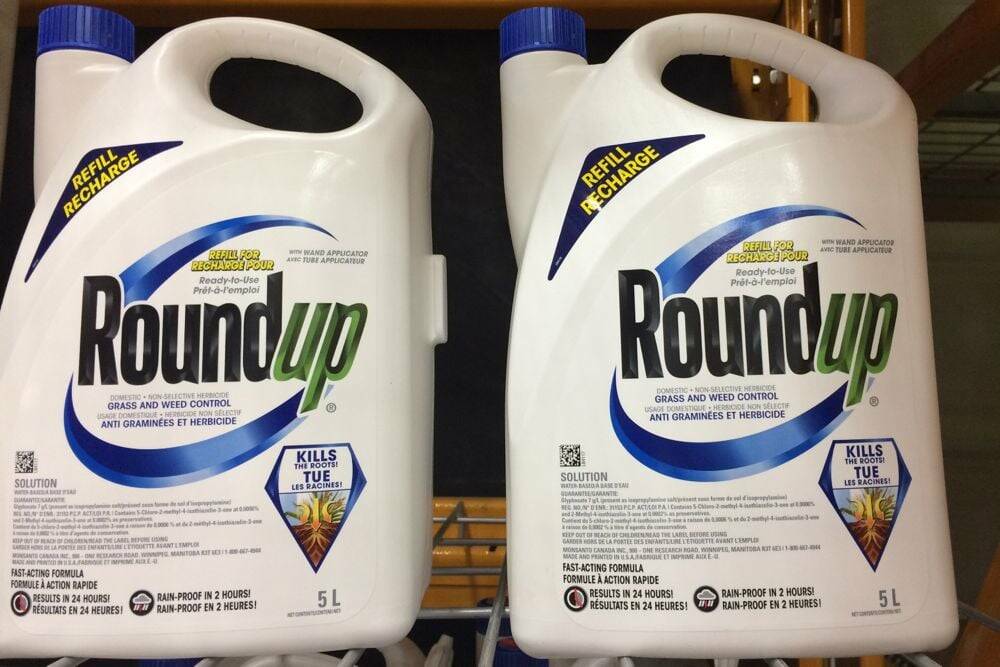
In March, the company hinted that continued Roundup sales in the United States could be reconsidered if legal risks persisted. A few months later, chief executive officer Bill Anderson put it more bluntly.
“Unless something changes, we are going to have to stop producing glyphosate,” he told reporters in reference to the mounting payouts.
Bayer’s response to the retraction indicates the company still stands behind its product and believes it is safe for humans. However, if legal costs keep mounting and public opinion shifts further, how safe it is for the company’s bottom line is another matter entirely.
Glyphosate’s safety profile
While litigation and public pressure continue to shape the conversation around glyphosate, regulators emphasize that today’s safety assessments rest on far more recent and extensive evidence than the 2000 paper that was withdrawn.
Many of the cases rely on the International Agency for Research on Cancer’s 2015 decision to classify glyphosate as “probably carcinogenic to humans.” However, the IARC review assesses hazard, not risk, meaning it does not evaluate real-world exposure levels.
The IARC itself acknowledges this distinction, noting: “The general population is exposed primarily through residence near sprayed areas, home use and diet, and the level that has been observed is generally low.”
That qualifier helps explain why regulators in Canada, the United States and Europe continue to conclude that glyphosate does not pose a cancer risk under normal exposure conditions. Their assessments are based on risk rather than hazard and on studies published long after the 2000 Regulatory Toxicology and Pharmacology review.
Some of the recent research shaping these decisions includes a 2023 analysis in the Journal of the National Cancer Institute, which found no firm association between glyphosate exposure and overall cancer risk in long-term U.S. agricultural worker data.
The PMRA also cites the most recent review by European regulatory authorities, completed in 2023, which it says reinforces the agency’s own 2017 assessment. Together, these are wide-ranging evaluations more than two decades removed from the now-controversial 2000 report.
Bayer argues this is why the retraction, while notable historically, does not affect current science.
While the retraction does not change the science regulators rely on today, it underscores the need for transparent separation between industry involvement and scientific assessment, and illustrates how questions about that separation can remain in the literature long after the fact.
In its notice, Elsevier was explicit that retracting the 2000 article was not a comment on the safety of glyphosate, but rather it was about applying industry standards long in place.
“This retraction does not imply a stance on the ongoing debate regarding the carcinogenicity of glyphosate but originates from directly following the COPE guidelines.”