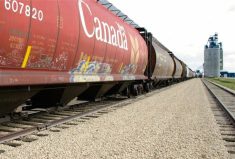
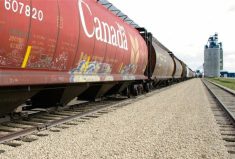
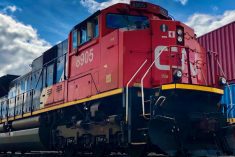
Glacier FarmMedia — Farmers said they are happy and relieved that Canada’s two major railways have removed their carbon tax surcharges.
The Agricultural Producers Association of Saskatchewan had long advocated for the removal of the surcharges, saying they affected farm profitability.
Carbon surcharges were implemented to cover costs associated with emissions and fuel consumption.
Both Canadian National Railway and Canadian Pacific Kansas City eliminated the surcharges as of April 1 in Alberta, Saskatchewan, Manitoba, Ontario and New Brunswick after the federal government ended consumer carbon pricing.
Read Also

Canadians worked first 39 days of 2026 to pay for year’s grocery bill says CFA
Sunday marked “Food Freedom Day,” the date by which the average Canadian household earned enough money to cover its annual grocery bill as per calculations from the Canadian Federation of Agriculture.
“This is massive for farmers,” said APAS president Bill Prybylski in a news release. “Axing the surcharges puts more cash where it belongs, in our pockets and back into our rural communities.”
APAS said since 2019, Saskatchewan farmers paid about $200 million in the fees. It estimated that the bill in 2025 would have been $80 million.
“We’ve fought tirelessly for relief and seeing it finally come to an end is incredibly rewarding,” Prybylski said.
The move comes at a time of incredible trade uncertainty.
A CN notice to producers said the Low Carbon Fuel Standard is still in place in British Columbia and “will remain unchanged per the tariffs issued effective April 1, 2025.”
APAS said it remains concerned about that and whether it will increase shipping costs to B.C. ports. The organization is also advocating for transparency of how the federal Output-Based Pricing System, or industrial levy, impacts farm input costs.
CN said it would follow legislation closely and re-adjust if necessary.