Two remaining irritants from the BSE crisis could soon go by the wayside.
The United States has had to segregate a much smaller list of specified risk materials (SRMs) than Canada, which has resulted in more competitive challenges for beef processors.
The loss of small and medium-sized processing has been significant, said Dennis Laycraft, executive vice-president of the Canadian Cattle Association. Smaller processors can’t afford to separate SRMs and non-specified risk material, so large portions of the carcass go to waste, compared to larger processors.
Read Also
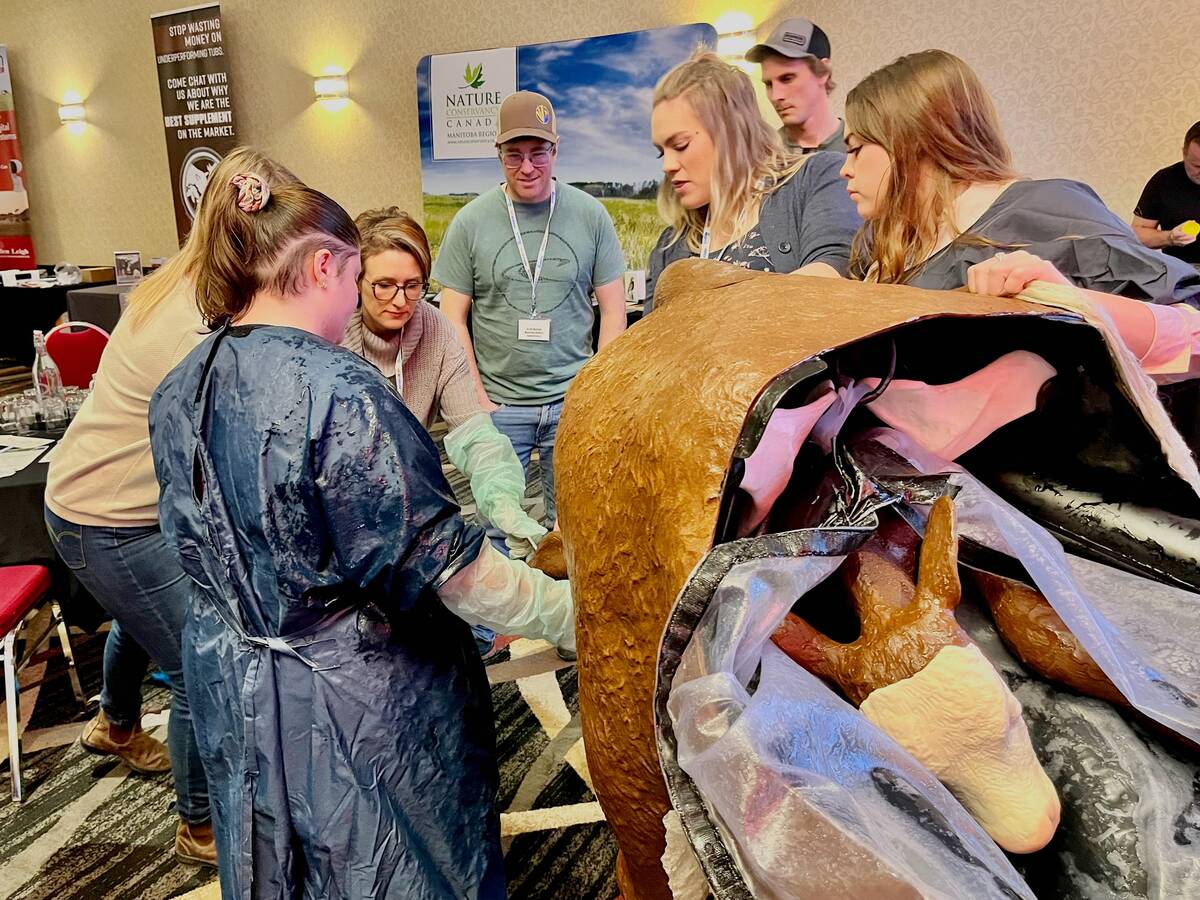
When should you use a calving jack — and when should you stop?
Knowing when to reach for the calving jack — and when to put it down — can mean the difference between a live pair and a dead cow.
“Just the quantity and the cost is so much higher in smaller operations and it also makes our larger plants not as competitive,” he said.
The Canadian Cattle Association is working with the Canadian Food Inspection Agency and the Canadian Beef Research Council on a risk study of Canadian SRMs. It’s been 13 years since the last risk assessment.
It’s taken longer than expected, Laycraft said, but the second-to-last version of the report was delivered Dec. 22. It will go out for international peer review, and Laycraft hopes the final report will arrive in March.
“In our view, it should support moving ahead with a change.”
Laycraft said once the risk assessment is received, and if it supports a change, the CCA will sit down with the CFIA to discuss the report.
It could then take anywhere from four months to several years for a regulatory change to work its way through the government.
The change would not affect the ruminant-to-ruminant feed ban that remains in place.
Hundred-day holdback
Another irritant, created by a difference in Canadian and U.S. veterinary certificates with South Korea, could also soon be solved.
South Korea was one of the last countries to open its borders to Canadian beef. Canada had to take South Korea to a World Trade Organization appeal hearing before a veterinary certificate agreement was negotiated.
That deal gave South Korea the ability to reject Canadian beef should any type of BSE — classical or atypical — be found.
The World Organization for Animal Health’s position is that countries should no longer close their border for an atypical case. These cases are random and unpreventable, and their numbers are exceptionally small.
The American agreement with South Korea follows international standards.
From the standpoint of American beef processors, that slight difference meant a risk to their growing exports to South Korea. It resulted in a 100-day holdback for Canadian cattle going to the United States for slaughter, if it was possible beef from those cattle could go to South Korea.
That resulted in U.S. processors creating separate slaughter runs for Canadian cattle, said Laycraft, and they made sure that meat from those cattle never went to South Korea.
Laycraft said the requirement made little sense.
“We’ve never had a case of BSE enter into a packing plant or into the food system.”
There are discussions ongoing among the U.S., South Korea and Canada. The U.S. wants the 100-day rule gone and South Korea is more concerned with food security than it once was, said Laycraft.
“I think things are lining up, but with three countries involved, it takes longer. Once we get rid of the 100-day rule, we get back to a normally functioning integrated market.”