
The Manitoba cattle market remains strong and the number of head bound for sales is expected to drop off, according to Brock Taylor of Taylor Auctions near Melita. He said prices have increased from week to week in several weight classes.
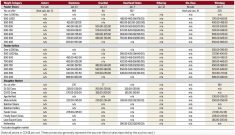
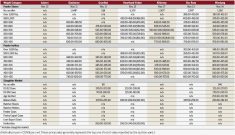
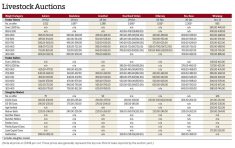
Looking at high-end prices for feeder steers, a number of weight categories showed increases during the week of Feb. 24 to March 2. The most notable change was in 800- to 900-pounders at Ashern, climbing from $239 per hundredweight to $268.
That said, there were declines among feeder steers, such as at Grunthal Livestock Auction Mart, in which 700- to 800-pounders slipped from $265/cwt. the previous week to $237.
Read Also

Iran war volatility sends shock waves through agricultural markets
Here are the numbers on how badly fuel, fertilizer and grain markets have been thrown for a loop by the conflict in Iran so far.
There were upticks among high-end prices for the slaughter market. Heartland Livestock Services saw prices for mature bulls jump from $105. to $122/cwt. over the week. As well, bulls at Ste. Rose went from $110 to $147.
Taylor said the shrinking supply of cattle has been pushing up prices across North America.
“It’s going to be a supply-and-demand deal,” he said.
As for cattle coming to auction now, Taylor said numbers are expected to decline in coming weeks as spring approaches. For the week of Feb. 24 to March 2, 12,213 head sold, compared to 9,061 the previous week.
“It’s been staying steady, but it’s going to get going downhill from now on,” he said.
Gladstone Auction Mart incurred the largest reduction, with 972 cattle sold at its Feb. 28 sale, 646 fewer than at the previous auction. Winnipeg Livestock Sales sold 770 for Feb. 24 compared to 1,115 on Feb. 17.
There were also notable increases in cattle sold this week, especially for Heartland. Its sales on Feb. 28 and March 1 garnered 4,105 head versus 1,593 the week before. Also, Ste. Rose Auction Mart had a sizeable bump from 1,505 on Feb. 23 to 2,815 on March 2. However, Ste. Rose’s website stated it expects about 1,500 feeders for its March 9 sale.
Taylor said the ongoing shortage of trucks and drivers is not as bad now as it was at peak times.
“It sure makes a difference if a guy can’t line up trucks to go to a certain place,” he said.