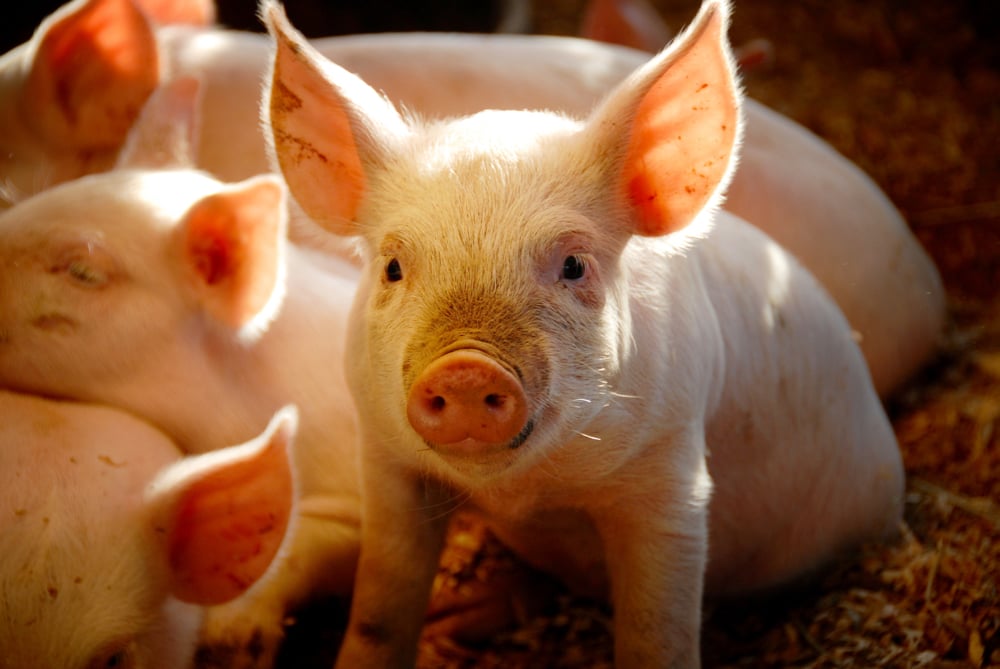
The biggest pork market in the U.S. could no longer be accessible to Canadian producers if a ballot initiative known as Proposition 12 becomes law.
Proposition 12 was part of the state of California’s general election ballot in 2018. Also known as the Prevention of Cruelty to Animals Act, it aims to establish new minimum requirements on farmers to provide more space for egg-laying hens, breeding pigs and calves raised for veal. California stores will be banned from selling eggs or uncooked pork or veal that came from animals housed in ways that did not meet these requirements.
The requirements are rather vague, but primarily deal with giving animals more space when confined. For pigs, 24 square feet of usable floor space must be available per animal to all gilts at breeding, weaned sows and gestating gilts and sows, but this does not apply to cull sows.
Read Also
OPINION: AAFC research cuts will cost farmers more than they save
Manitoba farmer David Rourke argues AAFC research cuts will erode wheat breeding and delay key innovation, costing farmers more than they save.
There are exceptions when sows are being transported, used in research trials, need to be individually treated, immediately prior to slaughter, five days before the expected farrowing date, and when nursing piglets.
Proposition 12 builds on the requirements set in a 2008 ballot measure, known as California Proposition 2. Its language was even more vague, simply stating that pigs, hens and calves be able to spread their wings or limbs and turn around. Although few specifics on spacing were given, Proposition 2 was obviously targeting the use of conventional cages for laying hens, gestation crates for sows and confinement of veal calves.
The primary proponent of both these propositions is the Humane Society of the United States (HSUS), supported by other animal welfare groups. The organization is touting Proposition 12 as the “strongest law in the world for farm animals.”
A blog written by humane society president and CEO Kitty Block states that 7.5 million voters (63 per cent) supported the ballot initiative and that “farm animals are deserving of our humane consideration and the protection of our laws.”
The organization and its allies have been a driving force for changing how some farm animals are housed, as it wisely chose to take a legal approach to make government and agribusiness take notice.
In 2008, a California-based meat packer, Westland/Hallmark, recalled 143 million pounds of meat, the largest amount ever at the time. This recall was not initiated by the USDA, but the Humane Society of the United States.
A member of the HSUS ‘investigative team’ got a job at the plant and with a hidden a camera in the button of his uniform, filmed downer cows being abused. The abuse was not the only issue of concern. The video showed that downer cows were entering the food supply, risking the transmission of BSE.
Rather than focusing on the abuse, the humane society used food safety concerns to appeal to a Senate appropriation subcommittee on agriculture regarding the apparent lack of USDA inspections.
This recall, along with the Proposition 2 ballot initiatives, were game-changers for animal welfare groups. Food companies also took notice and started to implement housing and welfare standards of their own.
As I’ve written previously, these changes are, for the most part, not bad for industry and good for animals — but only when the changes are made within reasonable times so producers can remain profitable, consumers can still afford the products and changes are backed by sound research.
What animal welfare groups tend to forget is that their views on what makes a farm animal happy aren’t necessarily so. More importantly, they don’t consider the chaos that could be caused by an initiative such as Proposition 12.
The pork industry is highly integrated throughout North America, so having a requirement in one state will have a ripple effect throughout the value chain. There are few pigs raised in California but it is one of the largest markets for pork.
That’s why the main bodies representing U.S. hog farmers, the National Pork Producers Council and the American Farm Bureau Federation, have challenged the law at the U.S. Supreme Court, saying it is unconstitutional because it interferes with interstate trade. The Canadian Pork Council has joined the challenge because many of our feeder pigs enter the U.S.
The entire North American swine industry is on edge and will have to wait for the Supreme Court’s ruling expected early next year.