

Livestock producers may be in the home stretch, but they’re far from out of the woods on feed.
Tyler Fulton, president of the Manitoba Beef Producers, said a hard winter meant higher feed use than many producers expected, during a year when planning for extra feed was less than easy.
“It’s tight,” he said. “It’s very tight. I’ve heard from several different producers and you can see it on the social media market sites… I’ve heard multiple comments about trying to stretch the supplies as long as they can through the use of supplements or molasses on straw. They’re using kind of every technique possible.”
Read Also
Best before doesn’t mean bad after
Best before dates are not expiry dates, and the confusion often leads to plenty of food waste.
Why it matters: The livestock sector expected to scrape its way into spring, and that was before long stretches of bitter cold and heavy snow.
Livestock producers in Manitoba are coming off a year in crisis.
Historic drought conditions in 2021 left the sector reeling. It began with little regrowth in spring, proceeded through a summer of dried-up dugouts, dried-out pasture and almost non-existent first hay cuts in the worst parts of the province. Then there was grasshopper pressure, still poor hay and increasingly dire pasture conditions leading to a stream of cattle headed to market. AgriRecovery was eventually triggered, with $155 million in federal and provincial funds earmarked for producers in Manitoba.
Despite fall rain opening the door for much-needed extended grazing, many feed supplies were expected to be tight.
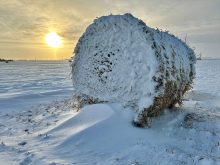
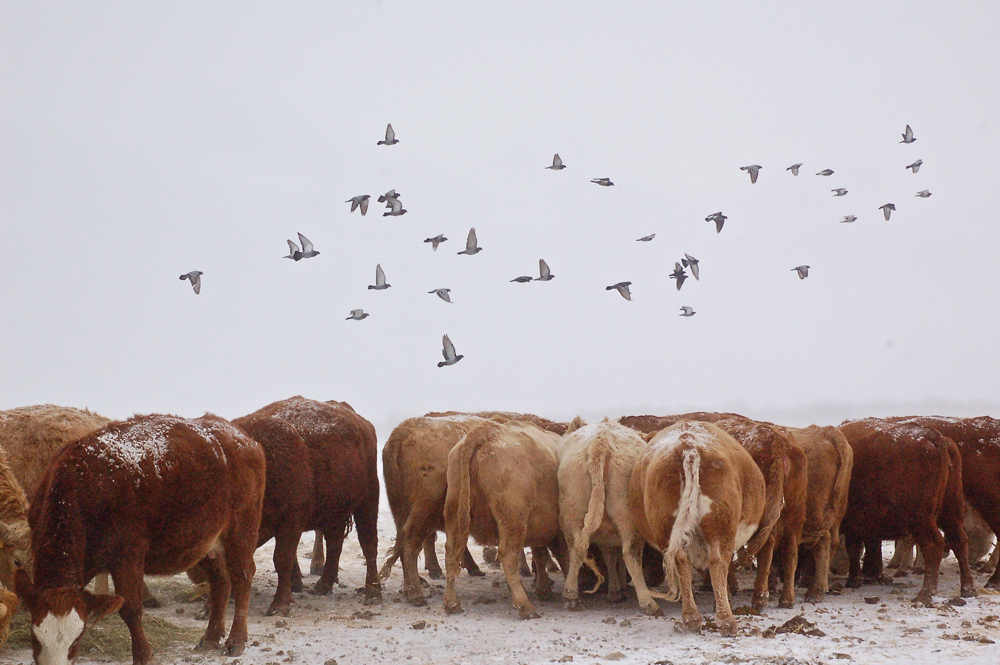
Then came the winter. A polar vortex descended on the province in late December, while the following months commonly saw ambient air temperatures dip below -25 C or -30 C for days at a time.
Manitoba Agriculture suggests that cattle producers feed an extra pound of grain per animal per day for every 10 degrees below -20 C.
Fulton estimates that he has fed five to 10 per cent more than expected so far, and has heard similar estimates from other producers.
“Part of it is coming from those long stretches of cold temperatures where you need to reflect that in your daily feeding, but the other part of it is just the wind,” Fulton said. “Sometimes you just lose it. Depending on the spot and so on, if those cows end up heading back for shelter or going to a different spot than where they were fed, sometimes that feed doesn’t show up again until spring under all those drifts.”
John McGregor, extension support with the Manitoba Forage and Grassland Association (MFGA), said he has heard of two general camps amongst producers.
A number started the winter with enough feed, dependent on weather, he said. Those producers are now likely tight, due to the harsh weather.
“It’ll be touch and go between now and spring,” he said.
Others, he said, were already feeling the crunch in January, and the ability to source some kind of feed or supplement will be key to how they fare prior to green-up.
Sticker shock
Bloated feed prices have added to the issue. Hay prices have not dropped from the heights reached last summer.
According to the last MFGA market update, released in late January, non-dairy alfalfa price ranged anywhere from 11 to 12 cents a pound, a slight rise from the 10 to 12 cents a pound consistent since August 2021.
Likewise, producers could expect to pay 10 to 14 cents a pound for good-quality alfalfa-grass mix and eight to 12.5 cents a pound for beef-quality mix as of the end of January. Those prices, likewise, have seen only minor tweaks since midsummer 2021.
The next MFGA market report, expected in late March, will also see little change, according to McGregor.
Dairy-quality alfalfa is expected to hit 15 to 16.5 cents a pound (compared to 14 to 17 cents reported in January).
“We’ve got grass hay around, possibly, nine cents and the straw, for the cereal straw, will be somewhere around 4-1/4 to 4-1/2 cents,” he said. “That’s about the extent of the hay listing that will be changing.”
Alternate feeds have offered little respite from a larger feed bill, between a swelling feed grain market, and transport issues that have done nothing to curb the already high price of feeds like dried distillers grains or feed pellets. Those prices, some retailers say, are several times more than they were this time last year.
Those shipping delays have yet to work themselves out, despite the best efforts of the trucking companies, Fulton said.
“The labour constraints, the weather, the highway conditions, all of those kind of build up to adding further delays,” he said. “There’s definitely kind of like a triage system that’s developed where those who are most in need end up getting it, typically, before they completely run out.
“On the cost side, that’s still a major issue,” he added. “There’s a ton of tight cash flow.”
While meant to take the sting out of feed and transport bills, current AgriRecovery programs also require producers to initially pay invoices before applying for aid, Fulton also noted.
“You can’t rely on the cash that you would get from AgriRecovery to actually pay those bills,” he said. “You need to be able to have some credit with your financial institution left in order to be able to pay for those feed bills so that you can then get reimbursed by the AgriRecovery program. So there’s some dancing happening there. It’s tighter than it’s been in years.”
Empty market
Those who can afford feed are running into another problem, there’s not much to buy.
There is “very little” forage going up for sale, Fulton said, and what is there disappears “in minutes.”
There is a bright side, however, in transactions happening between neighbours, he added.
“I think that there’s a goodwill kind of that’s happening in the countryside that says, I don’t need my normal and my desired inventory at the end of the year when the cost is that my neighbour can’t keep his cows around,” Fulton said. “There’s a lot of those transactions happening that we don’t see.”
Fulton also noted available hay from Ontario and Quebec, sources that he hopes producers can take advantage of, given AgriRecovery aid on shipping costs.
Getting warm yet?
It is unclear yet how quickly producers will be able to trade in the winter feed for grazing.
It is McGregor’s opinion, looking at the long-term forecast, that producers may have to practise some patience. There are no major spikes of warmth in the near future, he noted.
Deep snowpack gives some hope that pastures, dugouts and hayfields will get a moisture recharge this spring. At the same time, Fulton said, those deep drifts also mean that there is a lot of snow that has to move before the growing season.
“It is what it is,” he said. “I don’t know if it’s going to be a longer feeding period on the tail end here. It’s going to depend on the temperatures going forward.”