With the arrival of warmer weather, it’s time for the annual spring ‘Hawk Watch’ in the Pembina Valley southwest of Morden.
This region, also known as ‘Raptor Highway,’ is where birdwatchers gather each spring to watch hawks, eagles and vultures as they soar above the valley on their migration north. Avid birders count and record numbers and report the statistics regularly to their website.
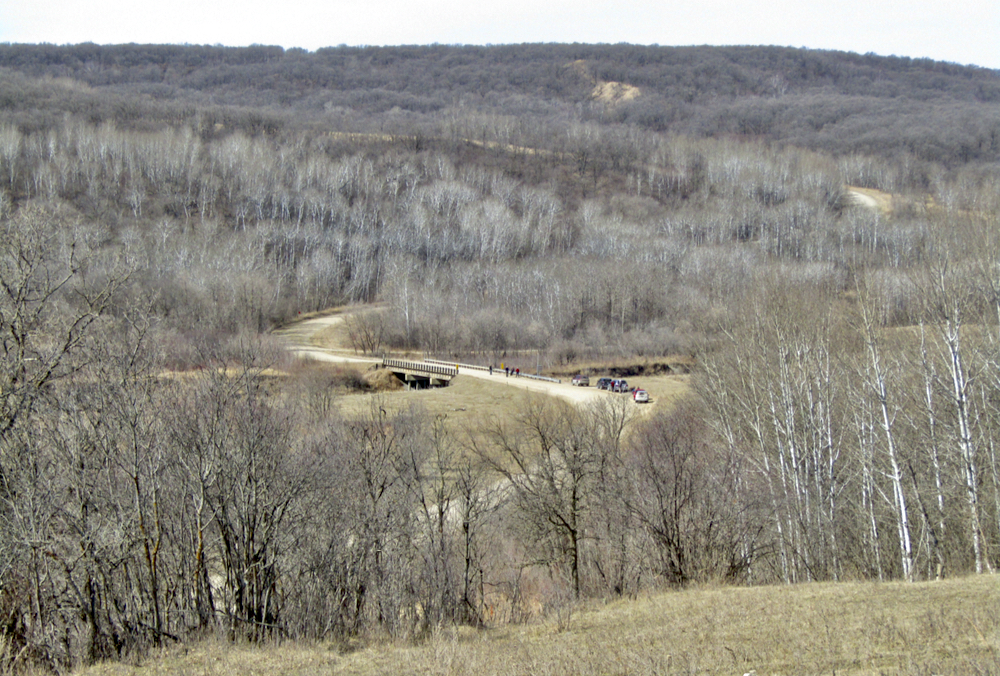
The Pembina River at Holo Crossing on Highway 201 is the most common spot for hawk watchers. The structure of the Pembina Valley here is such that it generates thermals, allowing raptors and other birds to soar on air currents above the valley. Nearly every day at migration time, birding enthusiasts gather to watch and count. Watchers gather at the bridge or on the nearby slopes of the Pembina Hills, either to the west or east, depending on wind direction and weather conditions.
Read Also
Manitoba gaining ground on wild pigs
Squeal on Pigs Manitoba reports progress on eradicating invasive wild pigs, but public sighting tips are key to keeping the effort moving.
Counts may begin near the end of February or early March (depending on spring weather conditions), but the peak migration is from late March into mid-April. The ‘official counter’ keeps data on numbers and species, as well as temperature, wind speed etc. The number of visitors is also noted.
Knowledgeable counters share their knowledge and counting skills with first-time raptor watchers. When I visited last spring, I spent about an hour and a half there and met several others including chief counter, Al Shritt from Winkler.
“I usually come to count about three or four days a week,” he told me.
For a 10-year period, from 2005-14, a monitoring project was conducted under A Rocha, an international conservation organization.
“Since 2014,” Schritt said, “there has been no concerted count project, but we go as often as the weather is good and it suits us.”
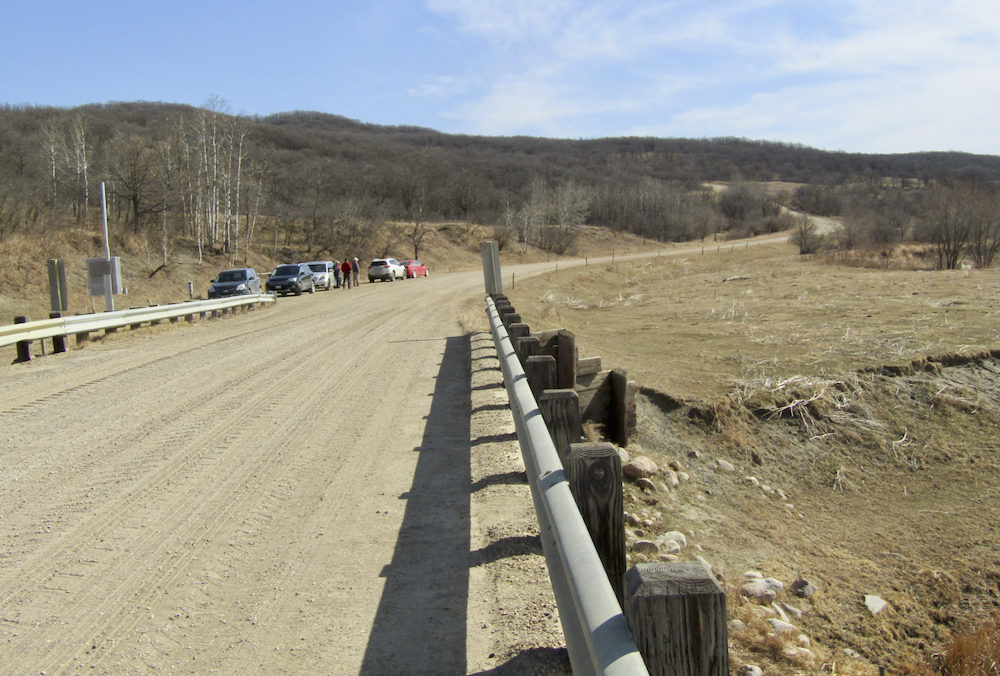
My visit didn’t coincide with one of the best days weather-wise, but we did count half a dozen raptors while I was there — including a vulture, a red-tailed hawk, a bald eagle and a sharp-shinned hawk, as well as a flock of 15 tundra swans. On a busy day, watchers are kept busy calling out species and direction so they can be recorded. A friend who visited on another day, with a strong south wind, helped count 71 raptors in an hour.
Although the birds we saw were limited, Shritt informed us that on the previous Friday (April 2) — when the winds were just right — the count for the day was an amazing 1,077 raptors, while the two next days were each over 200.
The most common raptor seen here is the red-tailed hawk, with the Pembina Valley ranked as the top viewing site for this species in all of North America. Some years, several thousand are counted in a single season.
Up to a dozen other raptor species are seen regularly while a couple of others occur infrequently. Total raptor count for the spring season is usually several thousand with occasionally the total exceeding 10,000.
In North America there are more than 200 sites where birds of prey are monitored each spring and Holo Crossing is an important part of this study. Last year’s spring statistics show that monitors counted during 178 hours with a total of 4,739 raptors recorded. Some numbers are also kept for the fall migration, but the main study is during the spring.
To reach Holo Crossing, travel southwest from Morden approximately 15 miles to connect with Highway 201, or east and south from Manitou on Highways 33, 31, and then 201. From the Maida-Windygates border crossing, it is one mile north and then four miles east and north into the valley.
Interested people should plan to spend an hour or two at the site. Most days you will find others to help you identify what raptors are visible. They will direct you to the best spot which varies from day to day according to wind speed and direction.
To follow the count online, or decide when to visit, check this website: hawkcount.org and click on ‘Find a Hawk Watch’ to reach the Pembina information. Last year’s statistics appear to show that the last few days of March and early April might be the best — depending on wind and weather, of course. A sunny day with a south wind is often a good one for watching.
Another Manitoba spot where hawk watchers occasionally gather is the Assiniboine Valley hillsides northeast of Virden. The Westman Naturalists usually conduct a fall count there.