Learning about developing farm policy and lobbying isn’t just theoretical for Reg Dyck’s ‘Issues in Agriculture and Food’ class of about 40 students studying for a diploma in agriculture at the University of Manitoba.
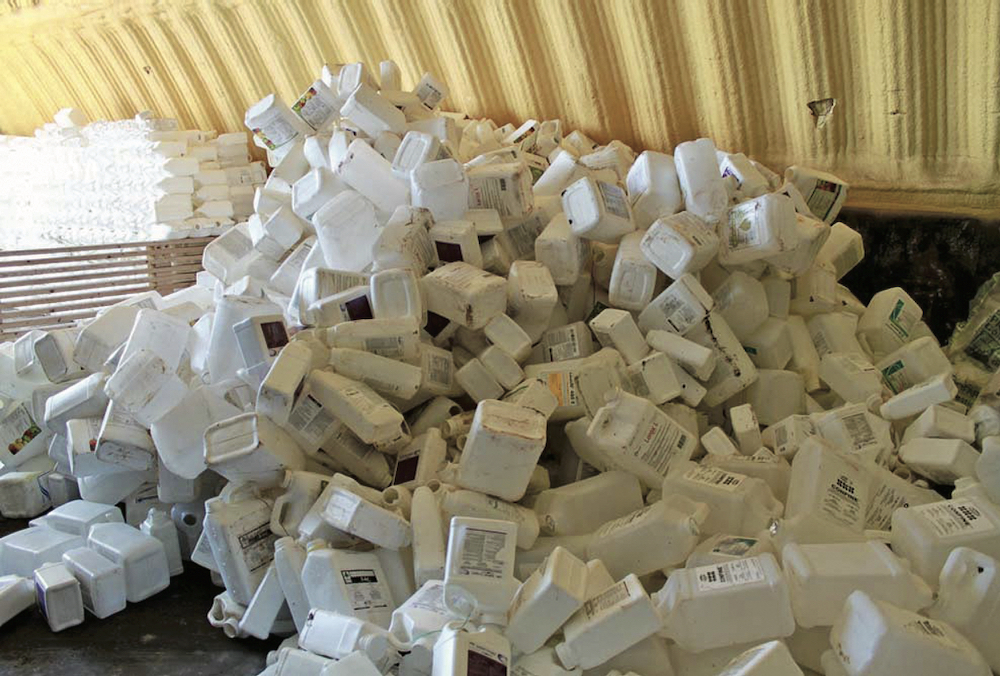
“I think this has been a really good experience in a number of ways,” Dyck said Feb. 8 after his class met online with Barry Friesen, executive director of Cleanfarms, the not-for-profit organization that oversees collection of empty pesticide containers and agricultural plastics across Canada, including Manitoba.
Read Also
MBFI livestock research farm gets major expansion
Manitoba Beef & Forage Initiatives expands Brookdale Research Farm by 467 acres to benchmark grazing profitability at commercial scale.
Near the end of the meeting student Krystina Taylor suggested Cleanfarms and students meet again to discuss ways to help Cleanfarms boost its container collection rate beyond the current 80 per cent.
“We want you to succeed and we want to help you succeed,” Taylor said.
Friesen welcomed the offer.
“Absolutely. We’d more than love to participate with you on this. There are so many more areas we can go in because this isn’t all just about containers,” he said.
“In the future, talk to us, call us. There’s a lot of us here and we’re willing to help.”
Dyck asked his class to come up with several resolutions for the Keystone Agricultural Producers’ (KAP) annual meeting, pick one, and then make the case for it on the virtual convention floor Jan. 25.
The resolution, which passed, calls on KAP to lobby the Manitoba government and rural municipalities to increase the number of sites collecting pesticide containers and obsolete chemicals and for KAP to work with Cleanfarms, agri-retailers, Manitoba Agriculture and municipalities to increase awareness of the current pesticide container recycling program.
To make the project even more true to life, three reporters were invited to ask the students about the resolution Jan. 27 during an online ‘scrum.’
Some of the students complained Cleanfarms’ maps showing small pesticide container sites were inaccurate. They said that, and a lack of awareness around Cleanfarms’ program, resulted in some farmers disposing of containers improperly.
A straw poll with 18 student respondents showed 78 per cent burned their containers.
In an interview following the scrum, Friesen said the students never talked to Cleanfarms. Had they, the students would have learned that Manitoba’s 116 small pesticide container collection points are at approved municipal sites.
Some students wondered why pesticide retailers weren’t collecting empty containers like in Saskatchewan.
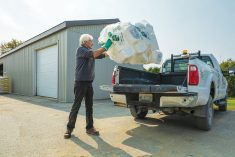
Adding to the confusion is that retailers take back larger totes and drums. There are 121 Manitoba locations that collect non-deposit containers.
Retailers also take back the refillable containers that have deposits on them.
Forty per cent of pesticides in Canada are delivered in small containers, 40 per cent in refillable containers and 20 per cent in single-use bulk containers.
When Dyck heard Friesen still wanted to speak to his class an online meeting was set up Feb. 8.
“Full mea culpa, our maps are not perfect,” Friesen told the students, adding that Cleanfarms doesn’t own the software, which is a challenge in rural areas without street addresses.
He added Cleanfarms’ website also lists all collection sites, contact people with phone numbers and the latitude and longitude of the sites.
“I posit it isn’t affecting our collection rates… however, we do need to get it right,” he said.
Ninety per cent of Canadian farmers know about Cleanfarms, he said, based on the organization’s research.
Across Canada 80 per cent of small pesticide containers are taken to proper disposal sites where Cleanfarms picks them up and recycles them, he said. (A story in the Manitoba Co-operator last week incorrectly stated containers are incinerated using high heat. In fact it’s old pesticides and livestock drugs Cleanfarms collects that are incinerated.)
Most Manitoba farmers don’t need a map to find container collection sites because they know where they are, Friesen added.
When student Jessica Livingston said sometimes farmers have no option but improper disposal Friesen said: “I would counter that there’s no reason other than the fact that they don’t want to spend the time to do it. There is no real reason why they couldn’t participate, particularly in the container program. The program has been in place since 1989.”
During his formal presentation Friesen said farmer participation boils down to “personal choice.”
“They can choose to ignore the program, they can bury their products, they can take it to landfill,” he said. “God forbid they can do one of the most environmentally damaging methods of disposal and that is to burn their plastics, particularly their containers, even when it’s technically illegal. The important thing is we offer them a choice to participate and most people will choose the right thing.”
Changes could be coming to how small containers are collected in Manitoba, Friesen said in response to student Todd Friesen’s question about why Manitoba retailers aren’t collecting them now.
Retailers currently collect seed, pesticide and inoculant bags, Barry Friesen said, adding that discussions about collecting containers have been underway for at least 13 years.
“We’re just not quite there yet Todd, but it is a live conversation and it’s happening now,” Friesen said.
Later Friesen said retail collection “may or may not occur. Nothing has been inked or anything. It will mean a few more locations (if a deal is reached). It’s not going to double or triple.”
Cleanfarms knows it’s collecting 80 per cent of Canada’s pesticide containers because it weighs what it takes in and manufacturers are legally required to report how much they put out, Friesen said.
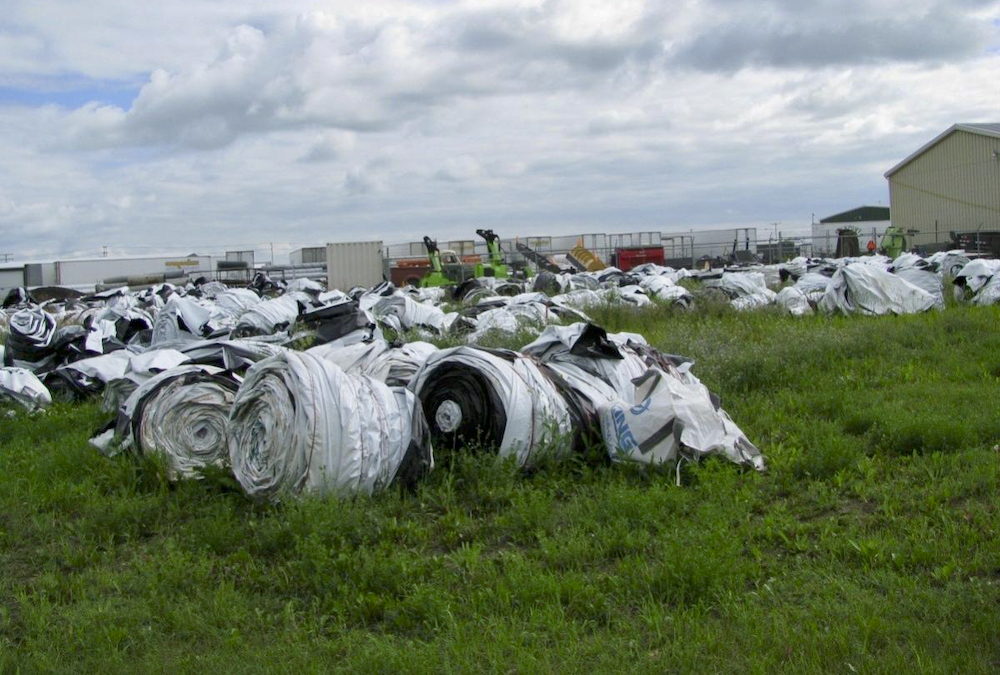
Cleanfarms has even more work to do collecting agricultural plastics such as bale wrap, twine and silage covers.
Of the 62,000 tonnes of ag plastics generated each year Cleanfarms collects just 10 per cent of it.
“If fully loaded in 53-foot trailers… that convoy would be longer than 65 kilometres without any space between the trucks,” Friesen said. “So that’s a lot of plastic.
“(W)e have a zero plastic waste to landfill goal here.”
As the meeting concluded Dyck said it was a great learning experience. Students learned they could get involved, latch on to an issue and make a difference, he said. He also said he and the students learned about Cleanfarms and its work, the work of the media, and the students helped raise awareness of an important issue.
“There are lots of things here good to come out of this,” he said.
“I think this has been a really good experience from my perspective to show that ag policy really does work in some instances.”