A Winkler-area feedlot has found success cleaning up cull potatoes and will soon be adding ‘pea cream,’ a Roquette waste product, to its ration.
“The economics of it just work out,” said Herman Peters, nutrition manager for Birkland Farms. “It’s been a good little trade for us.”
Read Also
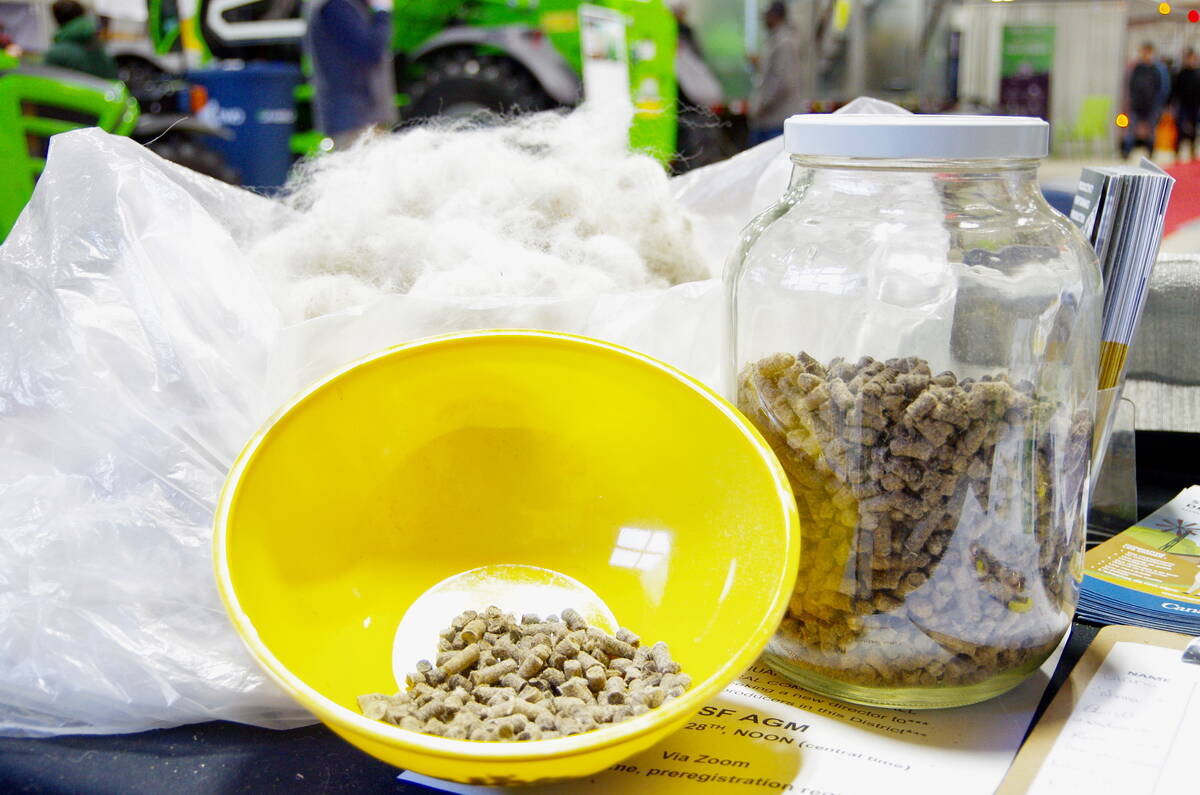
Wool pellets open new markets for Manitoba sheep farmers
Pellets from waste wool may offer new revenue for sheep farmers and a sustainable soil amendment and fertilizer for horticulture.
Why it matters: Food waste can save producers money and help eliminate waste and excess pollution, creating a true win win.
Peters joined researchers Kim Ominski and Tim McAllister on a panel discussion about food waste and livestock operations during a University of Manitoba webinar on February 1.
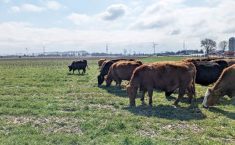
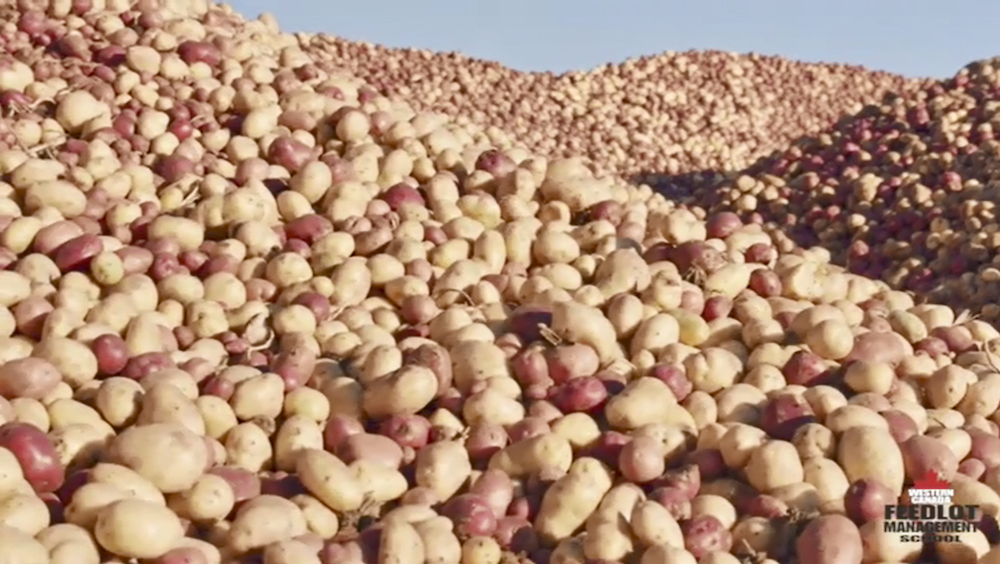
Between a video and live discussion, Peters described how the farm gets waste potatoes from Winkler facilities — spuds that are not the right size or quality for the grocery store.
“We see it as an energy source,” he said in the video presentation. “If you wanted to compare it to another grain it would be similar to barley.”

On a dry matter basis, feeder cattle at Birkland get between 20 and 40 per cent potatoes in their ration. Potatoes are broken with a roller-mill to prevent choking and to help keep cattle from ignoring the rest of their feed.
“They look at potatoes as candy,” Peters said.
Because cattle like potatoes, farm workers drop rations twice or three times per feeding. This way animals that make it to the bunk late still get a shot at the spuds.
Potatoes for cattle is hardly novel, but soon Birkland will begin feeding a new byproduct — pea cream from the Portage la Prairie pea processor Roquette, Peters said.
Pea cream is a liquid product “obtained from the wet refining of yellow peas following the extraction of the starch and protein fractions,” Roquette’s website says.
As of Feb. 1, Birkland had received one load of pea cream, Peters said. They’re waiting until they have a steady supply before they begin feeding it full time.
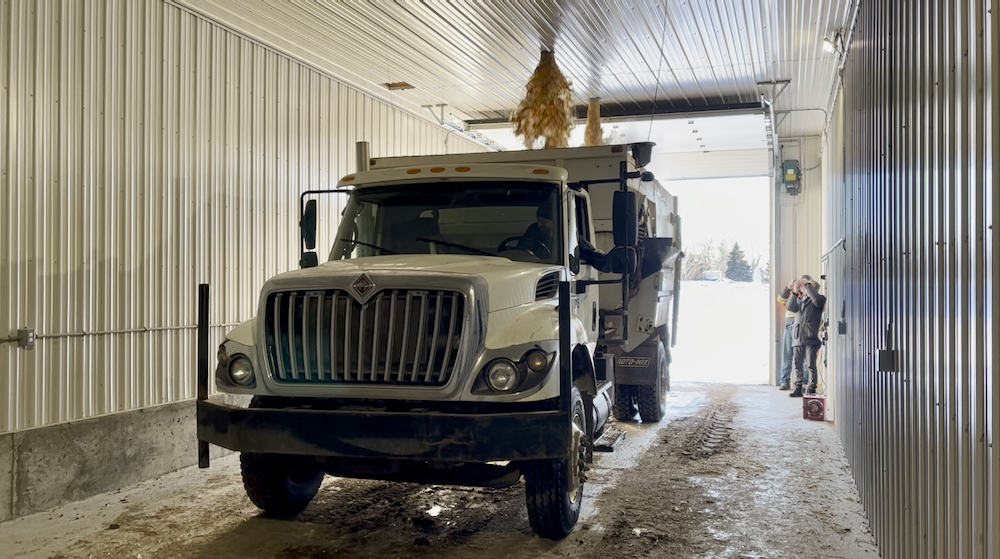
The farm has a two-year contract with Roquette and will get pea cream year round, Peters said. This required building a storage building for the cream. Roquette provided an initial sample for testing and also gives them data like the dry matter content and pH of the cream.
The cream is hot when it arrives — about 50 C, Peters said.
“It’s going to be nice in winter,” he said.
They fed it once to cattle to see how cattle reacted. They didn’t seem to notice much, said Peters.
“Palatability should be there,” he said.
The pea cream is high in protein, Peters added. He said they’re currently running a 42 per cent protein supplement. Since the cream is 23 per cent protein, they’ll be able to reduce protein supplementation significantly.
Peters said he regularly tests his feed for nutrient content.
“We’re not talking about producers randomly throwing things into the diet here. This is very calculated,” Tim McAllister reminded the online audience. McAllister is a researcher with Agriculture and Agri-Food Canada.
Using food waste in animal diets addresses waste management, food security, and resource and environmental challenges, wrote McAllister, Ominski and colleagues in a paper published in Animal Frontiers in March 2021.
“Livestock as ‘upcyclers’ play a critical role in the solution to reducing food loss and waste, with the potential to convert inedible foods into high-quality protein,” they wrote.
There’s opportunity to include more food waste in animal diets, they added. Availability of byproduct — e.g. oat hulls, soybeans and sunflowers — will increase as demand for fractionated products (made into things like meat substitutes) increases, the paper says.
Of over 60 million metric tons (MMT) of dairy, eggs, field crops, produce, meat, seafood and sugar that entered the food system in 2016, under 26 MMT were consumed. Over 30 per cent of that was deemed avoidable food waste, the researchers wrote.
However, cleaning up this waste is not as simple as throwing it in the feed bunk.
For one, the researchers wrote, it must be economically viable to transport it. Collecting and distributing the waste is a “global challenge,” they wrote.
The CFIA also must approve products as feed before they can be used. The feed must be safe, and it must be assessed for nutrient quality.
The researchers also cautioned that “upstream” impacts on the environment, like energy, fertilizer, water use, greenhouse gases and others must also be considered when developing food waste disposal strategies.