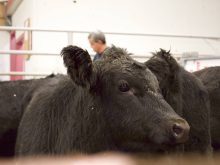

Canada is not developing new tests for the feed additive ractopamine in beef and pork exports to Russia, Agriculture Minister Gerry Ritz said on Tuesday, but is leaving shippers to take their own steps to satisfy the new Russian requirement for zero residue.
The Canada Pork International marketing group said Friday that the Canadian Food Inspection Agency has provided meat processors with testing guidelines for ractopamine, a drug used to make meat leaner.
However, a spokesman for Agriculture and Agri-Food Canada said the government is only making exporters aware of Russia’s requirements.
Read Also

Canada December retail sales down 0.4 per cent; seen up 1.5 per cent in January
Canadian retail sales decreased by 0.4 per cent in December to $70 billion on a monthly basis, led by a drop in sales at motor vehicle and parts dealers, Statistics Canada said on Friday.
"At this point, we’re making sure the Russians understand this is not science-based," Ritz said at an unrelated news conference in Winnipeg. "There is an agreement around the world that ractopamine is a safe and usable product."
Canada has asked Russia to delay its requirement into February, he said.
Russia is requiring pork and beef imported from the U.S. and Canada to be tested and certified free of ractopamine as of Dec. 7.
If Canadian exporters wish to export meat to Russia, they are responsible to test each shipment for ractopamine in an accredited laboratory, an AAFC spokesman said.
Ractopamine, approved for use in Canada since 2006, is sold to Canadian users by U.S. animal health giant Elanco, under the name Paylean 20 premix for hogs and heavy tom turkeys, and as Optaflexx 100 premix for finishing beef cattle.
Countries such as China have banned the product’s use despite scientific evidence that it is safe. The United Nations has agreed on acceptable levels of the drug.
— Rod Nickel writes for Reuters from Winnipeg. With files from AGCanada.com Network staff.