• Top Stories of 2025
  • Manitoba Ag Days
Manitoba Co-operator logo
  • Free Newsletter
  • Digital Editions
  • Subscribe
  • Home
  • News
  • Opinion
  • Markets
    • Market News
    • Market Prices
  • Crops
    • Crops Management
    • Oil Seeds
      • Canola
      • Canola Guide
      • Soybeans
      • Sunflowers
      • Flax
    • Cereals
      • Wheat
      • Barley
      • Oats
      • Corn
    • Pulses
      • Soybeans
      • Chickpeas
    • Field Crops
      • Potatoes
      • Potato Guide 2025
  • Livestock
    • Livestock Management
    • Beef cattle
    • Calf Central
    • Herd Health
    • Livestock Sales
  • Farmit
  • Weather
  • Machinery
  • AgDealer
  • Classifieds
  • Top Stories of 2025
  • Manitoba Ag Days
Maple Leaf

Proudly Canadian

  • Home
  • News
  • Opinion
  • Markets
    • Market News
    • Market Prices
  • Crops
    • Crops Management
    • Oil Seeds
      • Canola
      • Canola Guide
      • Soybeans
      • Sunflowers
      • Flax
    • Cereals
      • Wheat
      • Barley
      • Oats
      • Corn
    • Pulses
      • Soybeans
      • Chickpeas
    • Field Crops
      • Potatoes
      • Potato Guide 2025
  • Livestock
    • Livestock Management
    • Beef cattle
    • Calf Central
    • Herd Health
    • Livestock Sales
  • Farmit
  • Weather
  • Machinery
  • AgDealer
  • Classifieds
  • Free Newsletter
  • Digital Editions
  • Subscribe
X Logo
Maple Leaf

Proudly Canadian

Your Reading List

  • Shelterbelts make the landscape more resilient and sustainable

    January 30, 2013 News
  • Pallister calls for caution on cosmetic pesticide ban

    January 30, 2013 News
  • North Dakota State University develops farm fuel budget app

    January 30, 2013 Crops
  • Struthers seeks input on upcoming budget

    January 30, 2013 News
  • Tripartite agreement signed to promote nutrient management in Manitoba

    January 30, 2013 Crops

Shelterbelts make the landscape more resilient and sustainable

By 
Louise Bellet
Reading Time: 2 minutes

Published: January 30, 2013

News, Opinion

New research is exploring another crucial ecosystem function to agriculture — the role shelterbelts play 
in maintaining soil fertility by sustaining soil biological activity

Scientists and environmental agencies inform us that agriculture on the prairie, like in most parts of the world, is becoming more vulnerable as climate changes, energy cost rises and natural resources including organic matter and biodiversity are depleted.

This increased vulnerability not only threatens food security at a global scale (the Canadian Prairies contributes to 20 per cent of international wheat trade), but also the mere survival of Prairie communities. Besides reducing contribution to climate change and natural resources depletion, sustainable development experts urge rural communities to heighten agro-systems robustness and adaptability to climate changes “undesirable effects” (intensified weather variability, increased drought frequency, lower water storage capacity, and changes in precipitation patterns).

ADVERTISEMENT

Read Also

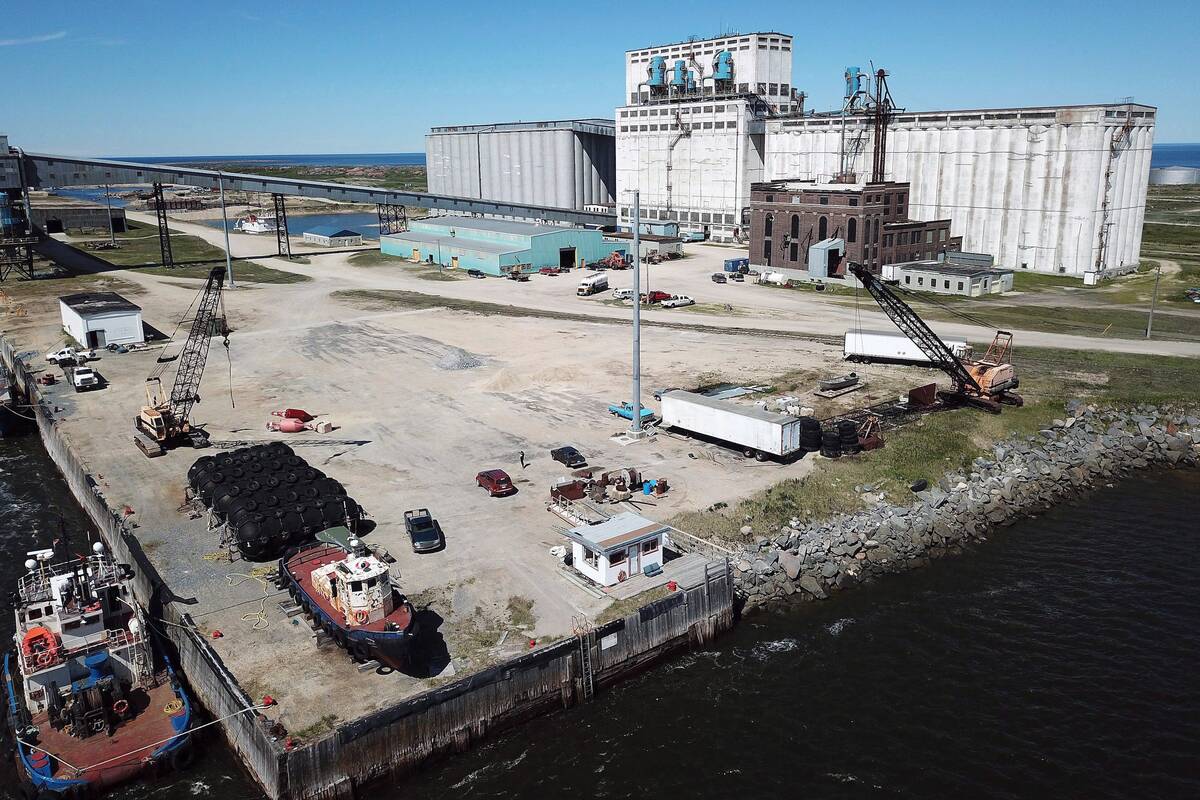
The Port of Churchill as seen in 2018. The port and surrounding railway have since been the subject of significant investment for improvement. The Port of Churchill as seen in 2018. The port and surrounding railway have since been the subject of significant investment for improvement. Photo: John Woods/The Canadian Press via ZUMA Press/Reuters

Making way for Port of Churchill expansion

Rail car limits, climate research and marine planning will determine if the Port of Churchill actually can grow beyond its four-month shipping season into year-round trade.

Long-term research in sustainable agriculture proves that trees in the agro-landscape help agriculture productivity and increase resilience to climate change. Judiciously chosen species of trees can contribute to farm total production (fruit, timber, energy, medicine) while fulfilling ecosystem services for crop production (windbreak, nutrient cycling, microclimate, moisture, and habitat for beneficial insects).

New research is exploring another crucial ecosystem function to agriculture — the role shelterbelts play in maintaining soil fertility by sustaining soil biological activity.

ADVERTISEMENT

Despite these staggering benefits, many farmers decide to eradicate trees from their operation. Today, more shelterbelts are being removed than planted, and combined with aging trees, one can question the future of agro-landscapes.

ADVERTISEMENT

Many reasons drive farmers to give up on shelterbelts, the main reason being that the short-term cost-benefit ratio is not always in favour of trees. Farmers’ values and perception of trees reflect a change in farming practices, structure and local knowledge. Shelterbelts are often seen as part of traditional agriculture, but can very well be designed for and adapted to modern agriculture.

Shelterbelts not only provide economic benefits for agriculture production, but also provide services to the ecosystem and therefore to the rural society. Too often the community and politics underappreciate the importance of ecosystem functions and processes in society’s social and economic well-being. Conserving fertile soil, protecting water quality, enhancing air movement and biological connectivity in the landscape, reducing energy bills while capturing carbon, but also recreation opportunities, esthetic, bird-watching and the solely cultural identity of a community are few examples of shelterbelts’ multi-functionality. One might call it the backbone of Prairie rural communities’ resilience and sustainability.

Shelterbelt adoption and management faces several issues. Besides the lack of knowledge in shelterbelts possible designs, functions and benefits, there is most of all a problem of valuation between private and public costs benefits. If shelterbelts do not provide sufficient financial benefits to offset farmers’ implementation and maintenance costs, are the social and ecological benefits to society significant enough to justify an intervention from the public authority to remunerate or compensate farmers for the stewardship of these public benefits?

Conflicts between utilitarian versus non-utilitarian views, as well as production, conservation, recreation and cultural goals are expected. Nevertheless these conflicting values and goals ought to be explored in order to develop a shared vision that responds to the population wishes and needs while ensuring its sustainability. This should not be based on short-term economic return but long-term community health.

A survey is presently underway in the Rural Municipality of Stanley to determine farming and non-farming local knowledge, perceived benefits and willingness to pay for shelterbelts. We are hopeful this survey will help local farmers, natural resources managers and rural planners make informed decisions about shelterbelt management in the face of climate change.


Newsletter Sign Up - Receive all that Manitoba Co-operator has to offer

Crops, markets, industry and policy, livestock production news and information—delivered to your inbox 6 days a week!

Consent
This field is for validation purposes and should be left unchanged.

ADVERTISEMENT

Related Coverage

Recycling stamp printed on cardboard box. Recycle symbol, arrows, recyclable materials, environmental protection and earth safe concept. Photo: Arkadiusz Warguła/GettyImages

News, Sustainability

Food packaging pressed after court backs plastics regulation

A displaced woman from Dalanj braids her grandmother's hair at a displacement registration center in El Obeid, North Kordofan State, Sudan, January 15, 2026. REUTERS/El Tayeb Siddig

News, food security

Global humanitarian aid slashed by one-third

Dragon's Den star Arlene Dickinson. PHOTO: AGDAYS.COM

News, food security, Sustainability

Manitoba Ag Days plans star-studded speaker lineup

The historic facade of what is planned to be the Prairie Innovation Centre for Sustainable Agriculture at Assiniboine College in Brandon, Man., May 27, 2025. Photo: Greg Berg

News, Sustainability

New ranking elevates Assiniboine College to national research elite

oats and flax intercrop. Photo: Janelle Rudolph

News, Sustainability

PepsiCo nearly doubles regenerative scope

Rob Wunder at Ag in Motion 2024. Photo: Lisa Guenther

News, Sustainability

Three paths of regenerative agriculture

explore

Stories from our other publications

  • Grainews

    Mahindra moving forward with new tractors, post-split

    machinery

    Mahindra moving forward with new tractors, post-split

  • The Western Producer

    AGT Foods goes public in bid to scale business

    crop management

    AGT Foods goes public in bid to scale business

  • The Western Producer

    Farmers of North America attempts another run at AgraCity assets

    crop management

    Farmers of North America attempts another run at AgraCity assets

  • Farmtario

    Canadian drone spraying regulation changes expected in late spring

    machinery

    Canadian drone spraying regulation changes expected in late spring

GFM Network News

  • Photo: Ulysse Pixel/Getty Images Plus

    Canadian Agricultural HR Council gets federal funds for workforce development tools

    13 hours ago
  • Twenty agriculture groups say AAFC research cuts, which included over 600 staff and seven research stations , were made without consultation with farm groups or proper cost-benefit analysis. Photo: File

    Farm groups call on agriculture minister to pause federal research cuts

    13 hours ago
  • Feed grains weekly: Prices bump up

    15 hours ago
More News →

AgCanadaTV

AgCanadaTV: In case you missed it; your national ag news recap for March 6, 2026

Sponsored by:
More Videos →

Cyber-Savvy Farmer

Glacier Farmmedia Podcast

Latest Market News

More Market News →
flag
Signup to our Newsletter
  • News & Opinion
  • Crops
  • Livestock
  • Markets
  • Farmit
  • Video
  • Digital Editions
  • Classifieds
  • Subscriptions
  • About
  • Contact Us
  • Advertise

Terms and Conditions | Privacy Policy | © 2026, Glacier FarmMedia Limited Partnership