
Yearlings are like early teens — they can be physically mature, but they still have plenty of maturing to do.

What to do for a yearling?

Horse Health: They’re often pressured into growing up too soon which is a husbandry error

As the equine version of an early teenager, the yearling is a bit of a peculiarity within the modern-day horse world. Yearlings generally appear and act physically ungainly, have a naive mindset and are often emotionally raw. For these reasons a pressure and haste is often placed upon the yearling to be more than it



(Photo courtesy Canada Beef Inc.)

Klassen: Feeder cattle market recovers

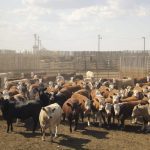
Compared to last week, western Canadian yearling markets traded $4-$6 higher on average; some packages in Alberta sold $8 to as much as $10 above week-ago levels. Larger feedlot operations were very aggressive on 750- to 900-pounders. The quality of yearlings is excellent at this time of year. Comments from the front row suggest most

(Photo courtesy Canada Beef Inc.)

Klassen: Feeder prices ratchet higher

Compared to last week, western Canadian yearling markets traded $3-$5 higher on average; however, there were a few feature sales quoted $8 to as much as $10 above week-ago levels. Finishing feedlots were fairly aggressive on backgrounded cattle, which was the main source of yearlings last week. Early grassers are starting to come on the


CME May 2019 feeder cattle with Bollinger (20,2) bands, a gauge of market volatility. (Barchart)

Klassen: Feeder market incorporates risk premium following U.S. floods

Compared to the previous week, western Canadian feeder cattle sold steady to $4 higher the week ending March 23. Favourable spring weather enhanced demand for yearlings from major finishing operations; Lethbridge-area markets were notably $3-$5 higher as feedlots focused on local cattle. While feeding margins remain in negative territory, strength in the deferred live cattle

(Photo courtesy Canada Beef Inc.)

Klassen: Feeder market sends mixed signals

Compared to last week, western Canadian yearling markets were steady to $4 lower while calves were steady to $2 higher. Barley prices have jumped $3-$6 per tonne over the past week, with winter conditions hindering off-farm logistics. Alberta packers were buying fed cattle in the range of $149-$150 last week; however, in Nebraska, fed cattle