soil

Editorial: They brought in plows?

When a consortium of Canadian non-government organizations funded by the Canadian government arrived in the Benishangul-Gumuz state in Western Ethiopia five years ago, their primary goal was to help smallholder farmers boost productivity and food security. They came in with “modern” farming methods. In this context, that meant oxen and plows, showing farmers how to

Irrigation on a farm in Ethiopia

Delivering the water of life

Cash crops often replace food crops in farming

It was almost 30 years ago, but the engineer who brought water to Bila remembers well the people’s plight prior to irrigation. Many were refugees who had been repatriated after the Ethiopia-Somalian war. They were given a piece of canvas for shelter, a shovel, pickaxe, a goat and a cart — and told to start over.


A woman sells chat in the village market in Bila.

The gift of water 28 years later

Bila farmers are producing wealth thanks to small-scale irrigation, but who is reaping the rewards?

The old man’s eyes grew teary when he was asked to remember what it was like before the water came. “There was a drought,” Ahmed Sahle Ahmed said through an interpreter as he sat on a floor mat in the family’s home. “We were having problems, we had no food.” That was in the early

African family

Project shows link between healthy soils and healthy people

A unique project is improving nutrition and incomes through better farming practices

A little yellow seed is sprouting big changes for farming families here in the Great Rift Valley, within reach of the Hawassa University extension services. Chickpeas grown as a double crop after maize are boosting families’ nutrition, providing extra income and helping improve the soils. Farmers here have traditionally grown one crop of maize, tef


Betty Tembo

Increasing food security and nutrition

More families are eating better food more often

Who would have thought cooking could be so tasty — oh, and nutritious too? As we sat in the shade of a tree outside the Tiyanjane Co-op Society Ltd., members of the cooking subgroup explained through an interpreter how they once looked upon soybeans as a cash crop, not something they could eat. Now they

young African girl

In Zambia, investing in farmers keeps kids in school

Families who see improved yields under conservation agriculture use the extra income to pay school fees

Juliette, the eldest daughter of Olipa Tembo and her husband Dickson Nkata, came home from school early one day. She was crying. The child, who would have been about eight at the time, had walked the four kilometres to the local school, only to have the teacher promptly send her home again. The family had


maize field in Malawi

Mulch, mice and ‘the man problem’ hold up CA adoption

Women are interested in producing food while men are more interested in growing cash crops using conventional methods

After three years of producing maize using conservation agriculture, Nkasauka Nthala is a convert. The yields from her tiny .16-hectare plot of maize grown using direct seeding instead of hoeing were 166 per cent above the yields of maize grown under conventional practices. Yet only a small portion of the farm she shares with her

man in corn field

Grow less maize and produce more food

Boosting yield allows seeding less maize as ‘insurance,’ and adding more profitable and nutritious crops to the rotation

Christian Thierfelder strides into a plot of maize, reaches down, and scratches through the mulch with his fingers to grab a clump of soil. Holding it up, the senior agronomist with CIMMYT’s Harare field station lets it crumble through his fingers — it is moist but not muddy, and the decaying plant material gives it


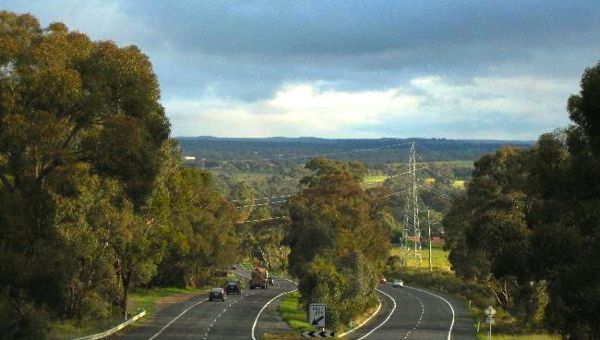
Australian countryside near Bendigo, northwest of Melbourne. (CIA.gov)

Australia tightens rules over foreign buying of farmland

Sydney | Reuters –– Australia tightened rules on Wednesday over foreign ownership of its agricultural land amid concerns that it is losing control of its own food security, slashing the amount beyond which land purchases would require regulatory approval. From March 1, foreign purchases of agricultural land over A$15 million (C$14.51 million) will be subject

soil profile of farmland

Dirt’s big year

The FAO has designated 2015 as the International Year of Soil

Last year may have been a lot of things to a lot of people but one thing it surely wasn’t was predictable. I mean who foresaw last year’s record-setting high in the U.S. stock market, the plunge in global crude oil prices, Russia’s naked grab of Ukraine’s sovereign territory or the Obama administration’s reaching out