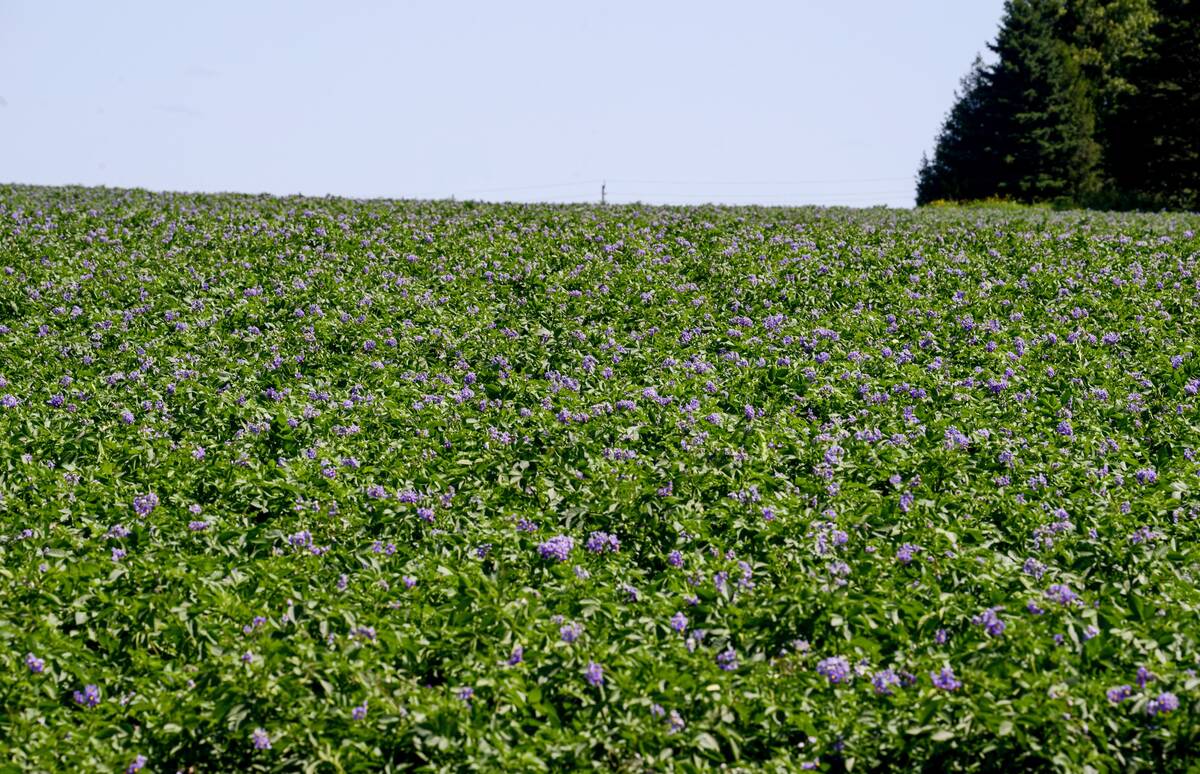
Despite perfect conditions, proactive prevention strategies by producers put the brakes on a potential late blight epidemic. “We had so much rain, some cooler temperature, and that makes late blight explode,” said Dr. Eugenia Banks, Ontario Potato Board potato specialist and researcher. “(This year) is a lot better than last year.”
In 2023, rain hindered producers’ efforts to spray for late blight, leading to a late blight outbreak. While Ontario struggled to get the fungal disease under control over the last few seasons, droughty conditions and extensive tracking in the western provinces have saved fungicide costs and kept them late blight-free in recent years.
Banks said eastern Canadian producers were ready in 2024 with proactive management plans.
Read Also

Reaction rolls in on Health Canada dicamba restriction proposal
Spray expert says proposed dicamba rule change would ban ‘over the top’ use of the herbicide
Forgoing spore traps for more accurate field inspections, Dr. Peter Vander Zaag, Sunrise Potato Systems Institute president, said growers opted for preventative treatments using predominately Orondis fungicide with phosphorus acid to mitigate late blight potential this season. Banks said specific and broad-spectrum fungicides help avoid resistance while effectively eradicating late blight lesions in about a week.
“When the late blight came, we used Ridomil Gold wherever it was to kill it,” said Vander Zaag, adding his sample harvest showed healthy tubers and a decent yield.
Good yields will be essential this season to help offset the skyrocketing cost of fungicide applications this year.
“Our irrigation cost is down, but spray is way up. We’re out of pocket,” he said. Stack on the impact of the U.S.-Canadian dollar exchange, high interest rates, and costly equipment, it’s tricky for producers to cultivate a solid financial position.
“What we sell hasn’t gone up the way it should have,” Vander Zaag explained. “Not to complain, everybody has to make ends meet, but we have to make money too.” Banks said producers must remain vigilant about storage issues like fusarium dry rot and soft rot when harvesting too-warm tubers.
“Today, you couldn’t harvest the crop,” Banks said during the Ontario Potato Field Day and Trade show. “It’s too hot, and these other pathogens could penetrate the tubers – then storage would be a nightmare.”
Growers must harvest early in the morning when temperatures are below 16 Celsius to ensure cooler tuber flesh, especially if the skin hasn’t set yet. Vander Zaag is cautiously optimistic but remains vigilant about detecting pathogens, particularly Erwinia bacteria, which could rot late blight-affected potatoes in storage, narrowing the window to get friable stock to market. “Generally (once in storage), the whole process of harvesting is so much shock that the starch turns back to sugar,” he explained. “It takes a while to burn that sugar off, so it will fry.”
Last year, he said warm temperatures led to a failed “sniff test” on late blight potatoes after two weeks in storage, but he managed to sell them in November.
The view from the west
“We never let our guard down. We’ve got a very expansive spore trapping network set up out here in the province (Alberta) to track it,” explained Terence Hochstein, Potato Growers of Alberta executive director. “Any early indication of a spore, we’re all over.” It’s difficult to compare the risk in the two provinces because where Ontario has high humidity, Alberta is semi-arid, with irrigation required in the south and summer nights dipping to 15 to 16 degrees Celsius before rising in the day. 00“We’ve got a massively huge, expensive monitoring program, and it’s paid for itself in spades. That said, next year, we could have a blow-up,” Hochstein said. “We’ve had it in years past when it’s been wet and with different strains, and it’s been devastating.” He said for the last dozen years, Alberta growers have benefited from a Burkard air sampler system to track the fungal disease’s spores, pulling vials daily for testing with excellent results. If spore counts indicate a problem, the producer will disc the affected area immediately to prevent a costly outbreak, explained Hochstein. While some producers pre-emptively spray twice a season, he said that effective spore tracking has saved millions in fungicide costs and prevented 1,000s of kilograms of active ingredients from entering the atmosphere. In addition to tracking late and early blight and other potential diseases, their insect monitoring program scouts for potato psyllids and other pests that could harm their seed industry.
“I know Manitoba fights the Colorado Potato Beetle; we don’t have them here,” Hochstein shared. “I don’t know why, but we don’t.”