Canada seems to have entered a new paradigm of energy consciousness.
While we want to become more energy independent and provide local markets for Canadian oil, gas and electricity, we are also well aware of the problems that arise from climate change. As we rethink our policies, we need to consider all options and look for solutions in “unconventional” places.
Much has been written about energy use for transportation, building heating and cooling, artificial intelligence, et cetera, but consider agriculture, an industry based on a renewable energy model.
Read Also
Farm sustainability means farmer wellness too
University of Manitoba LEAP program wants to talk farm succession, self-efficacy and community supports as part of agriculture wellness and sustainability study.
Farmers grow crops that harvest “free” energy from the sun and convert it into human useable energy: food.
Of course, it takes some fossil fuel and electrical energy to help this process along, such as building and powering farm machinery and manufacturing fertilizer and other crop and animal production inputs.
Scientists measure energy in megajoules (MJ). One MJ roughly equals 35 millilitres of gasoline, about the size of a container that holds the sauce for take-out orders.
The average Manitoba grain farmer uses about 7,000 to 9,000 MJ of fossil fuel energy per hectare to produce about 70,000 to 100,000 MJ of food energy, roughly similar to other Canadian grain farms.
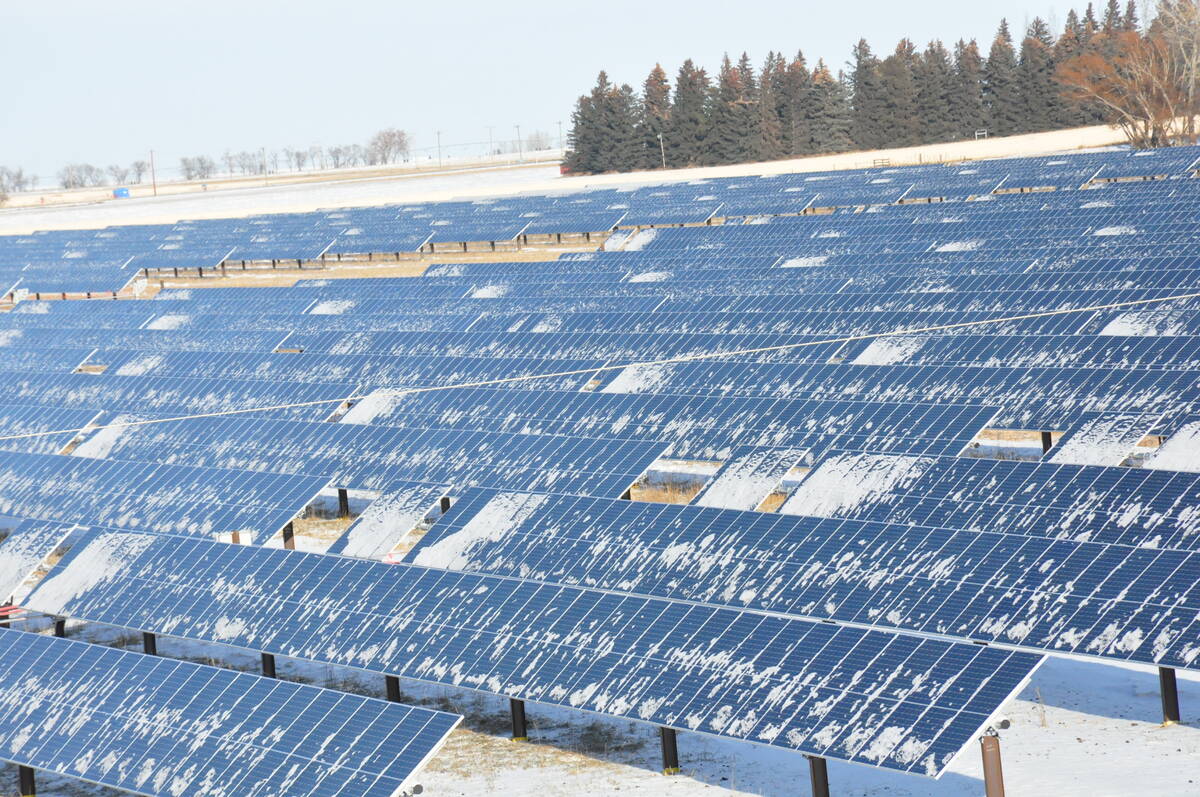
Grain production in Canada has an energy efficiency of about 10:1 — 10 parts of food energy for every one part invested. This is about the same energy efficiency as wind and solar energy.
And the efficiency of farming in Manitoba and indeed all of Canada is increasing.
One area where Prairie farmers have saved energy is the amount of soil tillage. The bigger challenge, however, is fertilizer.
Nitrogen fertilizer represents almost half of all fossil fuel energy used in growing crops because nitrogen, which makes up about 78 per cent of the atmosphere, is created using extreme heat and pressure.
However, even though nitrogen fertilizer use has increased in the past two decades, the amount of food energy that farmers produce for each unit of fertilizer has increased by about 30 per cent.
When smart livestock integration and practices learned from organic farmers are added, the nitrogen use efficiency of wheat, canola, soybean, oats and other crops can more than double.
However, once the grain leaves the farm, transportation and processing consume large amounts of fossil fuel energy. This means that food products on grocery shelves are no longer the models of energy efficiency they were when the farmer shipped them to market.
Even our food preparation takes energy.
For example, toasting a slice of bread with your average countertop toaster takes about the same energy as it took a farmer to produce that slice.
How can we maintain fossil fuel energy efficiency from the farm to our dinner plates? How can we honour Canadian farmers by not squandering the high level of energy efficiency of the bounty they produce?
The answer lies not with unproven carbon capture schemes or drilling for more oil but rather renewable energy sources that include wind, solar and tidal to get food products to the finish line — our dinner tables.
By linking renewable energy sources for transport, processing and refrigeration, the rest of the food system can maintain a positive energy balance of our food.
This choice would also help fight climate change because each MJ of fossil fuel energy that we do not release into the atmosphere means less carbon and hence less warming.
So, as the greater society rethinks energy use and tries to adopt wiser practices, agriculture can provide a useful guide. Let’s give farmers the credit they deserve and build on their accomplishments.
Martin Entz, PhD, leads the Jarsislowky Chair in Natural Systems Agriculture for
Climate Solutions at the University of Manitoba’s plant science department.