A year ago, I predicted that 2025 would be filled with global uncertainty that disrupted markets. I was hoping that this forecast would be proven wrong, but unfortunately it was not.
Our neighbour to the south is focused on “America First.” United States policies are moving away from supporting free and open trade. Canadian agriculture faced a short period of tariffs, but ultimately was protected by the Canada-U.S.-Mexico Agreement (CUSMA).
However, we don’t know if this will continue until the end of 2026 as CUSMA is up for review. This is the most important policy file for the 90 per cent of Canadian farmers who depend on the international markets. The agreement will either be extended to 2032, put into a cycle of annual reviews or terminated. The outcome of the review will determine the fiscal sustainability of many farms across Canada, including Manitoba.
Read Also
Canada’s crop breeding system needs farmer-led evolution, not just preservation
The pressures facing Canada’s crop breeding system are structural, not cyclical. Darcy Pawlik argues farmer ownership is the path forward.
Tariffs are a threat, but they are not the only protectionist measures faced by farmers and food processors. The revival of country-of-origin labelling in the U.S. and individual state legislation (such as Proposition 12 in California) that’s fragmenting the North American market are just two other examples of protectionist policies threatening Canadian agriculture and food exports.
Uncertainty in world trade is costly for both Manitoba farmers and processors. Unfortunately, this uncertainty will remain throughout 2026 and will likely intensify during the review of CUSMA. Securing the North American market, offsetting the cost of trade uncertainty, and trade diversification need to be at the top of the policy list for all governments in 2026.
Food and agriculture need to be top of mind at every Canadian negotiating table in 2026. Canadian governments and negotiators need to be continuously reminded that food and beverage processing is the largest manufacturing sector in Canada with sales worth about $175 billion. The sector accounts for over 20 per cent of total manufacturing sales.
Meat products comprise the largest proportion of the food manufacturing sector in both Manitoba and Canada. If agriculture and food are left behind in trade discussions, livelihoods in every region of Manitoba will be significantly impacted.
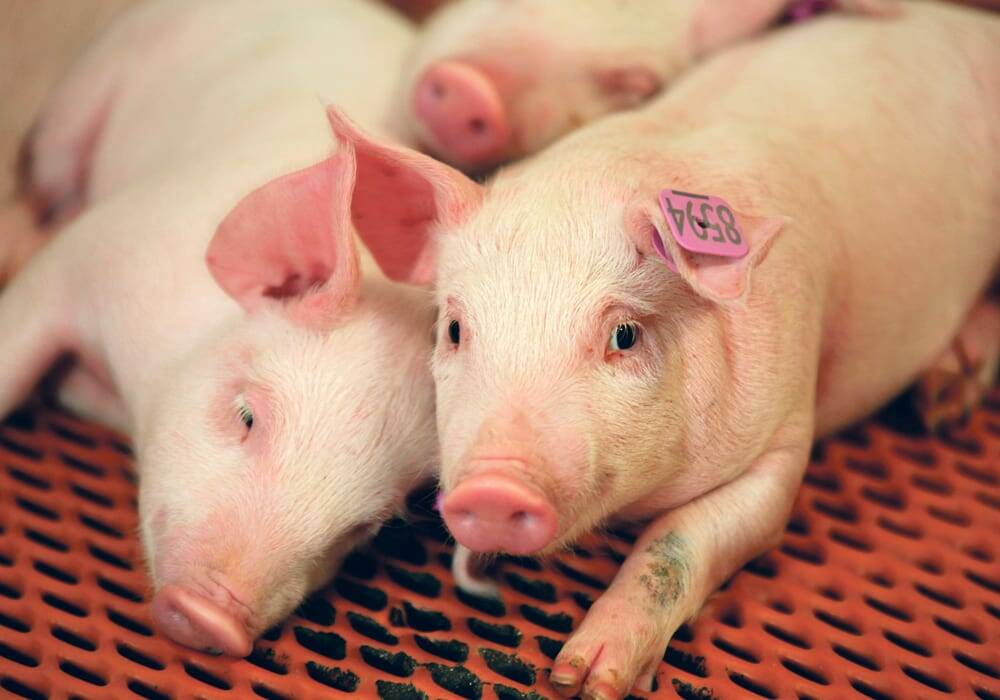
Manitoba hog farmers continue to be world leaders in disease prevention and management. The entire sector has recognized the need to work together to effectively protect the health of animals under our care. Sometimes this means that parts of the value chain take actions that are not in their short-term fiscal interest but will deliver long-term benefits to the entire sector. This level of collaboration is not often found in other countries or regions. Manitoba’s pork sector should be congratulated for this accomplishment.
Working with the entire value chain to prevent and mitigate disease impacts is a key priority for Manitoba hog farmers in 2026. This includes preventing diseases like porcine reproductive and respiratory syndrome and porcine epidemic diarrhea virus where possible, and limiting their spread when it is not. We are also working with processors, veterinarians, transport companies and Manitoba’s Office of the Chief Veterinarian to keep foreign animal diseases like foot and mouth disease and African swine fever out of Manitoba. Again, collaboration is the key factor in developing effective disease prevention and response plans.
On the economic front, 2025 was a profitable year across the hog sector. Profitability is being driven by strong pork demand around the world, relatively affordable pork prices for consumers — especially when compared to beef — disease pressures in other pork producing regions and reasonable feed costs.
I expect profitable conditions to continue into 2026, at least for the first half of the year. Profitability in the second half of 2026 will depend in large part on the world trade situation.
Given current profitability, 2026 should be a year of renewal and growth for Manitoba’s hog sector, but investing in the future is difficult when markets and trade patterns remain uncertain. Financing barns with a 25-year lifespan becomes more costly and difficult with growing uncertainty. Manitoba’s Economic Development Plan recognizes the impact of international uncertainty on the province’s investment climate and recognizes the need to reduce our reliance on trade with the U.S.
A priority for 2026 will be to develop ways to partner with government and industry to offset some of these financial risks and costs to facilitate industry renewal.
In some ways, 2026 will likely look a lot like 2025. We will continue to see significant trade and market uncertainty, with the potential to see this uncertainty increase going into the CUSMA review. Positive profitability should continue, based on strong demand, disease pressure in other jurisdictions, and manageable feed costs. The question at the end of 2026 will be whether the potential negatives coming from the political environment outweighed the natural potential positives of the market.
Cam Dahl is the general manager of the Manitoba Pork Council.