OTTAWA — The Next Policy Framework could be a new opportunity for Canadian agriculture to communicate its importance and potential.
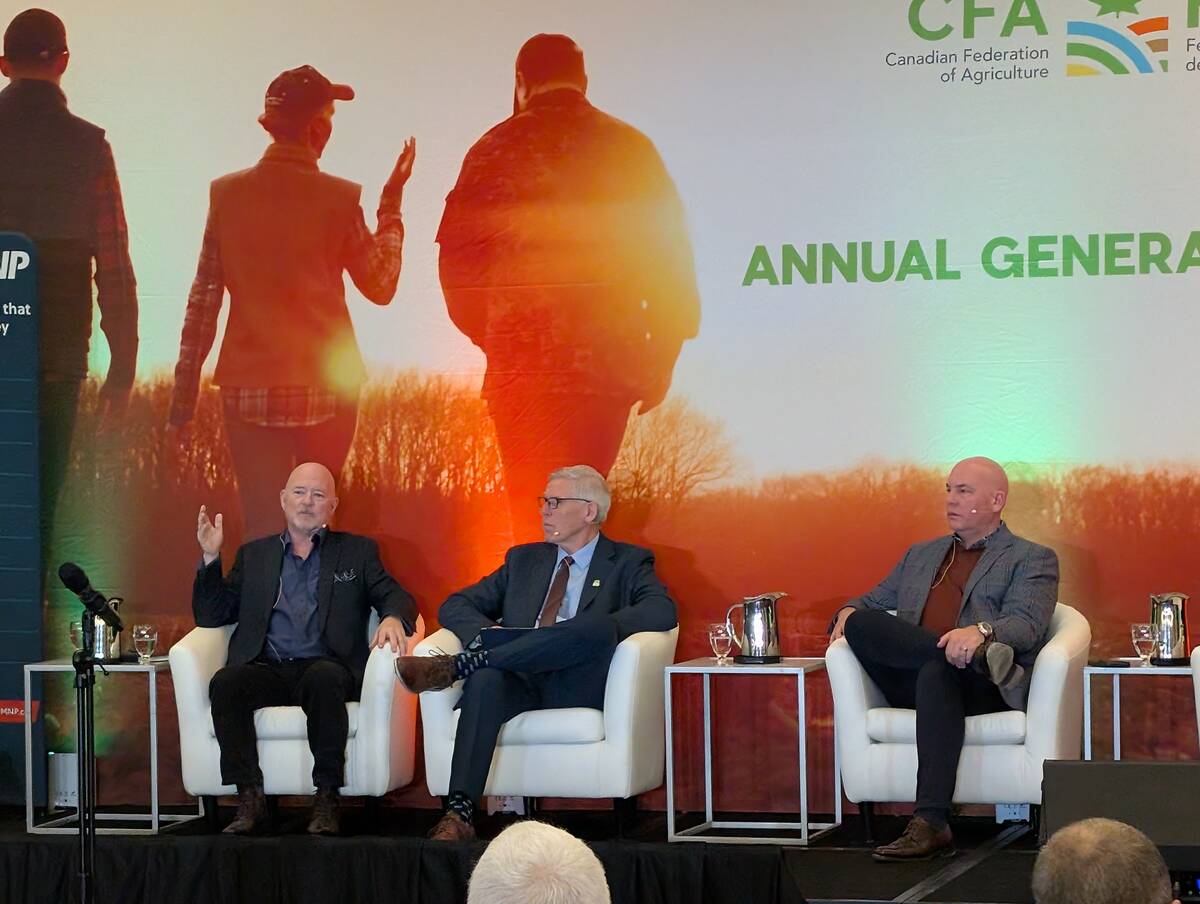
Panelists at the Canadian Federation of Agriculture’s annual general meeting in Ottawa discussed how the recently announced framework could mean a new era for agriculture’s relevance in Canada and what producers must do to get their voices heard by the government.
The NPF will succeed the current Sustainable Canadian Agricultural Partnership (SCAP) and involve negotiations with sector leaders ahead of the 2028-33 period.
Read Also
Indo-Pacific seen as potential organics market
Organic producers who want to export Canadian agrifoods should look to the Indo-Pacific region, an expert on trade in the area says.
As Greg Meredith, former deputy minister of the Ontario agriculture ministry, put it, there has never been a better time for Canadian agriculture to be framed as a growth opportunity.
He said the current government’s action on canola has suggested a renewed commitment to agricultural priorities.
“That was a really important step, from my perspective, to tell the sector, to tell me, to tell agriculture that there’s an opportunity to get back on the front bench with this government.”
He said the attention on agriculture has not always been common among governments.
“As deputy minister (for agriculture) I felt it. As deputy minister in economic development and trade, I felt it. In labour skills, immigration training and other ministries that I was deputy of, I felt it,” Meredith said.
“Agriculture was not job one.”
He also said the message of unity across government jurisdictions could help unite sector voices.
“Find the common interest and push on it,” Meredith said.
“I think this prime minister is listening.”
Stan Vander Waal, president and owner of Rainbow Greenhouses Inc., called the NPF an “opportunity for us to kind of reinvent ourselves in agriculture.”
“When our back’s against the wall, that’s often the time we get creative about how we deal with things, and that’s where I see us right now, when we look at this Next Policy Framework,” Vander Waal said.
“When I think of some of those challenges and I think of the opportunities that are up ahead, it’s like, if we face it with optimism, that’s where the opportunities really flow from.”
‘Fundamental consensus’
Part of this process will involve finding common ground between industry and government. Vander Waal said one challenge in similar discussions is agriculture’s occasional tendency to splinter and fail to present unified goals.
He said that while governments may be good at engaging different groups, in the end they will generally prioritize the one with the best chance of growth.
“They’re focused on trying to represent a big cross-section of farmers. So, what are the common objectives? When we talk about growth, that’s a common objective. We talk about profitability, that’s a common objective.”
Managing specific tactical problems are not necessarily common objectives.
Marvin Slingerland, senior vice-president of agriculture at MNP, also emphasized the importance of the agriculture sector staying unified throughout consultations.
“Find that base of common interest across all commodity groups, across all provinces and unify around that voice,” he said.
Slingerland warned that challenges can arise when many sector groups approach governments with different interests. This allows the government to pick and choose what to prioritize and then claim it is responding to stakeholders.
“Don’t get caught in that trap,” he said.
“Start off with the fundamental consensus and then lead the government where you want them to go. Governments do want to be popular and want to listen.”
Vander Waal said the agriculture sector should be prepared to make sacrifices if it wants to see new gains and ask the question of “what will we give up to get this?”
“I look at it as, we’re trying to make a deal,” he said.
“We’re trying to find (the) common ground between us and the government.”
If “the objective is growth and profitability, then let’s put on the table some of the things we’re willing to give up. Well, let’s also point out some of the things that we need to basically get us to where we need to be.”
Incentives wanted
Meredith expanded on the point by saying the discussion could go also include producers considering what they provide to the government.
“I don’t know that the conversation of engagement with2323w the government should be, ‘what can we give up and what do you give us in return?’ ” he said.
“I would start by (saying), ‘what are we giving you, besides food and feeding the gosh darn country, which is pretty important.’ There are all kinds of benefits that accrue from a healthy ag sector in this country.
“When Prime Minister Carney talks about reigniting the Canadian economy and generating growth and wealth for the country, this is a sector he should be starting with.…
“In my view, ‘what are you going to do for the government?’ is a question I think you should be posing to governments. What can we do for you if you get out of the way?”
He pointed to the current attention given to the cost of food in Canada and how farmers could help to address the issue.
“Let’s take a different perspective with governments and say, ‘let us solve these problems for you, but in return, we’ll need some other things.’ ”
Vander Waal and Slingerland both said new money allocated in the NPF should go toward advancing productivity and growth.
Vander Waal said he would like to see incentives encouraging farmers to take on new investments.
“Right now, I sometimes feel that … it’s the opposite,” he said.
Slingerland said he would encourage “a transformative tax policy to create investment,” such as the transferrable tax credits he sees in the United States.
“If you’re building a $10 million greenhouse, you might … be negative cash flow for two, three years, but you might have a $2 million investment tax credit that you can actually sell.”
National consultations on the NPF are expected to run until December 2027. The first phase of the process will be open until June 30.