A group of U.S. family farmers said March 28 it is appealing its lawsuit against Monsanto Co. to challenge the company’s patents on technologies for genetically modified seeds.
The group of organic farmers and seed dealers says its industry is at risk from Monsanto’s growing market dominance.
“Farmers are under threat. Our right to farm the way we choose, and to grow pure organic seed and healthy food on our farms for our families and for our customers is under assault,” said Maine organic seed farmer Jim Gerritsen, president of the Organic Seed Growers and Trade Association, lead plaintiff in the case.
Read Also
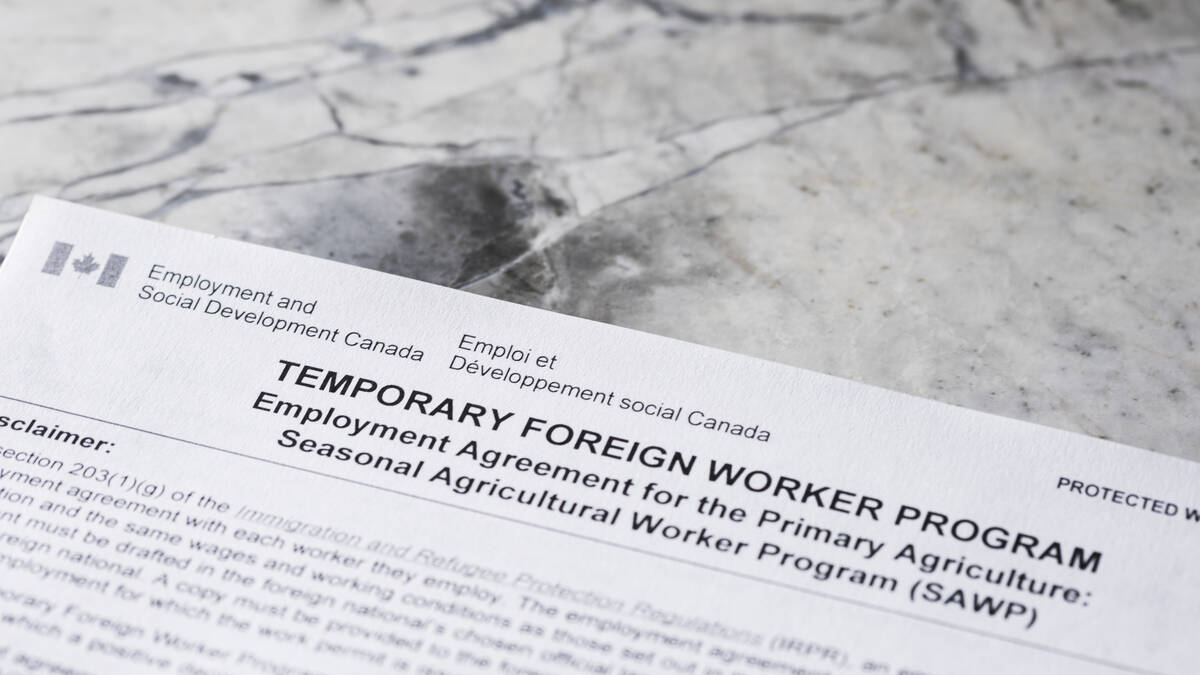
Meat sector shrugs at raised cap for rural temporary foreign workers
Federal moves to relax restrictions is unlikely to change much for agriculture or meat processing, where the real ask is permanent residency pathways.
The group sued Monsanto in March 2011. U.S. District Court Judge Naomi Buchwald, for the Southern District of New York, threw out the case last month, criticizing the groups for a “transparent effort to create a controversy where none exists.”
The group of more than 50 organizations filed its notice of appeal, seeking review by the U.S. Court of Appeals for the Federal Circuit.
The lawsuit challenges the company’s patents on its genetically modified seeds and seeks to prohibit Monsanto from suing the farmers or dealers if their organic seed becomes contaminated with Monsanto’s patented biotech seed germplasm.
Crop insurance eyed for U.S. Farm Bill cuts
washington / reuters
A federally subsidized crop insurance system seems to be everybody’s top priority for the new U.S. farm law. It also is a popular target for cuts.
President Barack Obama, Republicans in the U.S. House, and small-farm advocates separately call for cuts in the program, which has mushroomed into the most expensive part of the farm safety net. It is estimated to cost nearly $9 billion a year over the next decade.
Arguably, crop insurance is the most widely used risk management tool for U.S. farmers. They bought more than 1.1 million policies last year to cover $114 billion of production on 265 million acres, or four-fifths of U.S. cropland.
Cost of the program, roughly triple of a decade ago, soared with the popularity of policies that guarantee revenue from a crop.
That’s prompted House Republicans to call for a cap on government support while President Obama has proposed cutting $7.7 billion over 10 years.