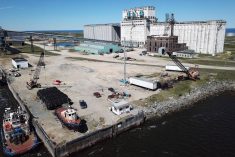
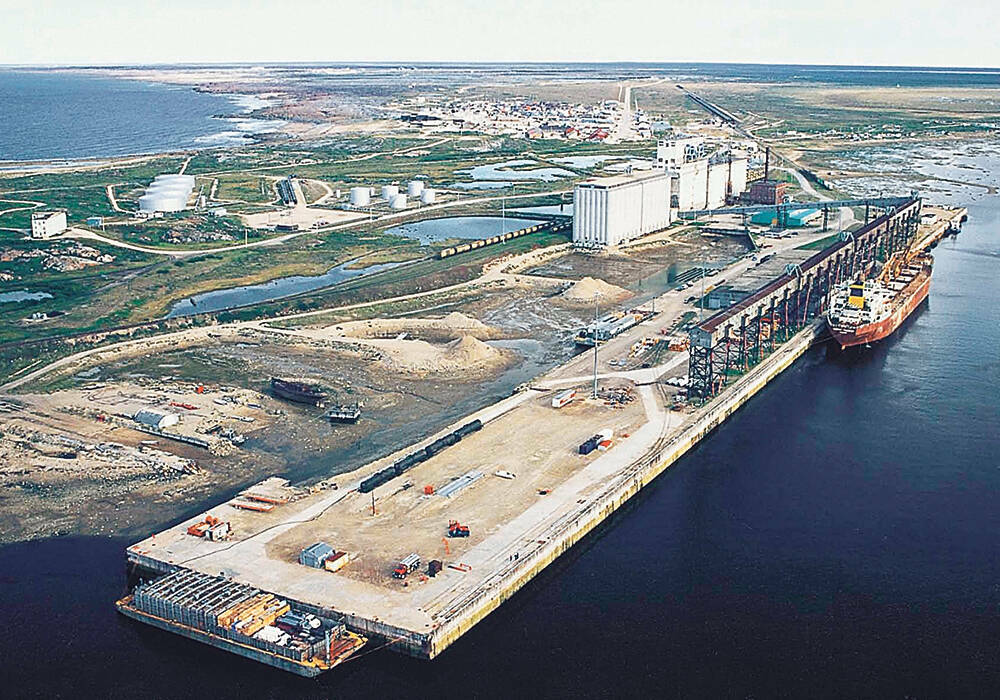
University of Manitoba researchers are investigating how many months of the year icebreakers could keep sea lanes out from the Port of Churchill open for trade.
WHY IT MATTERS: The Port of Churchill has been noted for its potential role in trade, including farm trade, but Manitoba’s seaport has also faced considerable challenges and outages.
The research is part of a mammoth retooling of the Manitoba shipping port that the federal government is calling “Port of Churchill Plus.” That blanket term includes, among other plans, year-round shipping from the port, Class 1 railway services for the Hudson Bay Railway which serves it (Churchill is the only deep-water Arctic port in Canada connected by rail) and an all-weather road to the town of Churchill.
Read Also
Meat sector shrugs at raised cap for rural temporary foreign workers
Federal moves to relax restrictions is unlikely to change much for agriculture or meat processing, where the real ask is permanent residency pathways.
The project was recently championed by Prime Minister Mark Carney as a pillar of Canada’s new trade ambitions.
The port has gotten increased public and political attention as trade tensions with major trading partners, and a corresponding push to streamline interprovincial and Canadian trade, heat up.
Chris Avery, president and chief executive officer with project developers and port owners, the Arctic Gateway Group, said that “the sea lanes right now are open for about four months of the year.”
Avery spoke at a Keystone Agriculture Producers (KAP) advisory council meeting Nov. 12.
“University of Manitoba tells us that (the sea lanes) can — without icebreakers — be open for about six months of the year already given climate change. They have their findings out already and it’s going through peer review.”
Avery said he’s seen climate change’s effect on the sea lanes a couple of times.
“I was up in Churchill on Monday — all the sea lanes are wide open,” he said. “The sea lanes on Dec. 22 were wide open from Churchill all the way up to the Hudson Strait and into the Atlantic Ocean.
“So that’s a sample size of one, but you get the idea of what’s happening with regards to climate change.”
Following peer review, Arctic Gateway — an Indigenous- and community-owned Manitoba company that owns and operates the port along with the Hudson Bay Railway — will share the results with shippers and insurance companies.
Avery said the latter has presented a potential roadblock.
“They’re working off decade-old data, so now they’ll have more data to work from given the impact of climate change,” he said.
The Royal Military College in Kingston, Ont., and Laval University in Quebec City, Que., are two other academic institutions working on the project.
“They specialize in working on permafrost and infrastructure,” said Avery.
“(There are) potentially opportunities to use Canadian icebreakers to create a sea lane … that’s open on a year-round basis.”
The Port of Churchill Plus has potential to ship a number of commodities to markets in Europe and Asia, but Avery said agricultural commodities are its “core backbone.”