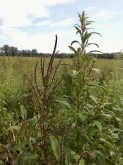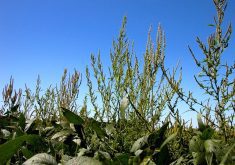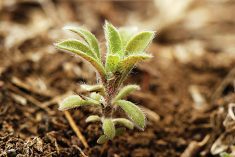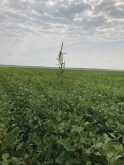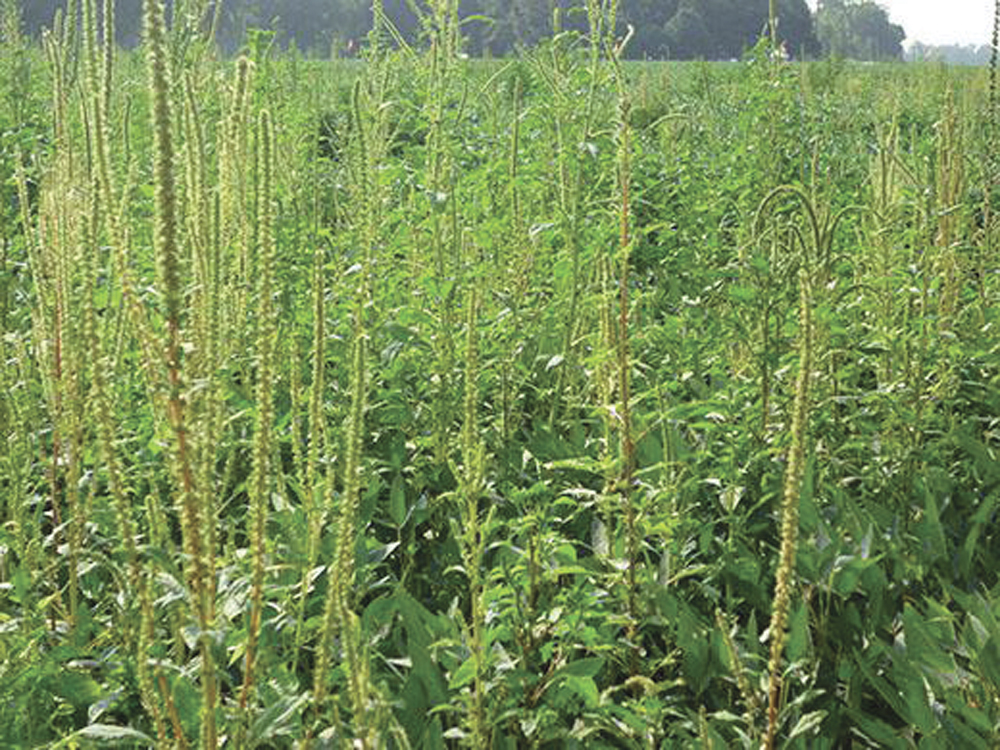
Scientists are continuing to discover just what a difficult foe the weed Palmer amaranth can be.
It can cause yield losses as high as 80 per cent for soybean growers and has already developed resistance to six classes of herbicide since its discovery in North America 100 years ago. It’s recently been found in North Dakota, likely after being brought there in conservation seeding mixes.
Now researchers at the University of Illinois say it appears to have two new tricks up its sleeves.
They were using a common test designed to screen for a common type of resistance, only to find it wasn’t present, despite field observations of resistance, said molecular weed scientist Patrick Tranel.
Read Also
MFGA praises federal government’s national soil strategy promise
Ottawa has announced plans to develop a national agricultural soil health strategy, drawing praise from Manitoba farm organizations.
“We started to suspect there was another mechanism out there,” he said.
Tranel and his colleagues decided to sequence the affected gene in plants from Tennessee and Arkansas to see if they could find additional mutations. Sure enough, they found not one, but two.
Almost all of the resistant plants tested had either the known gene deletion or one of the two new mutations, he said.
“None of the mutations were found in the sensitive plants we tested,” Tranel said.
Tranel says it is too early to say what that could mean for those plants. In fact, there is a lot left to learn about this resistance mechanism.
The team is now growing plants to use in followup experiments. Tranel hopes they will be able to determine how common the three mutations are in any given population.
“That way,” he says, “when a farmer sends us a resistant plant… we will be able to tell him how likely it is that he’s dealing with another one of these mutations.”