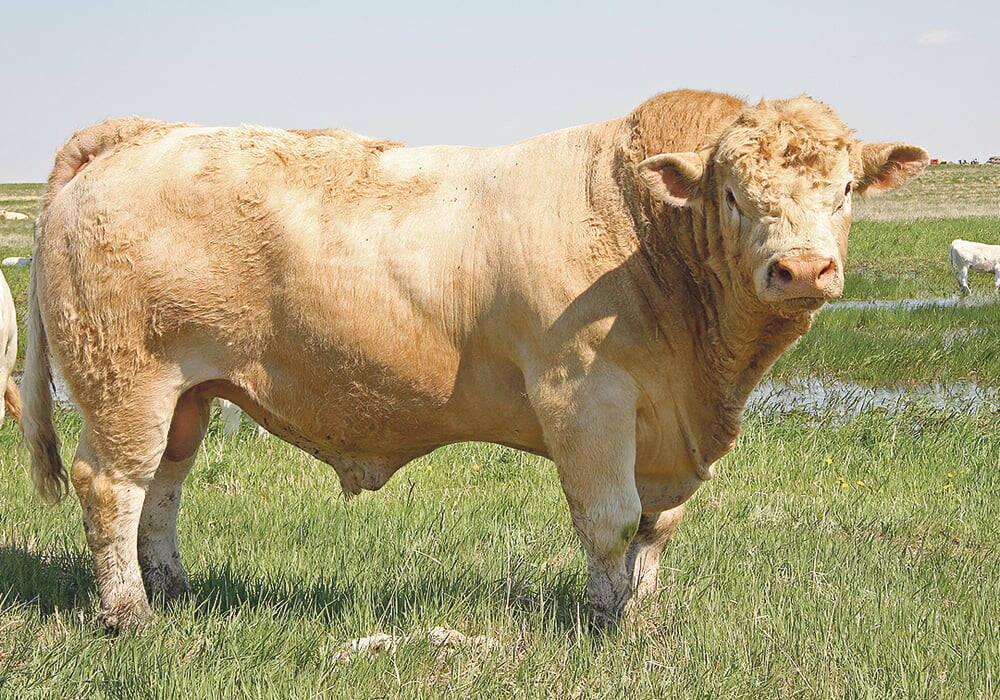
Joint research between the universities of Calgary and Lethbridge has unlocked a new understanding of sperm function, opening up possibilities for fertility in the cattle industry.
There has been a long-standing scientific belief a half-century old that sperm was in a dormant state during capacitation, using existing proteins.
However, Nehal Thakor, a molecular biologist in the U of L’s biological sciences department, Jacob Thundathil, a reproductive physiologist and veterinarian in U of C’s Faculty of Veterinary Medicine and U of C PhD student Saurabh Tiwari discovered in a transdisciplinary study that mRNA translation is activated, and new proteins are made, using bovine sperm samples in their labs.
Read Also

Neutral conditions drive 2026 weather as La Niña subsides
U.S. government meteorologist expects there will be neutral ENSO conditions for the 2026 farm growing season.
WHY IT MATTERS: Unlocking greater knowledge of male infertility across species will aid productivity, including giving women a greater chance to conceive.
Veterinarians do breeding soundness evaluations of bulls with physical examinations, measurement of scrotal circumstances and semen analysis for motility, density and morphology.
“When stem cells are producing new proteins, and their ability to produce new proteins, all those things are absolutely critical. Maybe at one point that knowledge we found could be translated to make diagnostic approaches for complementing what veterinarians are already doing. We can select better quality tools and improve fertility and thereby improving animal productivity,” said Thundathil.
“There are so many climate changes and environmental changes, all these things are happening, and at this point we don’t know how these factors are actually contributing to the ability of sperm to produce new proteins. These are the future directions that we want to go.”
Thakor gave an example of a bull producing a million motile sperm, yet during capacitation, most of them turn out to be infertile.
However, a bull that produces half as much sperm can yield many more fertile sperm in a more successful translation process.
Examining the protein-making process and identifying its markers with more successful bulls has the possibility to increase production yields.
“We should look more into molecular biomarkers of sperm to validate this further, so that we can achieve a better outcome for reproducibility of bulls,” said Thakor.
“A bull is producing so many sperm, and they may be all motile, but what if they are not able to get capacitated in the female reproductive system due to maybe a defect in translation or the protein synthesis step. If we study that further, then maybe even low-sperm producing bulls can be more fertile in comparison to a bull that produces lot of sperm based on the markers.”
Human implications
He said isolating the genes that are being activated and identifying what part of the fertility process they are responsible for opens up possibilities across species, including helping solve infertility problems in couples wanting to start a family.
Male factors contribute to approximately half of infertility cases in humans, with unexplained infertility affecting one out of three couples.
The researchers’ paper, Systematic mRNA interactome analysis reconceptualizes translational quiescence in bovine sperm, has been published in the Nature Portfolio journal and Communications Biology, a journal that only accepts novel findings.
Benefits for beef
The Canadian cattle and beef sector contributed an average of $34. 2 billion a year to the country’s gross domestic product from 2022-24, making male fertility crucial in animal breeding systems where cryopreserved semen from an elite bull is distributed worldwide to breed numerous cows through artificial insemination.
“Semen from a bull is used to inseminate thousands of cows,” said Tiwari.
“We will have the fertility data of that particular bull, so there are many indexes which categorize bulls into high fertile and low fertile. What differences exist in protein synthesis between the high and low fertile bull? Can we trace it down to anything that we use, segregating these bulls on a molecular level?
“We are trying to understand if there is a difference between the expression of the protein synthesis, between the high and low fertile bulls, and can we make something out of it so that any person can use it with a simple application.”
Fresh versus frozen sperm
The study did find an interesting difference between fresh semen and cryopreserved samples.
Protein synthesis is much higher and faster in frozen-thawed semen compared to fresh semen.
While protein synthesis remains low in fresh samples for up to four hours, many new proteins are synthesized within one hour after thawing frozen semen.
Some proteins detected after thawing frozen semen are not present in fresh semen, indicating that the process of freezing and thawing alters the protein synthesis activity of the sperm.
“What we think of is that new or different proteins are being synthesized once the semen is cryopreserved and thawed. We have to understand what are the function of these new proteins, or the proteins that are not in fresh semen, and whether some of the proteins are contributing to the fertility,” said Tiwari.
“The differential protein synthesis that I am seeing between the fresh and frozen semen, it might explain why the semen from some bulls can be cryopreserved very efficiently. That means there is something going on at the molecular level, and we are looking further into this direction.”
What comes next
An increased understanding about how different genes are activated means they could be used as biomarkers and translated to biomedical sciencesin humans as well for enhancing fertility.
“The next step is using really high-end techniques, such as ribosome profiling,” said Thakor.
“That has never been done on sperm before to see what mRNAs are being activated during the capacitation process and underlying biological mechanisms.”