A local college says biomass pellets that include cattails harvested from wetlands in the province have heated their campus through the worst of the winter.
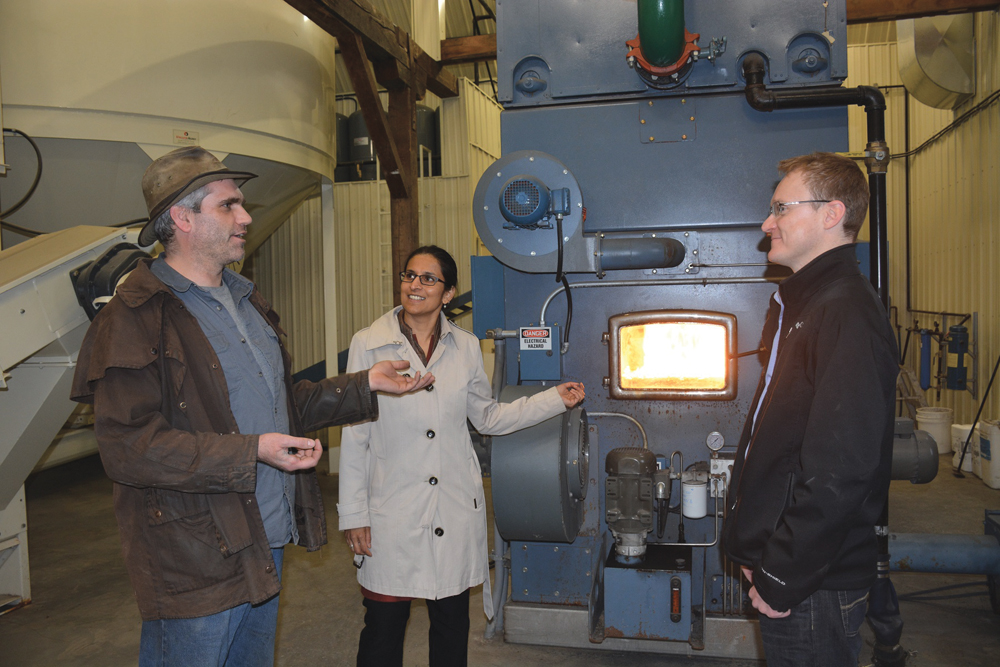
Providence University College in Otterburn has been burning biomass since 2011 and in January of this year it used the first of the pellets made from a combination of wood and cattails, in partnership with the International Institute for Sustainable Development (IISD).
Richard Grosshans, a senior research scientist with IISD, said the move proves the pellets are a viable heating alternative, something that is significant to those who want to preserve wetlands for their many environmental services.
Read Also

Manitoba’s Outstanding Young Farmers built success through diversification
Braden and Misty Drul of Oakburn, Man., earned Manitoba’s Outstanding Young Farmers 2026 award for building a multi-generational operation through diversification. With land prices rising, they launched an equipment assembly business and Pioneer seed dealership to create revenue streams that support two families.
“We always believed that one way to keep wetlands on the landscape would be to prove their economic values alongside the environmental values that they provide to society,” Grosshans said. “Through our partnership with Providence University College, we have proven that the system can work in the depths of a Manitoba winter with a product supply that can match demand.”
IISD’s innovative approach harvests cattails and other plants from marginal agricultural land, water retention sites, and drainage ditches to remove nutrients and contaminants absorbed by the plants, and then uses plant biomass to produce low carbon energy to replace fossil fuels. With the elimination on the use of coal for space heating in Manitoba, there is an accelerating strong demand for quality processed biomass fuel. Manitoba’s Hutterite communities are leading this charge.
“With coal no longer an option, several colonies are producing compressed biomass — including cattails — as fuel for their own heating demands,” said Grosshans.
The trial is part of Providence’s ongoing commitment to using environmentally friendly biomass, something it’s been doing since 2011, according to college spokesperson Jarrad Peters, who said the first cattail pellets were used in January.
“They burned exceptionally, and we were extremely pleased with the product,” said Peters.
Grosshans said these type of approaches can be applied globally, in places with far greater issues than North America.
“Innovative solutions developed here in Manitoba to collectively deal with our flooding, nutrient, and carbon reduction issues that also create economic growth and jobs will help us and the global community,” he said.