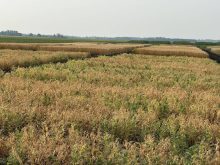
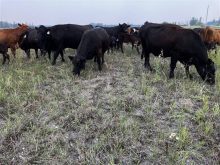
Reuters / UN agencies want to strengthen national drought policies after warnings that climate change would increase their frequency and severity.
Droughts cause more deaths and displacement than floods or earthquakes, making them the world’s most destructive natural hazard, according to the Food and Agriculture Organization, one of the groups taking part.
“We must boost national capacity to cope before droughts occur,” Ann Tutwiler, FAO deputy director general told the five-day talks on drought in Geneva attended by scientists, politicians and development agencies.
Read Also
High stakes for canola in CUSMA talks
The CUSMA review could reshape Canada’s canola trade with the U.S., its dominant export market for oil and meal.
“Unless we shift towards such policies, we face the prospect of repeated humanitarian catastrophes and the repeated threat of drought to global food security.”
In 2012, the United States experienced the worst drought since the 1930s “dust bowl,” pushing grains prices to record highs. In the past years, droughts have also affected the Horn of Africa and the Sahel region as well as China, Russia and southeast Europe.
UN Secretary General Ban Ki-moon said in December that extreme weather was the “new normal,” adding that drought had decimated essential crops from the United States to India, from Ukraine to Brazil.
“No one is immune to climate change — rich or poor. It is an existential challenge for the whole human race — our way of life, our plans for the future,” he said at the time.
However, governments have often been slow to act on drought as, unlike other natural disasters, they tend to develop more gradually and often do not generate an instant media buzz.
“As opposed to other natural disasters it’s a slow, creeping phenomenon,” said Mannava Sivakumar, a director for the World Meteorological Organization’s (WMO) climate prediction and adaptation division who assisted with the talks.
“If people say, ‘let’s wait and see what happens,’ before you realize it, you see crops dying, orchards dying and millions of dollars in damage,” he added.