
Who will inherit the family farm is a question that is becoming more difficult to answer as inheritance tax laws keep many potential heirs on the sidelines financially.
WHY IT MATTERS: Under the current Income Tax Act, only immediate children can inherit a family farm tax-free.
This means significant financial implications for those who do not qualify, which has prevented many eager farmers from being able to afford taking over an established family farm.
Read Also
Meat sector shrugs at raised cap for rural temporary foreign workers
Federal moves to relax restrictions is unlikely to change much for agriculture or meat processing, where the real ask is permanent residency pathways.
Advocating for legislative change
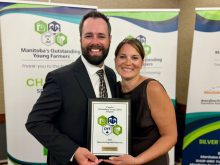
This is something that Derryn Shrosbree wants to see changed. Shrosbree operates a family farm in Mount Forest, Ont., and is the founder of 33seven, a national advisory firm specializing in farm succession planning, estate equalization and generational wealth protection for Canada’s agricultural families.
He has seen firsthand the challenges of passing a farm onto the next generation and is using his knowledge to advocate for modernizing Canada’s farm inheritance laws
“The average farmer is 56 years old, and fewer than one in 12 has a successor who is under the age of 40. Since more than $50 billion in farmland will change hands in the next decade, the foundation of our agriculture system must be protected,” Shrosbree said, adding that means having family farms of all sizes that survive and thrive through generations.
“Smaller communities rely on family farms, not to mention the efficiency of those properties with respect to the production of vegetables, fruits and livestock. There’s nothing wrong with large farms, but if you strip the country of farming operations that are driven by families, then we become vulnerable to consolidation and monopolies, which benefits no one.”
Toll of poor planning
He shared his experience in dealing with generation change within his own family.
“When it came time to inherit, there was turmoil, chaos and, to be honest, bad feelings because there wasn’t proper succession planning. It tore my family apart. And I know others have experienced this as well. Now, it wasn’t specific to this issue of nieces and nephews, but it shows the complexity of family interactions when it comes time to hand-off a property that may have been in the same hands for generations,” he said.
Shrosbree believes that changing the tax laws makes it simpler and easier for Canadians to pass down their farms within their own families, adding that the change could be as simple as altering the Act’s wording to reflect a broader family dynamic.
“Simple is best. I don’t see why it can’t be a matter of adding the words ‘and nieces and nephews’ within Section 73(3) of the Income Tax Act,” he said.
Strategic wealth management
Whether within immediate families or extended families, Shrosbree is aware of the challenges that inheritances can present. He said avoiding these conflicts is about proper planning.
His company works with farmers to develop solutions that utilize life insurance and real estate investments that provide stable income to provide off-farm children with their share of the inheritance.
“You wouldn’t believe how often this preserves relationships among family members who could have ended up in bitter arguments over who gets what,” he said.
Shrosbree points to other countries such as New Zealand that have made provisions for extended family inheritance.
“In New Zealand, farmland can be transferred tax-free to a niece and/or nephew. I do not know when/if this was added or if it has always been like that,” he said.
Lobbying for future of farming
To help raise awareness of this issue, Shrosbree has been advocating at the federal level to get the government, policy makers and stakeholders to change the Act.
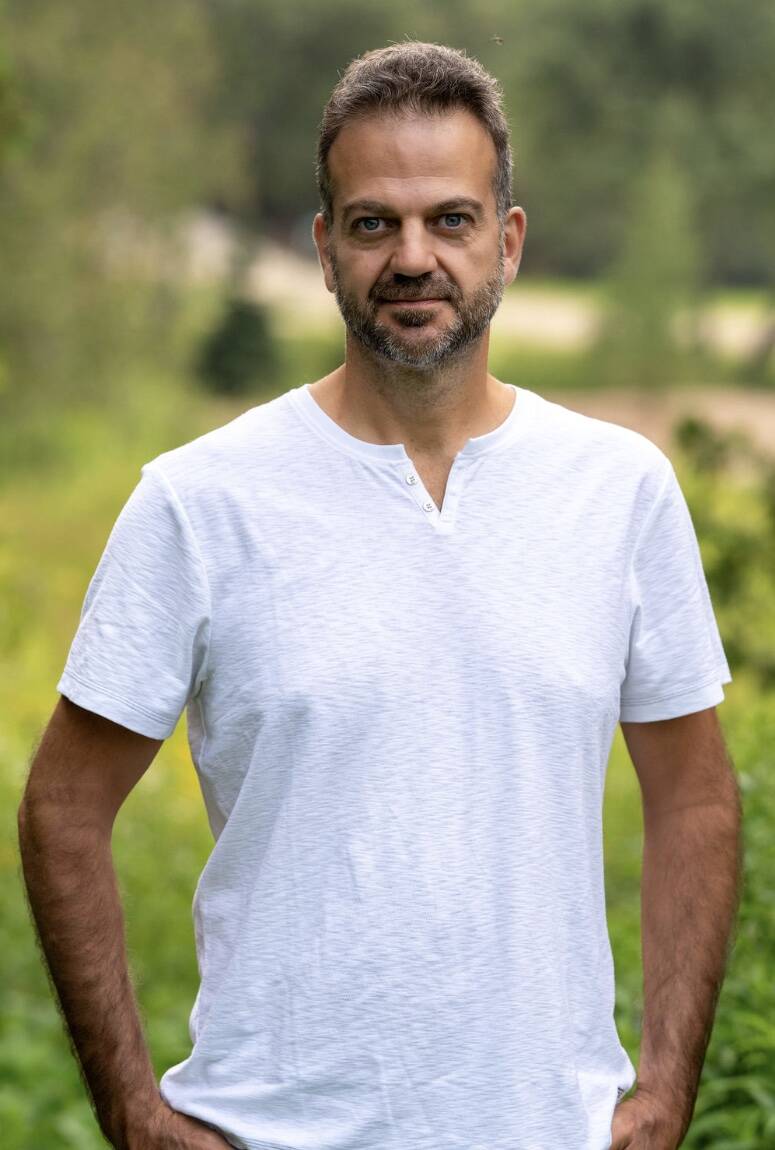
“We’ve initiated the discussion with the finance folks in Ottawa, along with governments at the provincial level, just to educate our elected officials on the importance of this issue. Our politicians are all about ‘Canada first’ right now — and this fits perfectly into their desire to protect Canadian families and provide added security in the farming sector at the same time.”
Derryn Shrosbree
33Seven
Without this change, Shrosbree believes there will be a marked decline in family farm ownership.
“They’re at risk of vanishing. We lose approximately 2,800 family farms in Canada every year. Land values are so high these days that anyone who inherits a farm who’s not a son or daughter is faced with trying to secure millions of dollars in loans to pay the taxes associated with inheriting the property. Most of the time, they can’t afford it. So farms will continue to be sold to the highest bidders — that means big companies and maybe even foreign investors who absolutely love getting their hands on land in Canada,” he said.
Government stance
Glacier Farm Media (GFM) reached out to the Department of Finance to see what is being done to help farmers better bridge the transition of farms between generations. In a statement, the department replied that through the income tax system, the Government of Canada provides a number of measures that help reduce the tax burden for qualified farmers when starting up or transferring their family farm businesses. For example, the Income Tax Act facilitates transfers of property principally used in a farming business by exempting certain dispositions from tax, granting capital gain reserves on certain dispositions, and deferring tax on inter-generational transfers.
When it came time to inherit, there was turmoil, chaos and, to be honest, bad feelings because there wasn’t proper succession planning. It tore my family apart. And I know others have experienced this as well.
Derryn Shrosbree
The statement added that a farmer may claim the Lifetime Capital Gains Exemption (LCGE) of up to about $1 million on the disposition of qualified farming property. Bill C-15, currently before Parliament, proposes to increase the LCGE limit to $1.25 million. The LCGE is applied on an individual basis so that each taxpayer is allowed to claim the exemption. As a result, the amount would be doubled to $2.5 million if both the farmer and their spouse (or common-law partner) qualify for the exemption.
In addition to the LCGE, the statement continued, if the proceeds of disposition have not been fully received, farmers are entitled to claim a capital gain reserve over a five-year period. This capital gains reserve is extended to a 10-year period where the transfer is of qualified farming property to the farmers’ child. For this purpose, and for the purposes of the inter-generational transfer described below, “child” is broadly defined to be a child, grandchild, or great-grandchild of the farmer or the farmer’s spouse or common-law partner and includes a person who, before attaining the age of 19, was fully dependent on the farmer and under the farmer’s custody and control.
Navigating capital gains and transfers
For transfers to a farmer’s child, a minimum of 10 per cent of the gain must be included in income each year. For other transfers, a minimum of 20 per cent of the gain must be included in income each year. This allows a farmer to average the gains from a disposition over a number of years.
The department noted that farmers are also entitled to tax benefits on the inter-generational transfer of a farm. A farmer may transfer their farming business without any immediate tax on capital gains to their child, grandchild or great-grandchild or their spouse or common-law partner. A farm transfer may be planned so as to maximize an individual’s LCGE while also minimizing the tax implications of the transfer through use of this tax-deferred transfer to a child.
Further to this, an individual may also claim the principal residence exemption from tax on any gain on their principal residence, which includes a principal residence that is situated on farm property.
Federal initiatives for ag resilience
GFM also reached out to Agriculture and Agri-Food Canada (AAFC), which also provided a statement.
The department said the federal government is committed to advancing the interests of Canadian farmers by helping create growth and opportunities for farmers, farm families and rural communities across the country and remains committed to protecting the livelihoods of farmers.
AAFC has several initiatives underway that support a more resilient food system, including:
- strengthening risk management,
- supporting market growth,
- improving cash flow, and
- advancing sustainability to ensure a strong, competitive agricultural sector.
Regardless of farm size, the statement also noted that eligible producers have access to the full suite of business risk management (BRM) programs delivered under the Sustainable Canadian Agricultural Partnership (Sustainable CAP) and AAFC continues to work with industry partners to enhance program accessibility, equity and effectiveness.
Federal loans and programs
The Canadian Agricultural Loans Act (CALA) Program is a loan guarantee program designed to increase the availability of loans to farmers and agricultural co-operatives. Farmers can use an agriculture loan to establish, improve and develop farms. In addition to existing farmers and co-operatives, this program is available to beginning farmers (less than six years of farming), start-up agribusinesses and farmers taking over the family farm, helping to facilitate affordable inter-generational transfers.
Agriculture and agri-food business owners transferring farm or business assets to new owners now have a new option to consider, given recent changes to Farm Credit Canada’s (FCC) Transition Loan. The enhanced FCC Transition Loan is specifically designed to facilitate the transfer of assets, making it easier for both buyers and sellers. The new terms allow disbursements to the seller over a period that extends to 10 years. The loan is available for farms, agribusiness or food businesses going through changes in ownership, be it within or outside the family.
In addition to financial support, many projects funded under initiatives like the AgriDiversity and AgriCompetitiveness Programs focus on capacity building and fostering interest in the agricultural sector, including youth. By supporting the development of a skilled workforce and encouraging new farmers, these programs have helped ensure that family farms can continue their work and contribute to the economic stability of rural communities.
AAFC said it remains committed to working collaboratively with farmers, producers and partners across the country to ensure Canada’s agriculture and agri-food sector continues to thrive.
Breaking the silence on succession
Shrosbree notes that real action will come from farmers joining the conversation and taking steps to make change. In a community where money often isn’t discussed, he invites farmers and their families to talk about it at the dinner table and at family gatherings.
“Don’t be afraid of talking about inheritance. People laugh at us at 33seven because we have a saying on our website that says, “Fear. Denial. Procrastination. We take it out back and shoot it.” Don’t put off dealing with something as important as family legacy. Don’t let generations of work fade into history,” he said.
He invites farmers and their families to talk to local MPs and share their concerns.
“There’s no ‘bad guy’ in this — we just think it’s a creative solution to protect very important family farms,” he said.