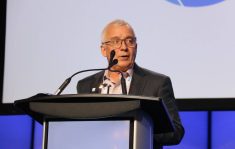
Greg Meredith, a former deputy agriculture minister in Ontario, is pessimistic about the upcoming Canada-United States-Mexico Agreement (CUSMA) review.
“I think it’s going to be a very fraught negotiation process,” he said.
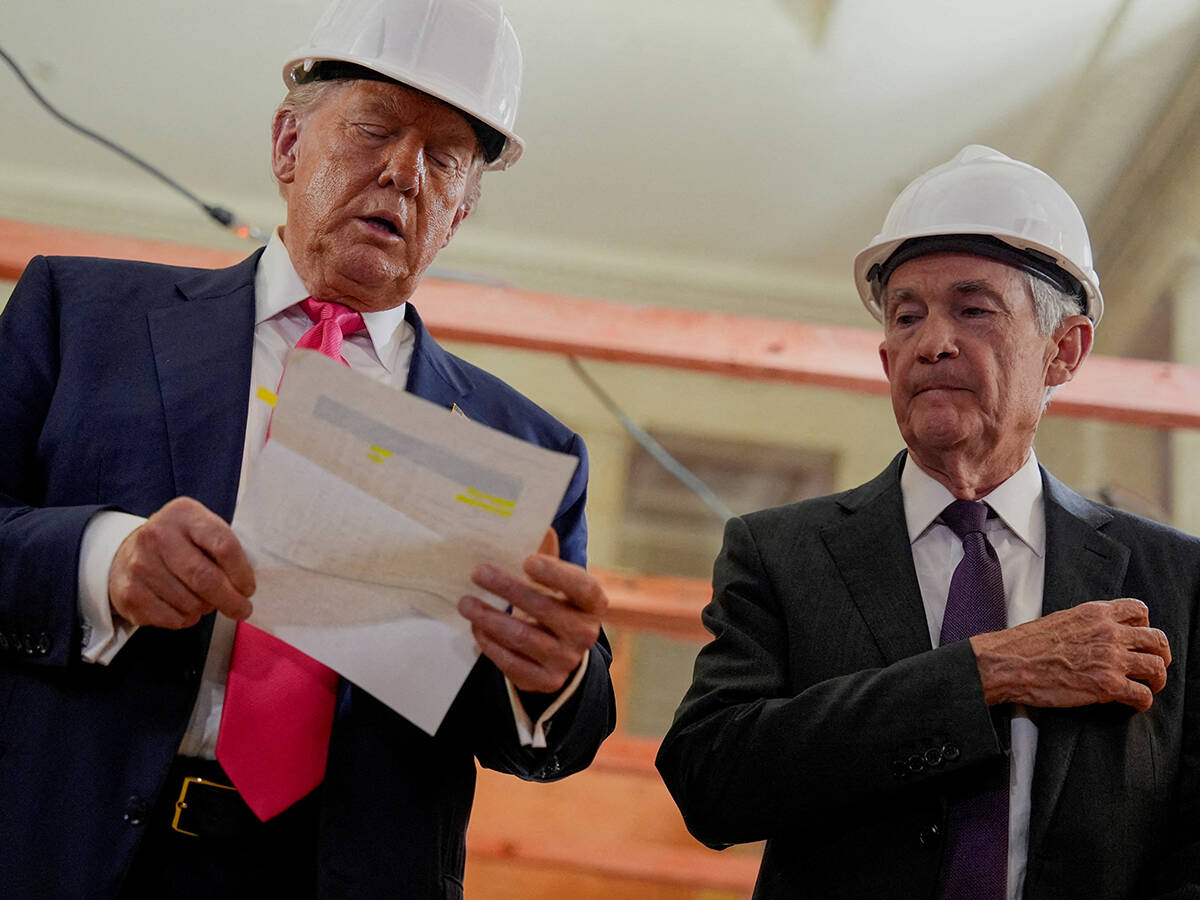
Meredith described U.S. President Donald Trump as volatile, unpredictable and transactional.
“He doesn’t see any deal as a win-win for anybody. Anything the other side gains, he perceives as a loss,” he said.
Meredith’s comments came from a recent webinar from the Canadian Agri-Food Policy Institute and RealAgriculture.
Read Also
Meat sector shrugs at raised cap for rural temporary foreign workers
Federal moves to relax restrictions is unlikely to change much for agriculture or meat processing, where the real ask is permanent residency pathways.
WHY IT MATTERS: Uncertain trade policy, tariffs and supply chain disruptions top many farmer lists of concern as U.S.-Canada relations enter the second year of a more protectionist U.S. administration in the White House.
Meridith believes Trump will use the CUSMA negotiations to get concessions out of Canada, whether that be on broader issues such as sovereignty or CUSMA-specific issues such as supply management.
“I do expect that there will be a series of outlandish demands or claims or requests that will populate the discussion,” said Meredith.
CUSMA is an agreement that in the past provided a great deal of certainty with clear rules of engagement.
However, he said Trump is not constrained by the norms of multilateral agreements or institutions. Any agreement reached between the U.S., Canada and Mexico will be as volatile or uncertain as the president’s behaviour.
“That makes me very, very concerned about the likelihood of a solid outcome of CUSMA,” said Meredith.
Supply management questions
He thinks there will be “very substantial” concessions in U.S. market access for dairy.
Desmond Sobool, deputy chief economist with Farm Credit Canada, did not get that impression based on a report that the U.S. Trade Representative (USTR) sent to the U.S. Congress.
“It didn’t seem like it was a blow-up of the dairy system,” he said.
Sobool said the USTR appeared to be pushing for “tweaks” to supply management, primarily in the form of increased access to the Canadian market for U.S. dairy products.
Francis Drouin, senior adviser with Capital Hill Group, was encouraged by the letter that 124 national and state farm organizations in the U.S. sent to the USTR calling for a 16-year renewal of CUSMA, noting that there has been a tripling of the value of agri-food trade with the three countries between 2005 and 2023.
“Without the economic might that this trilateral agreement affords, farmer incomes would be harmed, as the industry would be saddled with additional and burdensome costs related to transportation and compliance measures,” stated the letter.
“Without the certainty guaranteed by USMCA (the U.S. term for the deal), agribusinesses and family farms would face undependable markets and weakened global competitiveness.”
Drouin said it is a relief to see such solid support for the agreement at the ground level, where agriculture groups are pleading with the USTR to leave CUSMA untouched.
“That’s the positive news I see, despite the rhetoric and the riffraff between our politicians,” he said.