

Farmers will likely call the 2026 crop “the most expensive crop ever put in the ground.”
That’s according to Farm Credit Canada chief economist Desmond Sobool during FCC’s most recent economic outlook, Jan 22.
FCC expects farmers will see another jump in their bills this year. Its farm cost projections expect overall expenses to rise four per cent in 2026 over the previous year.
Read Also

Student agronomy challenge coming to Assiniboine College
The Prairies’ first agronomy competition brings together post-secondary ag students for hands-on crop advising challenges at Assiniboine College in Brandon, Man.
“If you look back to 2019, which is kind of our base pre-pandemic year, overall farm expenses are up over 50 per cent since 2019,” Sobool said. “In comparison, inflation in Canada overall is up 20 per cent, so you can just see how much more significant the impact of inflation has been on farm expenses.”
WHY IT MATTERS: Canada’s economy, agriculture included, is till trying to navigate volatile seas when it comes to trade and geopolitics, affecting projected farmer profit margins, investment and growth prospects in the agriculture sector and more. However, Canadian cattle will continue a run of strong, stable prices.
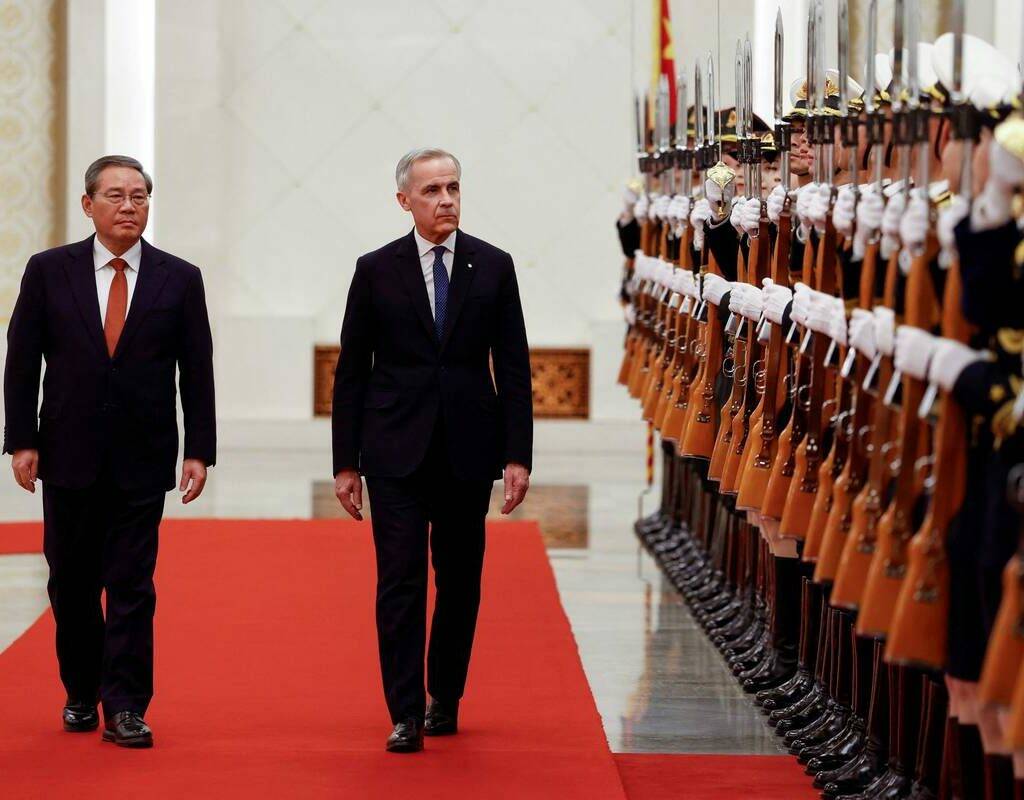
Sobool’s most energizing message concerned Canada’s new agreement-in-principle with China, which promised to drop Chinese tariffs on Canadian canola seed from 76 per cent to 15 per cent by March and eliminate China’s tariff on Canadian canola meal (at least for 2026) and peas — a boon for the domestic canola crushing sector.
“(Producers) have some certainty that there will be market access for canola this year,” he said.
That was before U.S. President Donald Trump threatened 100 per cent tariffs on Canadian goods if Canada makes a trade pact with China. The U.S. is Canada’s biggest canola customer, worth about $7.7 billion of oil, meal and seed exports.
Cattle wave still rolling
Sobool reported Canadian cow-calf producers and feedlots are set for another year of strong prices, driven in part by moderating feed costs.
Canadian cattle growers are finally seeing signals for expansion of the national herd, which steadily dropped over the drought years of the early 2020s.
The U.S., meanwhile, has its own challenges on herd retention. Heifer retention rates remain at a 75-year low, Sobool said.
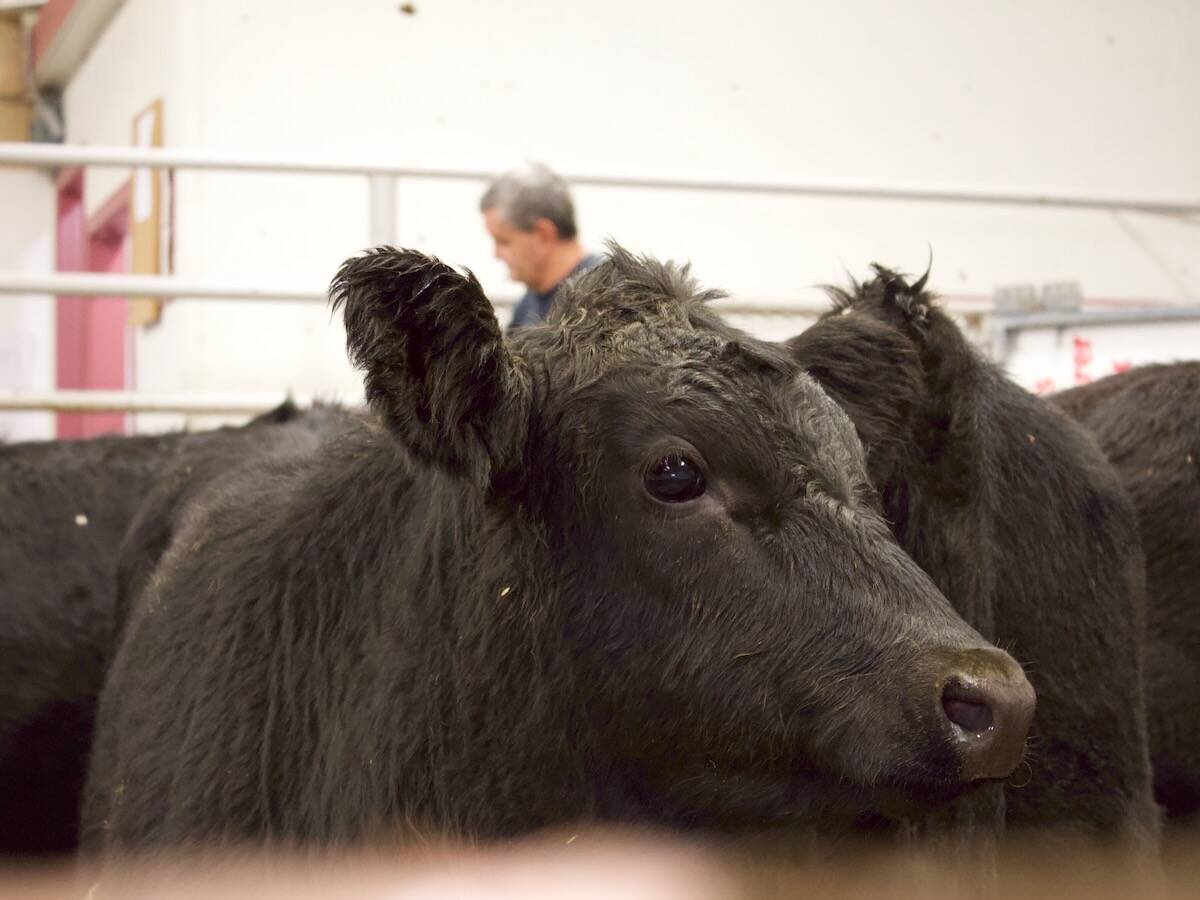
Sobool also looked at the number of cows and heifers being sent to slaughter as a percentage of total animals to determine cattle herd trends. Once that percentage dips below 40 per cent, it’s a signal that the cattle herd is expanding. Canada’s percentage is currently at 41 per cent.
“In the U.S. it’s still about 49 per cent through 2025, so in the U.S., we’re still not seeing those market signals and so that’s going to continue to support prices.”
GDP slowdown
Canada’s economy is still growing, but FCC expects that growth to be slow.
The lender is forecasting Canada’s economic growth will slow from 1.7 per cent in 2025 to 1.2 per cent in 2026.
“I understand that what we’re saying here is quite different from consensus on interest rates, because most forecasters are predicting either no change to the overnight rate or even an increase later this year,” said Krishen Rangasamy, principal economist with FCC.
“That may well be the right forecast if the economy picks up materially. But … we think economic growth will weaken this year and if we’re correct about that additional stimulus by the central bank should not be ruled out.”
Uncertainty over the future of the soon-to-be-reviewed Canada-United States-Mexico Agreement (CUSMA) will continue to be a limiting factor, Rangasamy said.
He suspects Canadian exporters in CUSMA’s tariff-free categories such as farm, fishing and intermediate food products have felt above-expected tariff impacts due to confusion over rules of origin requirements, losing their CUSMA compliance in the process.
“Remember that the majority of our exports to the U.S. is tariff-free thanks to CUSMA, and yet, outside of the energy sector, our exporters have really struggled since the U.S. tariffs were imposed,” he noted.
Tariffs placed on Canadian goods have caused U.S. importers to look elsewhere. This has caused Canada’s share of the U.S. market to drop to 11 per cent — its lowest ever — in 2025.
Diversified trade
Although Rangasamy considers Canada’s attempts to diversify trade partners commendable, he was disappointed in the country’s apparent inability to “materially reduce” dependence on the U.S., in light of its 15 free trade agreements with 51 countries.
“We’re not capitalizing on opportunities presented by those trade deals,” he said, citing ignored opportunities presented by the Canada-European Union Comprehensive Economic and Trade Agreement (CETA).
That agreement was designed to offer Canadian businesses preferential access to the EU market. But some expected big winners when the deal was first inked have failed to see major gains, particularly meat sectors who say regulation conflicts continue to keep them out.
Leveraging the house
This year will also see a large share of Canadian households renewing mortgages at higher interest rates than their origination. According to Bank of Canada estimates, mortgage payments will increase by an average six per cent this year.
“Those households that are renewing their fixed-year, five-year mortgage — which, by the way, is the most popular mortgage product in the country. For those folks, payments will increase by about 20 per cent,” listeners heard.
If there’s a bright spot for Canada, Rangasamy said it’s the federal government’s new focus on ambitious public projects that could rekindle business investment. But don’t expect big results too soon.
“It’s probably not a 2026 story. It’s probably something more like next year or even 2028.”