Canada’s business risk management programs were designed as a safety net for one-time shocks. Experts say multi-year droughts are exposing a structural gap — and the fix requires a fundamental shift from paying for losses to preventing them.
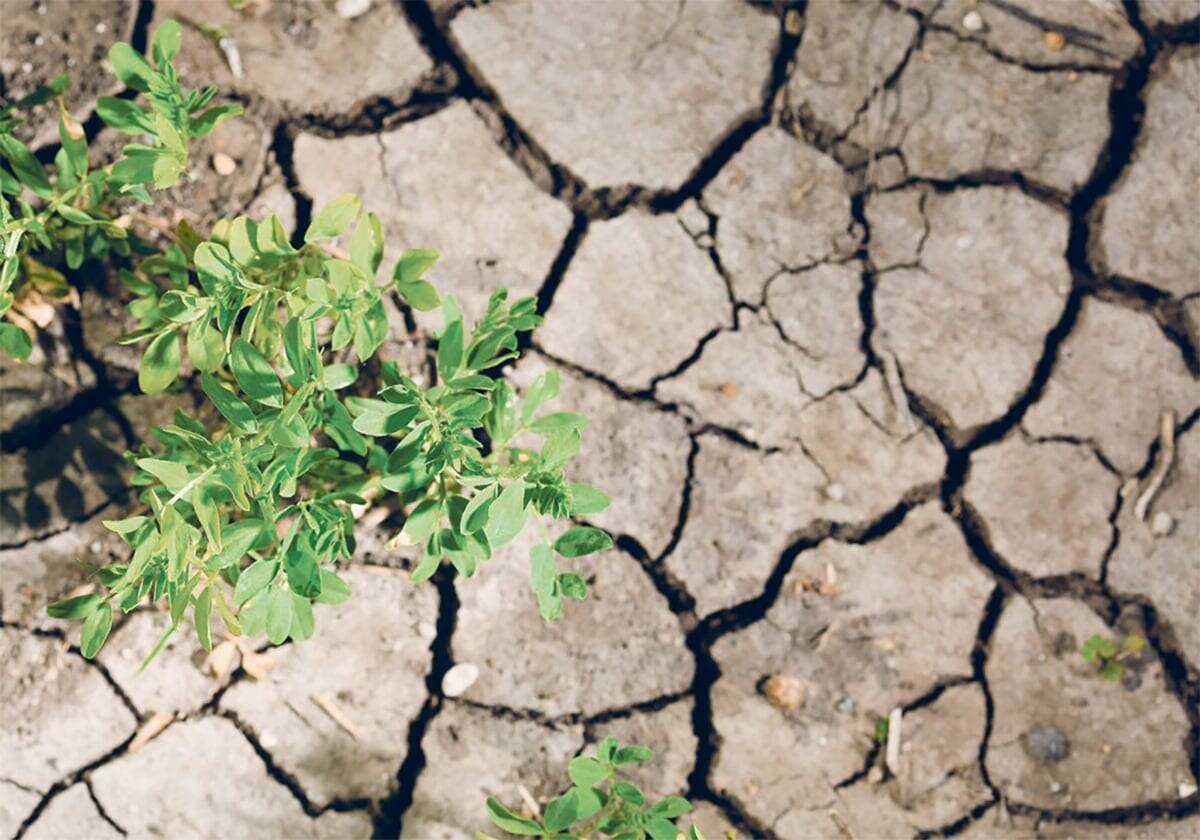
Canada’s current business risk management programs must change if multi-year droughts continue, says the national risk management lead at Farm Management Canada.
Mathieu Lipari said the existing suite of programs was designed as a safety net for shocks — not for prolonged, recurring dry cycles. AgriStability, for example, wasn’t built for multi-year water shortages. A drought of several years causes lower reference margins, which reduces future payments even when losses continue.
Read Also
Canada’s cereal breeding system is failing. Who fills the gap?
Agriculture Canada breeds 80 per cent of Canada’s wheat varieties. A new report says that system in no longer sustainable — and without a transition, some crops could quietly disappear from Prairie fields.
“The more your reference margin goes down, the lower your payments are going to be in future years, even if you do have an event that causes you to have a lower margin,” said Lipari.
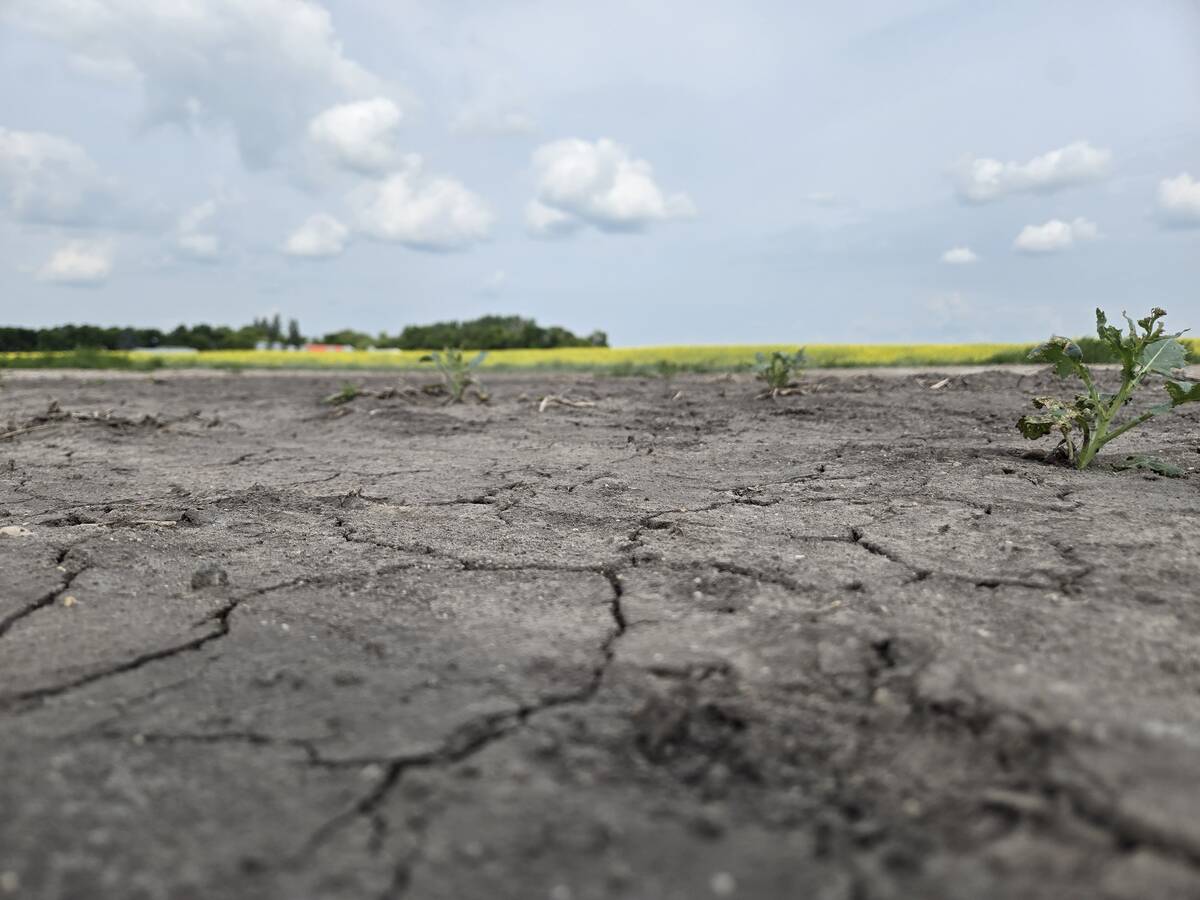
WHY IT MATTERS: Some Prairie regions have been dry for a number of years —including pockets that are nearly a decade into drought. Canada’s BRM programs are currently under review as part of the regular agriculture policy framework cycle, making this a critical moment to push for structural changes before the next framework is locked in.
Crop insurance during a drought pays out well at first, but then higher premiums follow, and a period of lower yields affects the long-term average and coverage.
AgriRecovery — the framework that allows provinces to request assistance under exceptional circumstances — is not intended to cover an ongoing event.
“So if it becomes more common to have droughts or more severe droughts or more prolonged droughts, then that will decrease the intervention of AgriRecovery,” Lipari said.
A warming climate, a drier Prairie
David Sauchyn, head of the Prairie Adaptation Research Collaborative at the University of Regina, said drought is a natural phenomenon on the Prairies — but it is now occurring in a warmer climate.
“It’s not caused by climate change, but it’s occurring in a warming climate,” Sauchyn said.
The strongest evidence of that warming is showing up in nighttime temperature data. At Red Deer, Alta., temperatures at night have risen by more than four degrees in the past 100 years. In Lloydminster, there have been only two winters since the 1990s when the nighttime temperature average has been greater than -20 C.
“We are losing the advantage of our cold winter in terms of our major water supply, which is snow,” Sauchyn said.
The growing season is getting longer as a result — but the prospect of greater production from that extended window is tempered by the low yield losses that come with drier conditions.
“Drought has and will always limit productivity on the Prairies,” Sauchyn added.
Sauchyn noted that farmers continue to report producing good crops despite both too much and too little moisture — evidence, he said, that they have already adapted their practices significantly.
Lipari said governments have already made some adjustments. AgriStability’s compensation rate has increased from 70 to 90 per cent, at least partly in response to drought concerns. In Alberta, the government updated its ‘normal’ moisture levels for crop insurance to reflect drier conditions, and some provinces increased low-yield allowances so farmers could salvage crops for feed.
The shadow of 2021
$6 billion
Crop insurance claims from yield losses in 2021
Mainly in Saskatchewan and Alberta — a one-year event the system was built to handle. Multi-year droughts tell a different story.
That 2021 figure came with payments from other programs on top, adding up to a significant total impact. But Lipari noted it was still essentially a single-year event — exactly the kind of shock the current system was designed to absorb.
“This system is really built on the assumption that we have, once in a while, a severe drought,” Lipari said.
The right approach to risk
Lipari said the programs will fall short because of backward-looking pricing. Using historical data during recurring drought will diminish the ability of the programs to help. Structural drought will result in lower crop insurance coverage, higher premiums and a limited disaster response through AgriRecovey.
He said there has to be a balance between proactive and reactive risk management. A report from Farm Management Canada and the Canadian Agri-Food Policy Institute released last fall explored this concept.
“The first line of defence in our mind in our mind is the farmer when it comes to these types of risks. And as much as the BRM suite is important as a safety net, there’s a need to reduce some of the dependency on these reactive responses,” Lipari said.
Farmers will have to take adaptive measures in a drier pattern, but the programs themselves could also be adapted to reflect the shift.
“The key here is that our main shift should be from paying after there’s been a loss to reducing the vulnerability,” he added.
Lipari said there could be incentives for water-smart practices and support to shift toward more drought-resistant farming. Sharing data to establish benchmarks, he said, will be a necessary part of making any new approach work.
Key takeaways for Prairie Producers
- Canada’s BRM programs — AgriStability, crop insurance, AgriRecovery — were designed for one-time drought shocks, not multi-year dry cycles
- The longer a drought runs, the less effective each program becomes: reference margins fall, premiums rise and AgriRecovery coverage shrinks.
- In 2021, crop insurance alone paid out $6 billion in yield loss claims — mainly in Saskatchewan and Alberta — in a single-year event.
- Experts say the system needs to shift from paying for losses after they happen to reducing vulnerability before they do.
- BRM programs are under review in the current agricultural policy framework cycle — a window to push for structural change.