
Agriculture and the agri-food sector can be a powerful tool for Canada both economically and geopolitcally.
That’s according to Jack Mintz, economist and president’s fellow at the University of Calgary’s Public Policy Institute.
Agriculture is a high-productivity sector with great strategic opportunities on the world stage, he told attendees of the Protein Industries Canada convention in Saskatoon earlier in September.
Read Also
Fertilizer industry optimistic as Ottawa commits to cutting red tape
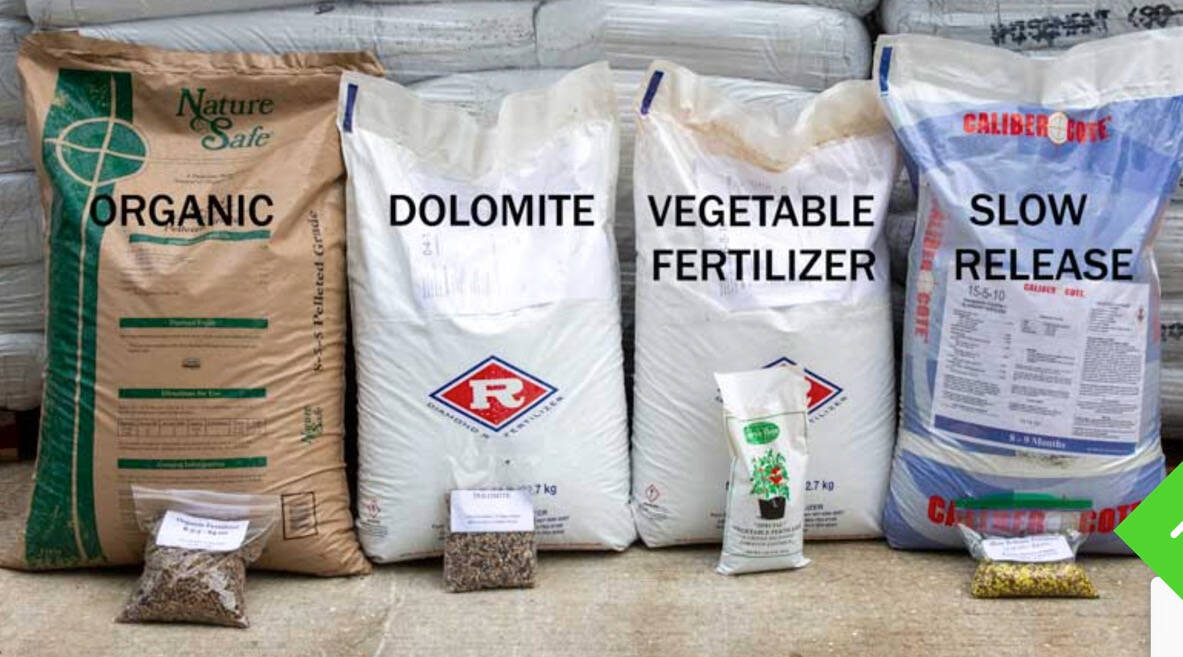
Federal ministers and bureaucrats are now willing to modify or eliminate unhelpful regulations, including a rule that required complex bilingual labels on fertilizer delivered to Canadian farms. The CFIA extended the bulk fertilizer labelling deadline to July 2027.
For that to happen though, Canadian governments and organizations at all levels need to establish a balance of research and development, innovation and infrastructure.
“When you look at the opportunities that are in agriculture, like bioenergy, genetic science, resilient crops, grain storage, there’s a whole number of new value-added opportunities,” he said.
Why it matters: Agriculture has big economic chops, but industry is concerned that policy and infrastructure gaps are holding it back from its potential.
Agriculture is one of Canada’s top five industries in terms of growth per capita, conference attendees heard. Speakers noted an expansion of processed and manufactured goods from the agri-food sector.
“How many sectors of our economy can deliver $65 billion of annual economic output growth, not just back to price, but tied to output and that as well?” said Murad Al-Katib, president and chief executive officer of AGT Foods, who also spoke at the convention.
Analysts outside of the event, meanwhile, have worried about Canadian agriculture’s slipping productivity. At this year’s Canadian Pulse and Special Crops Convention in Winnipeg, Farm Credit Canada’s chief economist, J.P. Gervais, noted that while productivity is still growing in the sector, it’s a far cry from the 23.4 per cent and 21.9 per cent seen in the 1980s and 1990s, respectively.
Gervais suggested that rates might slip to less than one per cent growth per year, if observed trends continue.
Bumpy road
For all the optimism about agriculture and agri-food’s productivity, however, the road is getting bumpier.
The marketplace is always in flux. Players shift; new companies fight for space, and everyone scrambles to deal with a shifting policy landscape. There are also issues around infrastructure and research capacity, attendees heard.
Canada and its agriculture sector don’t need new and flashy solutions to those problems, according to Tyler McCann of the Canadian Agri-Food Policy Institute. Instead, he said, there needs to be improvements to fundamental issues such as transport and infrastructure, tax systems, and the regulatory environment.
Heidi Dutton, chief executive officer of Sunnydale Foods and Lovingly Made, cited her own experience, particularly when it comes to expansion efforts
“The cost to build in Canada is very, very high, and (when) we’ve priced out plants, it was very, very tight between the U.S. and Canada, particularly Saskatchewan,” said Dutton. “And I’m (from) Saskatchewan, so I’m constantly waving that flag, and in Alberta now too.”
Regulation has been a whole other obstacle.
Both Al-Katib and Dutton said that it’s much easier to establish plants in emerging markets because of lower costs, but even certain U.S. states are better than trying to set up shop in Canada. Those areas have well established infrastructure systems for building and transport, which make it easier and quicker to move product. It isn’t much cheaper to dig roots south of the border, but U.S. state policies are competitive, even amongst each other, which allow and promote businesses and manufacturing to shop for locations, the speakers said.
“We can’t blame it on North America, because we can go to the U.S. and find states where we can effectively build there,” said Al-Katib. “So, governments here (in Canada) haven’t recognized our regulatory burden is bad. It’s not killing us, but it’s bad. The incentive programs are nonexistent and the cost structures are inhibitive.
“So, if this is a race, we have to be recognizing that this opportunity won’t just wait around for us. If we don’t take it someone else will, and we’re seeing other countries trying to do it.”
Gaining government’s ear
Speakers argued that policy changes are needed if Canada wants to dig more market share in the agri-food and plant-based food space.
“In Canada, there is a business community, a community of entrepreneurs that have a sense as to where they want to go and how they want to get there,” said McCann. “But again, we have a disconnected policy environment that doesn’t do a very good job facilitating and enabling the work that they want to do and creating the conditions for those entrepreneurs to be as competitive as they need to be to succeed with those destinations that they want to get to.”
That disconnect bleeds into the innovation environment as well; the two are connected, Mintz said.
Government must prioritize investment to welcome industry growth, he argued.
Speakers also argued that agriculture needs to be more vocal about what they need to grow.
“The reality is (the) squeaky wheel gets the grease,” said McCann. “I think we need to do a better job of understanding what are we missing in this country. How do we talk about it in a different, more strategic context, and in a way that isn’t just about ‘agriculture is a great asset,’ but ‘agriculture can help the country?’”