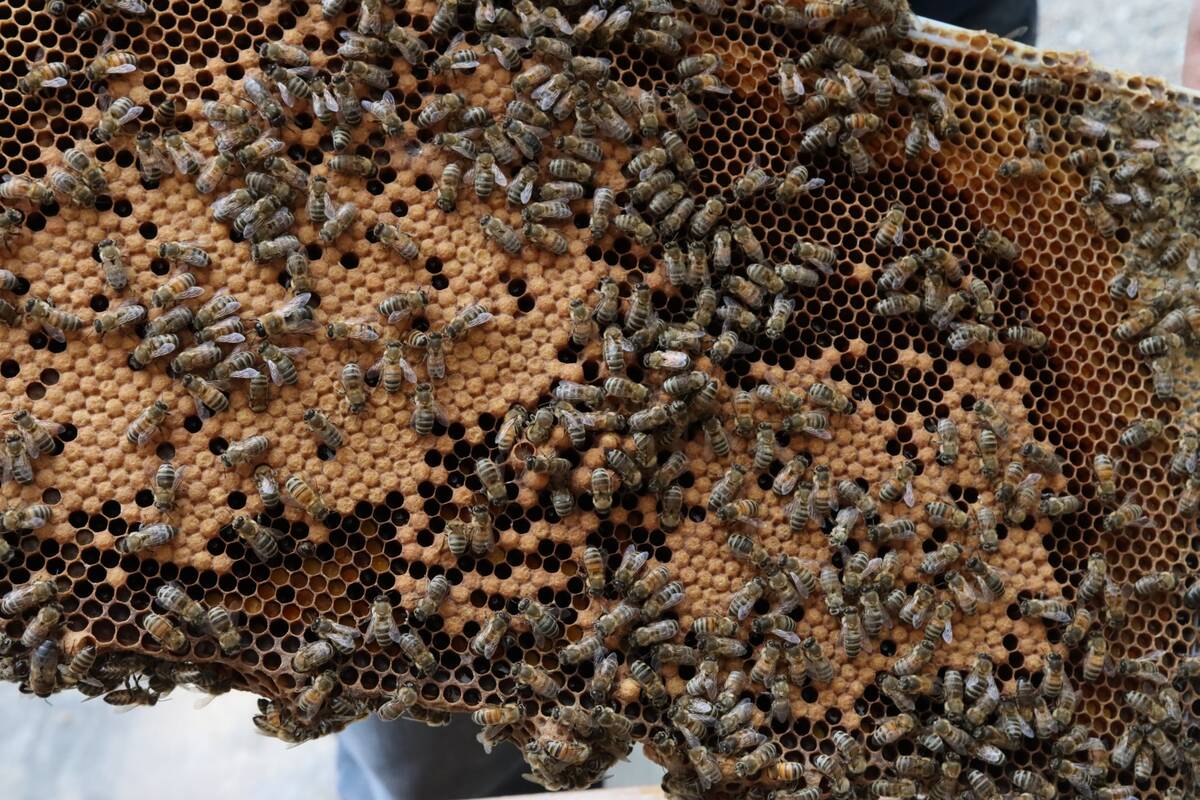
As Canadian beekeepers assess significant winter losses, the debate around whether to allow the importation of package bees from the United States has returned to the spotlight.
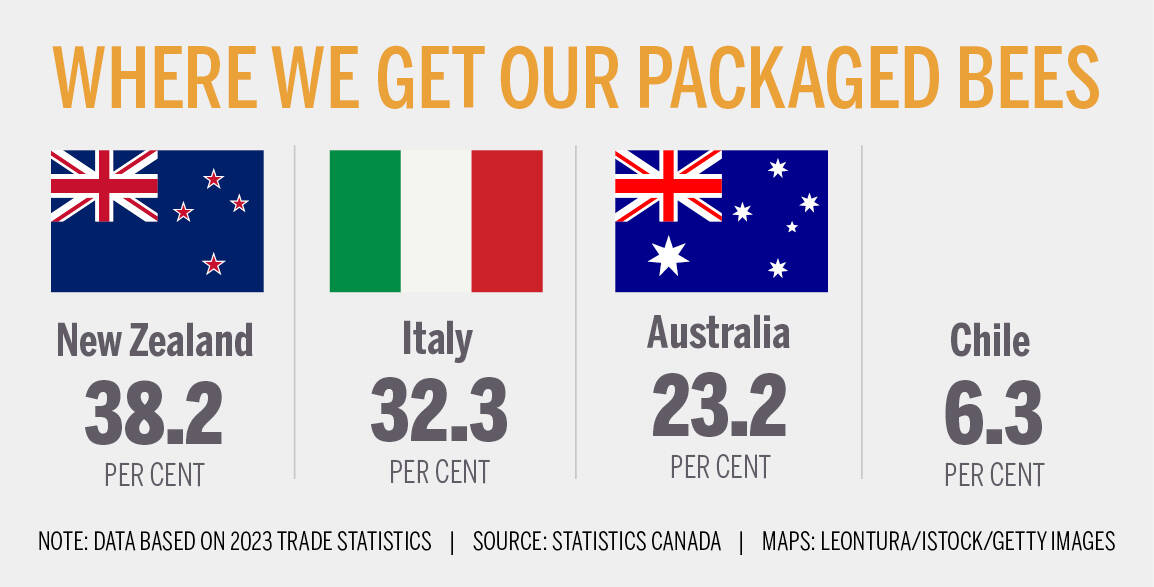
Package bees from the U.S. have been blocked from Canada since the 1980s, and a 2022 report from Agriculture and Agri-Food Canada (AAFC) notes that since 2017, package honeybee imports have come exclusively from Australia, New Zealand, and Chile.
Now, some producers say reopening the border is crucial to helping the industry recover. Others, however, express concern about the potential risks.
Read Also

MBFI livestock research farm gets major expansion
Manitoba Beef & Forage Initiatives expands Brookdale Research Farm by 467 acres to benchmark grazing profitability at commercial scale.
The Canadian Food Inspection Agency’s (CFIA) most recent risk assessment, completed in 2013, identified significant threats associated with importing bees from the U.S., including Africanized genetics, antibiotic-resistant American foulbrood, varroa mites, and small hive beetles.
“Beekeepers in Canada are pretty well split,” said Jake Berg, chair of the Canadian Honey Council (CHC), and member of the Saskatchewan Beekeepers Development Commission. “It’s almost 50/50 on whether they want package bees from the U.S. or not.”
WHY IT MATTERS: Importing package bees from the U.S. to revive Canadian colonies suffering bee losses is currently being debated by the industry ahead of a CFIA decision to allow the trade or not.
For those in favour, the biggest driver is simply having more replacement stock options, since Canadian beekeepers don’t have many options around the world for bringing bees into Canada, Berg said. However, others are worried that bringing in U.S. bees could mean bringing in more problems.
“We’re hearing about huge losses in the U.S. So, what we’re worried about … is the health of these colonies in the U.S. Are they worse off than what we’ve got here already? So, are we, by bringing package bees in the U.S., going to import ourselves more problems?” he said.
A good fit
Osee Podolsky, the Manitoba director of the CHC and member of the Manitoba Beekeeper’s Association, is in favour of importing package bees from the U.S. He’s facing an 85 per cent loss this year from last fall and winter, and estimates that his operation is looking at $1.2 million in damages just from dead bees.
U.S. package bees are a viable solution to replace those bees, particularly given their seasonal advantage, he said.
“The U.S. beekeeping season starts in the middle of January. They pull all the bees out of there…and they take them down to California, and as you know, spring starts a whole heck of a lot earlier in California than it does in Manitoba.”
However, beekeepers in the U.S. lost 48.2 per cent of their managed honeybee colonies from April 2022 to April 2023, according to a nationwide survey by the Bee Informed Partnership, the Plant Bee Foundation’s website states. Current loss rates remain high.
Despite this, Podolsky is not concerned about importing package bees from the U.S., since whatever is causing the losses there will make its way to Canadian hives eventually, he said.
“It’s not a question if we’re going to have those losses, it’s when. Is it going to be next year, or is it going to be two years from now? Because the border is an imaginary line in the sand. Bees fly across that border every single day.”
Producers who live farther away from the border, however, are more concerned, Berg said.
“A beekeeper that’s a couple hours from the U.S. border is somewhat insulated from that. So, by bringing bees in, we’re no longer insulated from that risk. You’re bringing that risk directly into your own bee population.”
Other options for replacement stock do exist, including imported bees from Australia, New Zealand, Chile and Italy, Berg said. Being self-sufficient and making replacement stock the year prior is also an option, but a more complicated one.
“It takes time, and it takes a fairly substantial financial investment in replacement stock to kind of self-insure, and you have to have bees to start with to do that. You can’t make bees from nothing,” Berg said.
Ultimately, producers like Podolsky are focused on survival and rebuilding.
“Seeing losses like this is disheartening. It is another year of rebuilding, but we’re making a plan to get through it, and we will muddle our way through this and help of buying some bees and trying to split and make up losses internally,” he said, adding that he expects to see lower levels of honey production this year, but hopes numbers will rebound soon.
The CFIA is expected to announce its decision about reopening the border to U.S. package bees sometime in spring 2025.
“More information can always be presented, and the case can be made again, if they do deem they don’t want to wish to open border,” Podolsky said. “It never is the end all be all. No pun intended.”