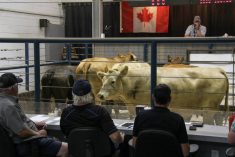
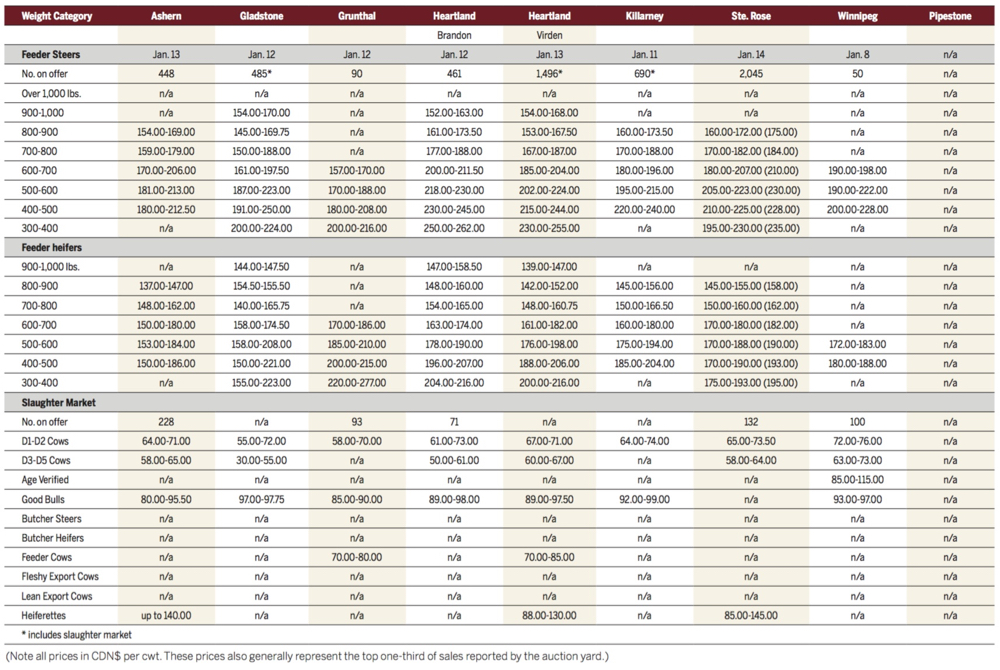
Activity was slowly picking back up at Manitoba’s cattle auction yards during the second week of January, with feeder prices steady to lower compared to levels ahead of the holidays.
Lighter-weight feeders continued to see the best demand, with discounts for the heavier animals. About 5,000 feeder cattle moved through the rings across the province during the week, with volumes highly variable depending on the location.
Cattle futures in the U.S. moved lower during the week, while feed prices kept rising. Chicago Board of Trade corn futures jumped above US$5 per bushel, while live cattle futures lost a couple of dollars per hundredweight.
Read Also

Mideast war driving grain markets, but fundamentals remain
The war in the Middle East has become the primary driver for nearly all major global financial and commodity markets, though its long-term effects on grain and oilseed markets remain to be seen.
“It’s been a tough run” for the feeding sector, Brian Perillat of CanFax said on a MarketsFarm-sponsored webinar on Jan. 14.
“Canadian barley supplies have been tight and we’re relying on U.S. corn to come into the feeder sector… that’s taken a bite out of the profitability for the feedlots and chews into what they can pay for feeder cattle.”
Perillat presented a table highlighting some of the outside influences on cattle prices. As an example, every time the live cattle futures move US$1, he estimated that a 550-lb. steer in Canada would see an adjustment of about $3 per hundredweight.
When it comes to the Canadian dollar, a one-cent move on the currency translates to a $4.50/cwt move on that steer. Meanwhile, every 50-cent-per-bushel rise in barley cuts into the feeder steer price by roughly $10/cwt.
The Canadian dollar has moved five cents over the past year, taking 25 cents/lb. out of calf prices. “If it continues to trend higher, we have to be cautious on cattle prices,” Perillat said.
“There are obviously some headwinds in the market right now,” he said, though he added that expectations for a stronger fed cattle market in the spring would help offset the losses feeders have experienced in recent months, with feedlot placements likely to see an increase over the next year.
Looking at the bigger-picture demand for beef, the data points to strong demand both domestically and on the export market, according to Perillat. While the pandemic may have cut into demand from the food-service sector, retail demand has risen.
“We’ve seen very strong beef consumption,” Perillat said, adding that “consumers continue to pay up and buy their beef.”