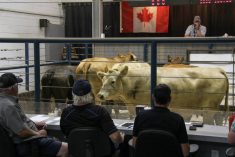
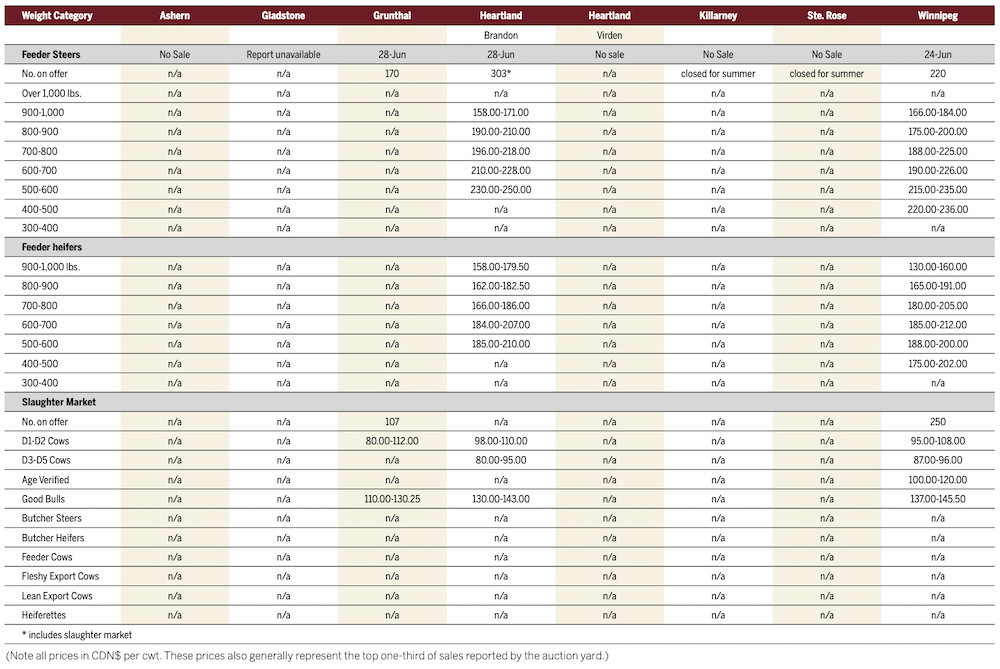
Activity at Manitoba’s cattle auction yards has slowed down for the season, but feeder and butcher cattle coming to market in late June were being met with solid demand and relatively strong prices.
Many yards have closed for the summer but a few run on a reduced basis through July and August.
Scott Anderson of Winnipeg Livestock Sales said there are several reasons cattle are coming to market at this time of year. Some were likely the ‘oddball’ cattle that producers were finally getting around to selling. Other sales could be due to dwindling feed supplies.
Read Also

Iran war volatility sends shock waves through agricultural markets
Here are the numbers on how badly fuel, fertilizer and grain markets have been thrown for a loop by the conflict in Iran so far.
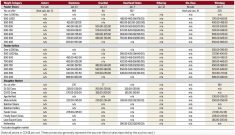
Butcher cattle often find support in summer months as demand for hamburger ramps up. Anderson described the butcher market as “reasonably steady,” with cows bringing $95 to $107 per hundredweight.
On the feeder side, “there’s not many feeder cattle around… the feeder cattle have been getting progressively stronger every week,” said Anderson. He noted that fat cattle prices have gone up considerably in Eastern Canada so eastern demand is driving the local market.
Steers in the 500- to 600-pound range were bringing $215 to $250 per cwt., although numbers were low. Heifers in the same weight category were topping out at about $200.
Eastern buyers want large framed better-quality cattle and the highest bids are generally headed east. Meanwhile, lower quality animals are primarily headed west at this time of year, said Anderson.
“Most of the local backgrounders are done,” he said, noting they were taking advantage of better pastures and cheaper feed. “Now that they can get them out on grass is a welcome relief.”
That sense of optimism was being felt throughout the cattle sector, given better moisture levels, exceptional pastures and solid prices after last summer’s drought. However, Anderson said many Manitoba grain farmers were unable to seed in a timely manner this spring, raising questions about future grain supplies.
Trucking could also be an issue, given the high cost of fuel. With fuel prices unlikely to drop, Anderson said it would be difficult for transportation companies to make profits and there is a risk that smaller trucking fleets may fold.