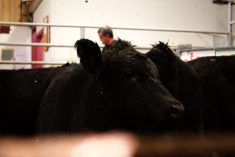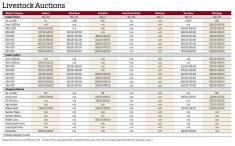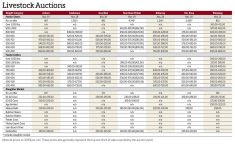

In addition to ongoing COVID-19 social distancing measures, a spring snowstorm also hampered some movement at Manitoba cattle auction yards during the first week of April.
Prices were generally steady to higher compared to the previous week, although volatility in global markets was also being felt at a local level.
“The cows are still calving, they don’t know that there’s any social distancing going on,” market analyst Anne Wasko of Gateway Livestock Exchange said.
Read Also

Iran war volatility sends shock waves through agricultural markets
Here are the numbers on how badly fuel, fertilizer and grain markets have been thrown for a loop by the conflict in Iran so far.
She pointed to large price swings in U.S. futures as a sign of the general volatility in all markets, including the cattle sector.
“There’s just too many unknowns right now, and the futures market does not like that unknown,” she said, pointing to questions over how processing plants will continue to operate and the possibility of transportation disruptions.
“Everybody in the supply chain is trying to figure out how to do this, and the market is trying to predict what will happen if we couldn’t kill as many cattle as we need to or if something happens at the border,” said Wasko.
Demand from restaurants and the food-service sector has ground to a halt, “but on the retail side it just exploded,” she said. Consumers stocking up on all food, including meat, caused wholesale prices to climb.
However, “now that the freezers are full, we’re seeing prices at the wholesale level come down again.”
Ground beef was one of the top items moving at the retail level when everyone was stocking freezers. That supported the market for slaughter cows. Finished cattle and the slaughter market are also seeing better prices at auction than they did prior to the COVID-19 pandemic.
“Business is carrying on, but the prices are extremely volatile,” said Wasko, describing that volatility as “unnerving… you don’t know what to expect today or tomorrow.”
Activity in the feeder market typically slows down at this time of year, as ranchers focus on calving and animals are put out to grass. Feedlots still need to see cattle moving through the system, but questions also remain over how COVID-19 will alter the traditional movement. Farmers could hold on to animals longer than normal, but they could also be looking to make sales earlier.
The Canadian dollar has seen some large moves over the past month, and is trading at a considerably weaker level than where it started the year. That soft currency is somewhat supportive for Canadian cattle prices, with weakness in input prices also providing a small silver lining for the cattle sector in the midst of the general uncertainty.