What and how much we feed horses is innately related to their health. The large number of feed products on the market designed for “making horses healthier” is overwhelming, leading many horse owners to believe their horse should have a commercial feed to be healthy.
However, the addition of such feeds to the horse’s diet is not benign or without consequence to the horse’s health. Upon occasion they may even be detrimental to the horse’s overall well-being.
Whenever a particular illness arises in a horse it is a worthwhile exercise to investigate if the diet may have in any way contributed to the illness. Different feeds have a strong influence on the levels of inflammation in the body and as such play a significant role in the development or progression of disease. Many illnesses in the human and the horse are downstream from a chronic inflammatory process. Left unchecked this insidious type of inflammation smoulders in and burdens the body and over time expresses itself as disease.
Read Also
Manitoba cattle prices, March 11
Your weekly table of price ranges for beef cattle from seven Manitoba auction markets during the week ending March 10, 2026.
Laminitis (or founder) is but one example of the strong connection between the diet and the health of the hoof structures of the horse. Most horse owners are familiar with the acute laminitis that can occur when horses overindulge in a large amount of grain. Since cause and effect between diet and disease symptoms are closely related in this situation, it becomes easy to connect the diet with the foundered feet.
However, another form of chronic laminitis also occurs where the connection between diet and lameness is not so readily evident. Horses consuming diets high in sugars develop persistently high levels of blood glucose. When the tissues are bathed in sugars, chronic inflammation is created alongside hormonal disruptions. The cascade of events results in a weak laminar bond between the hoof and the underlying bone. Since this process is more subtle and occurs over a longer period of time, as opposed to the acute situation of grain overload, the connection between a rich diet and chronic laminitis, poor-quality hooves and foot soreness is often overlooked.
Attempts to restore the horse successfully to full soundness will be limited with medications and conventional therapies unless the level of sugars in the horse’s diet are assessed and addressed.
High sugar, starch and fructan levels in feeds and forages have an inflammatory impact on the horse’s health. The body of the horse is generally intolerant and often debilitated by persistently high levels of blood glucose. Over time the condition becomes problematic for the horse, leading to numerous health issues.
Laminitis, insulin resistance, metabolic syndrome, PPID, obesity (yes obesity is an illness), and developmental bone diseases in the young horse all share a common dietary thread. The low-grade chronic inflammation associated with these diseases is precipitated, maintained and aggravated by long-term consumption of feeds and forages high in sugar and starches. The consequences are further amplified by a sedentary lifestyle.
In addition to elevating blood glucose levels, sweet feeds, processed commercial diets (pelleted or extruded), and horse treats cause the body to generate inflammatory free radicals. These highly volatile and destructive molecules can overwhelm the horse’s antioxidant defences, alter DNA, accelerate aging and lessen the cell’s sensitivity to key hormones.
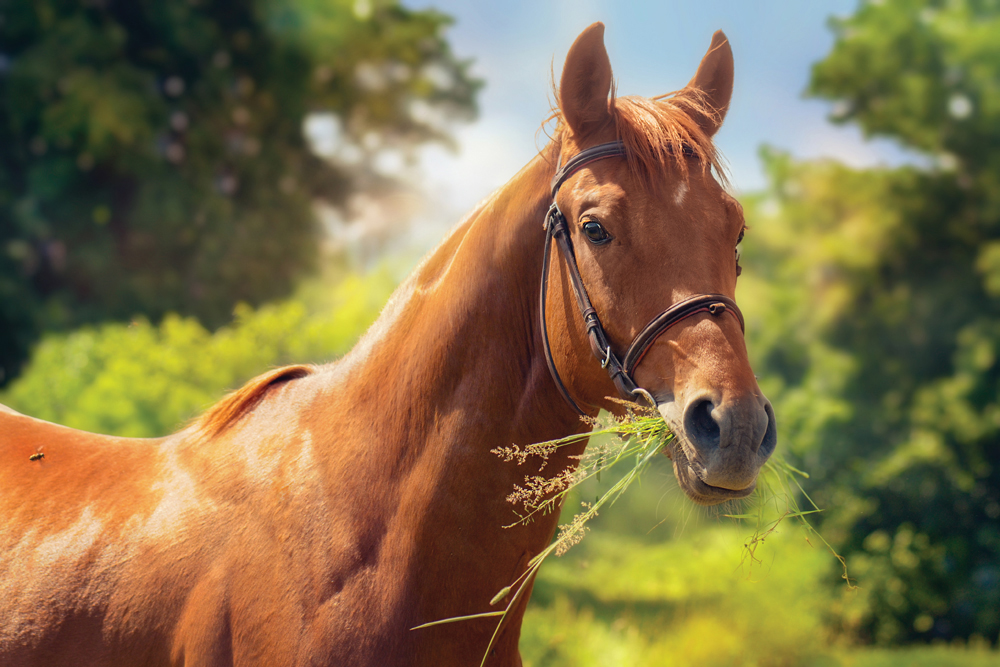
Horses are naturally adapted to a forage diet which is rich in omega-3 fatty acids compared to omega-6 fatty acids, often with ratios of 4:1 or higher. In contrast, many of today’s equine grains and complete feeds contain far fewer omega-3 and more omega-6 fatty acids. The “upside down” ratios become a concern as the omega-6 fatty acids are precursory substances in the inflammatory cascade. The skewed ratio of dietary fatty acids predisposes the horse to chronic inflammation and has been implicated in diseases such as arthritis, laminitis, and colitis. Horses need a balance of both omega-3 and -6 fatty acids for optimal health. One isn’t necessarily better than the other. They simply have different roles in the body and must be in balance with each other for optimal health. Removing the feeds with an imbalance of omega-3 to omega-6 fatty acids can have a surprisingly beneficial effect on the horse’s health, including reducing the need for medications necessary to treat inflammatory process such as arthritis.
The majority of processed horse feeds contains vegetable and seed oils such as corn or canola. Not only do these oils contain high levels of omega-6 fatty acid levels, they are heat processed and hydrogenated to avoid rancidity. The addition of these substances to a horse’s diet predisposes them to hormonal dysfunctions and inflammatory diseases as the horse’s body attempts to respond to the unfamiliar and foreign fats or oils
Dietary and nutritional approaches hold solutions for controlling inflammation in the horse’s body. Ironically at times the solution is to remove the offending substance or substances from the diet, allowing the horse’s body to be well. Therefore, simplifying the diet of a horse, rather than further complicating it with the addition of processed feeds and supplements can often improve the horse’s health.