About a month ago, I woke up to -38 C (and a wind chill of -42 C). It didn’t affect me much until I went outside to a dead car battery.
One trip to Canadian Tire and we were on our way, driving north on Highway 7 in Manitoba.
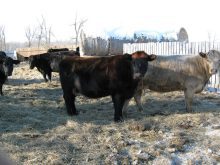
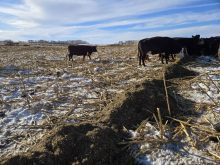
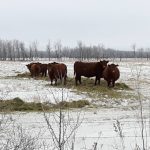
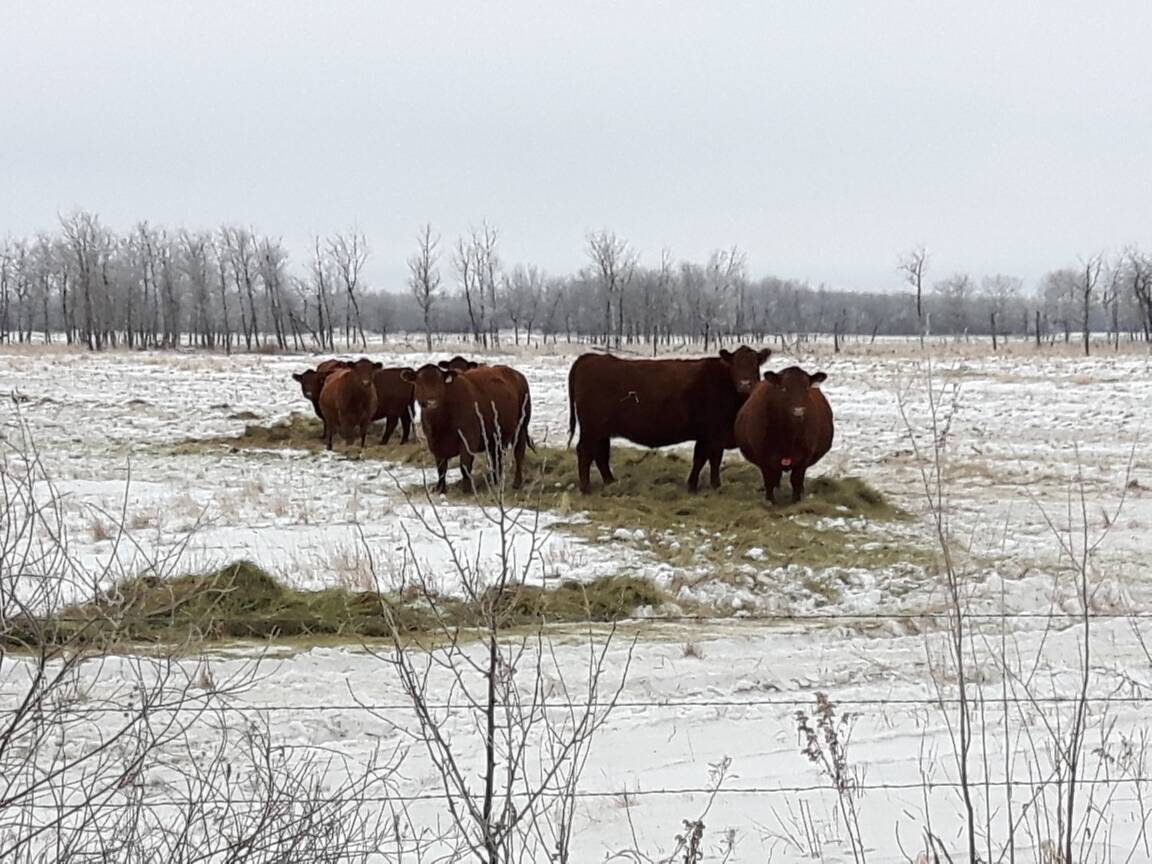
It didn’t take long before I saw a herd of well-conditioned Angus cows that were munching on rolled-out green feed round bales near the roadside. My first reaction was, how do they survive such bone-chilling temperatures and are they going to be ready for calving?
Read Also
Don’t let winter deplete your cows vital vitamin A reserves
Boost your calving season success: prevent weak calves and maintain gestating cow health by fortifying winter beef diets with vitamin A.
Luckily, these temperatures don’t stick around long, which gives them a chance to retain good body condition with the help of some well-balanced diets.
When well-fed, late-gestation cows maintain an optimum body condition score of five to six on their calving-date, most of them calve out without many problems during the actual birthing process and their post-partum days (cleaning and uterine recovery).
It also helps the fresh cow to produce about 10 litres of milk for her hungry newborn calf (60 to 75 per cent of all milk is produced during the first few months).
Plus, first-time mums tend to recover faster from their first-calving experience and tend to grow faster into maturity.
That’s not all. When such optimum body condition is carried weeks beyond into the breeding season, there is a higher proportion of fertile beef cows with stronger first-estrus cycles, which results in high conception rates.
Their next-year calves tend to be born earlier in a desired shortened-calving season, which also results in higher autumn weaning weights by as much as 23 to 25 kilograms.
Consequently, a beef cow in transition from late-gestation, calving and into post-calving stages requires about 25 to 50 per cent more dietary energy, 20 to 25 per cent more protein and nearly double the minerals and vitamins compared to an early gestating beef cow.
Her forage-based diet at this time should contain about 58 to 62 per cent TDN, 11 to 12 per cent protein, 0.70 per cent calcium, 0.50 per cent phosphorus and a fortified complement of other macro-minerals, trace minerals and vitamins.
It’s going to be the cow herds that calve out at the beginning of February to the middle of March that will be further challenged nutritionally, during the coldest weather of the season.
As noted by university and extension research, the cold-weather rule of thumb is that for every 1 C drop in temperature below 0 C, beef cows’ TDN energy maintenance requirements are increased by an additional two per cent.
All of these heavy nutrient demands placed upon beef cows at this time could result in a poor calving season. However, it surprises me that just the opposite occurs when nutritious overwintering diets are fed at this time.
The plane truth
I spoke to a half-dozen beef producers and asked them how they feed their late-gestation cow herds to prepare for the upcoming calving season, particular during periods of frigid weather.
One producer who runs a 150 cow-calf farm just brought his cows home to a 20-acre plot from an open pasture and now rolls out good alfalfa-grass hay bales every morning.
He plans to feed to about three to four pounds of barley once they calve out at the end of March.
Another producer, who runs a 300-cow purebred/commercial operation, feeds them a TMR of high-energy corn silage and mixed hay and adds four to five pounds of a 14 per cent protein/65 per cent TDN grain-screening pellet during the coldest weather.
Still, another producer makes up a TMR with barley silage, grass hay and three to four pounds of dried distillers grain to maintain optimum body condition of her late-gestation cows (plus replacement heifers) throughout the entire winter.
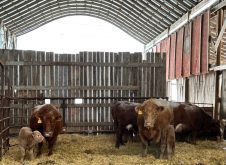
Most of the producers also make use of tree stands and portable windbreak fences that reduce wind chill temperatures by 5 to 10 C or have pole barns that their cattle can go into when a northwest wind picks up.
All these producers provide a clean source of water for their cows and put down fresh straw in the loafing pens to allow cows to lie down on an insulated and comfortable bed.
Their stories vary a bit, but their philosophy is very much like my own when it comes to feeding late-gestation beef cows as they roll into the calving season.
That is — the sole purpose of their feeding strategies is to increase the cows’ plane of dietary energy (and other essential nutrients) in a timely fashion to maintain vitality and optimum body condition toward calving as well as cope with frigid weather.
The payoff of this plan is that a healthy herd of cows will be ready for a successful calving season and beyond.
Peter Vitti is an independent livestock nutritionist and consultant based in Winnipeg. Reach him via email at [email protected].