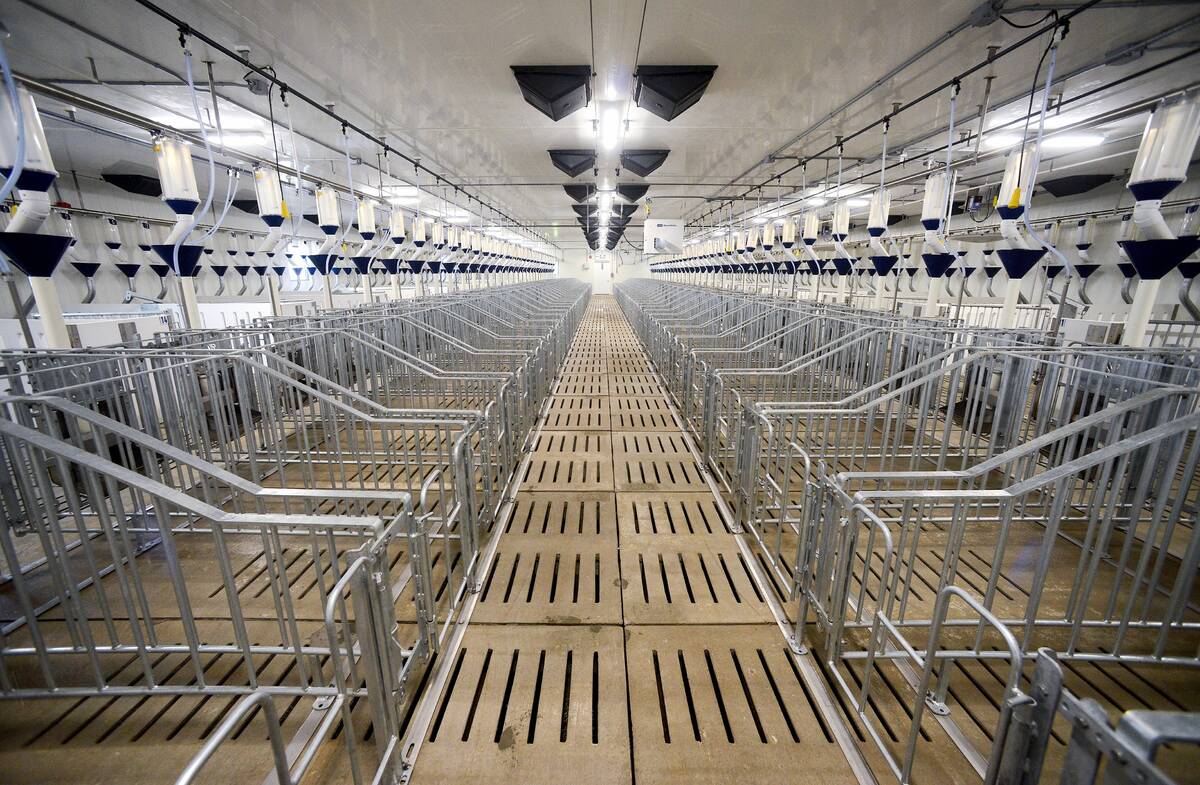
Canada’s hog operations have just over three-and-a-half years before sows have to be in open housing.
They’re at various points in the shift. Some farms are in the midst of renovations. Some have already upgraded, and have planned future facilities with the new guidelines in mind. Some have yet to start to meet the July 1, 2029, deadline or are getting out of gestation completely.
WHY IT MATTERS: The pork sector’s transition away from gestations stalls to group sow housing has stretched for over a decade.
Read Also
Video veterinary telemedicine valuable — within limits
Telemedicine makes veterinarians more acessable to farmers, but not every horse health issue can be diagnosed or treated through a screen.
Maple Leaf Foods has previously touted its early adoption.
A 2023 estimate from the Manitoba Pork Council, meanwhile, suggested that 60 per cent of hog barns in the province had made the switch at the time.
Three barn operators recently offered their insights on how they tackled conversion. They appeared during a producer panel at the Saskatchewan Pork Symposium in Saskatoon Nov. 4.
Different production
Toby Tschetter is the swine unit manager at Star City Colony, between Tisdale and Melfort, Sask. They decided to forego open pen gestation. Instead, they decided to convert their 400-sow farrow-to-finish barn to a contract finishing barn.
He wanted to stay in the pork industry, Tschetter said, but after analyzing their situation and potential challenges, a finishing operation was the best option.
“We had some pretty good challenges that were starting to compound,” he told the crowd. “And we had a plan to do a partnership (for farrowing), but I just couldn’t make it work. We couldn’t find the resources and environment to help us out with that. And we were actually at the point of low staff availability.”
Less staff are needed for contract finishing, compared to farrow-to-finish. The transition also promised to be less costly.
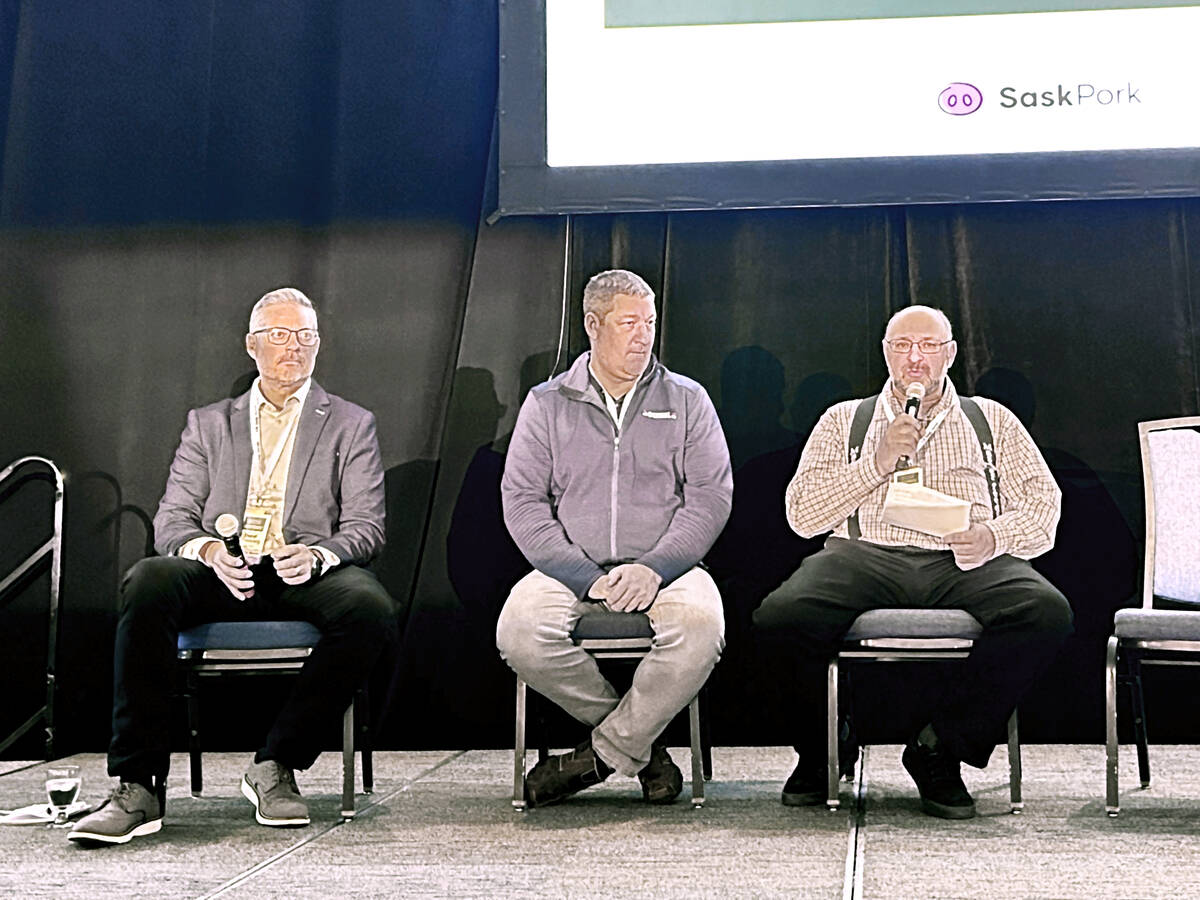
Daryl Possberg, Levi Soltys, Toby Tschetter during the Group Sow Housing and Renovations panel at the 2025 SaskPork Symposium. Photo: Janelle Rudolph
It wasn’t all smooth sailing though. Tschetter said there’s been other challenges as they’ve adjusted.
“I had to get my head around that, that I actually worked for somebody else,” he said. “Up to now, you got your own barn, you’re making your own decisions, doing your own thing. Now, contract finishing, you actually work for somebody else.”
His other challenge has been feed. They went from 400 animals to more than 600. It was tough to get used to. They had to recalculate how much feed to make, put out, and how often.
Tschetter also specified the required weight that pigs had to be arriving at, so they can meet market needs.
Other options that dodge the open housing question include things like wean-to-finish.
“For a reasonable capital investment, you can still make these things cash flow, and there’s some good opportunities,” said Daryl Possberg, general manger of Polar Pork Farms. “And I mean, what our industry needs is to be able to finish pigs and fill up those plants. Like, if we don’t have those plants going full-out, we’ve got big problems in this industry.”
Making open housing work
Polar Pork Farms transitioned to open pen gestation, with a drop feed system servicing pens of 10-12 sows.
They’ve seen better animal performance and strong production improvements, Possberg noted — namely, fewer stillborns and less piglet mortality, but those gains weren’t uniform across all sites, and in some cases, the initial numbers needed some improvement.
One barn, Possberg noted, initially saw a four per cent jump in sow deaths. “It took a couple of years to kind of get that one working right,” he said.
Levi Soltys, a manager with Olymel, has seen similar improvements in the transitioned barns he manages. They utilize the Nedap system for precision feeding, watering, and housing for their dynamic sow groups.
“Every little imperfection of those sows is exposed. So, if she’s a little bit lame in a crate, you can get away with it or it goes unnoticed. But as soon as you put her into that open gestation environment, she’s going to struggle.”
Levi Soltys
Olymel
The Olymel barns did see an uptick in sow mortality after the initial switch.
“Every little imperfection of those sows is exposed,” said Soltys. “So, if she’s a little bit lame in a crate, you can get away with it or it goes unnoticed. But as soon as you put her into that open gestation environment, she’s going to struggle.”
Additionally, with the first moves and during the transition period, there was some aggression with the sows. Pushing, tail chewing, and vulva biting were all observed. That was a sign that there wasn’t enough enrichment in the environment, he said. On average, it took sows two cycles to get accustomed to open pen gestation.
The transition period wasn’t too tough on staff, though, panellists said. Both Possberg and Soltys reported staff feedback preferring the new system.
The Manitoba Pork Council has a document guiding farms through their options when it comes to group sow housing. The 2024 edition notes the advantages and limitations of possible systems.
Staff training
Staff needed a lot of training ahead of time to ensure they’d be ready and knowledgeable about the new changes.
With Soltys’s barns, the transition took about a year. That included initial work adjustments, reviews, and establishing procedures, policies, and troubleshooting guides. It was also important that managers were capable and willing to change.
“If a manager or supervisor is not super interested in being in a gestation area, or is not super interested in finding solutions to some of those problems, it can take a lot longer,” said Possberg. “It can be a lot more expensive and a lot more headache.”
“In our experiences, if you have a poorly managed gestation system, it results with more lameness, more problems with sows … I think a success or failure really depends on the body of the decision makers and the leaders on the farm.”
Soltys added that a good manager is good with tech, or at least willing to learn best operating methods.
Building the barns
On the side of building changes, Olymel decided to go with a complete refresh. That was a slow process and a big job, attendees heard.
Soltys and Possberg emphasized the benefit in using the barn’s existing blueprint if renovating. It’s best to get assistance from experts and others in the sector who have converted, to determine and talk through possible pen sizes, number of sows in a group, and how to maintain a good flow.
“It’s a great opportunity to just revisit your business and make decisions that are that are going to last a long time. So revisit everything,” Soltys said.
All aspects from pen size, barn materials, breeding methods, genetics, and ventilation should be considered.