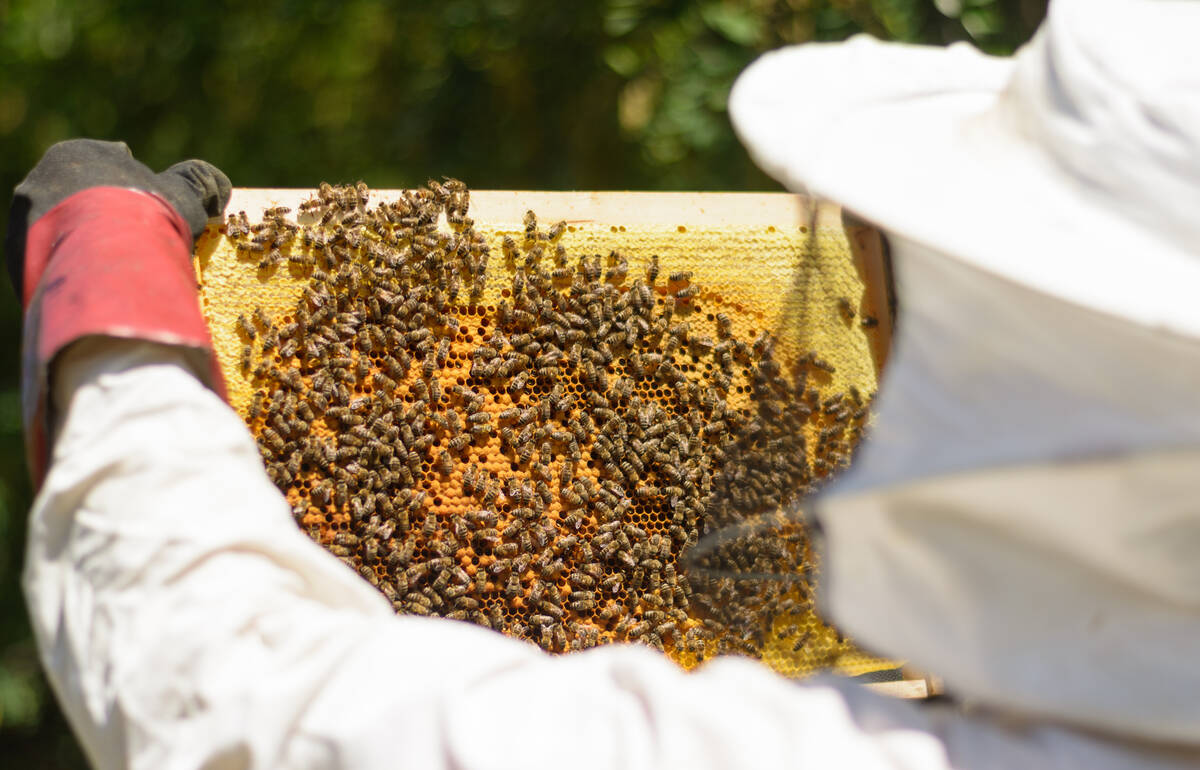
A European honeybee provider said they’re collateral damage to a dust-up in the Canadian honey sector over replacement bees.
Ermanno De Chino, CEO of Melita Bees, a firm based on the Mediterranean island of Malta, said Italian and Maltese bee biosecurity and quality are the subject of unwarranted “smears” coming from a Canadian beekeeping contingent. He said they’re “pushing for the opening of the border with the United States,” a country he said is extremely vulnerable to the tropilaelaps (tropi) mite threat.
“There’s little science and a lot of politics in all of this,” he wrote in a Feb. 10 email.
Read Also
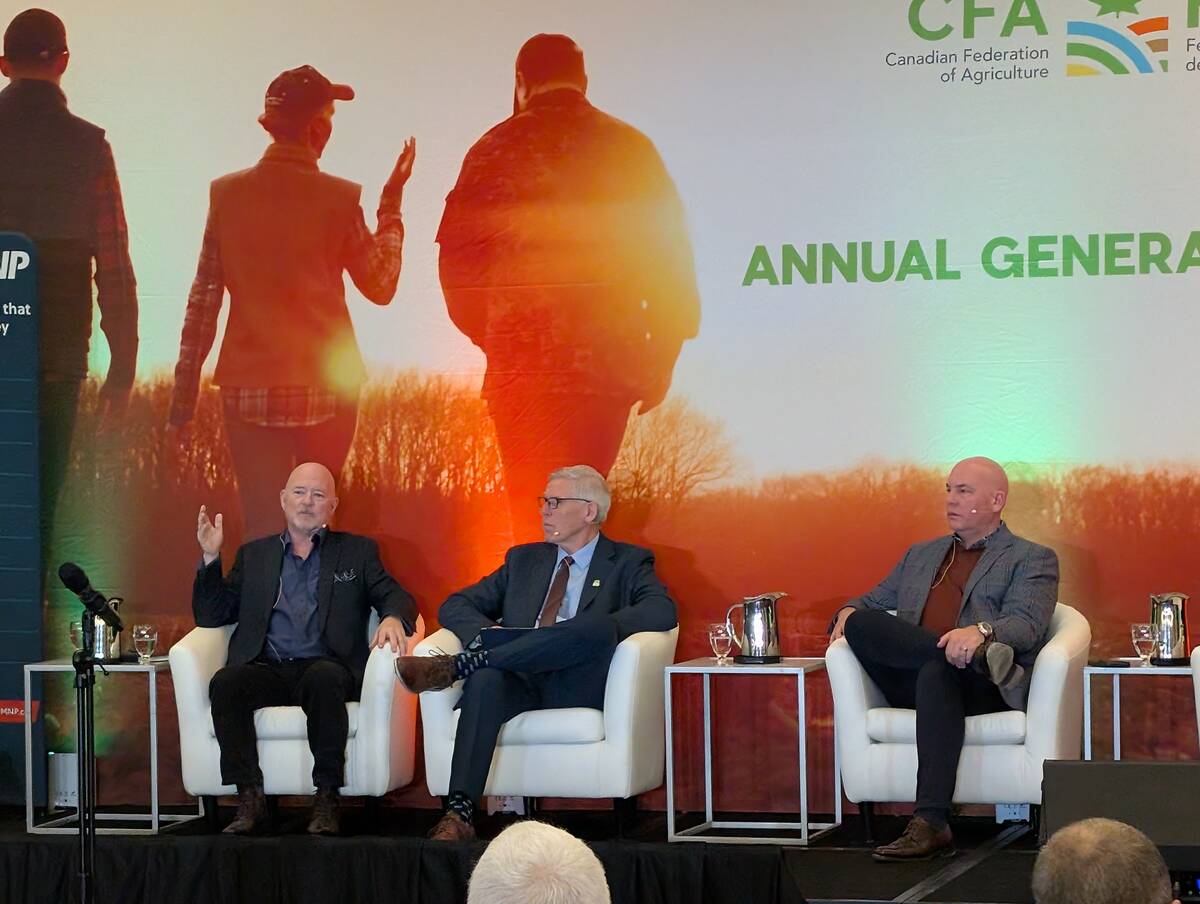
Unified ag front urged for Next Policy Framework
Panelists at the Canadian Federation of Agriculture (CFA) annual general meeting say agriculture groups must stay focused and united in consultations for the recently-announced next policy framework
In a separate email, De Chino described the risk of tropilaelaps entering the U.S. as “very high” due to the “enormous” number of cargo ships from Asia arriving at the ports of California, Texas, and Florida: three states with tropi mite-friendly weather conditions.
“Swarms of Asian bees arriving in containers would have an easy time establishing themselves in these areas. The enormous concentration of hives in California’s Green Valley, dedicated to almond pollination, would make their spread almost immediate.”
De Chino said Italy and Malta’s biosecurity efforts are being “undermined” by the “political games” of a handful of Canadian beekeeping industry players — including the Canadian Beekeepers Federation (CBF) — wishing to re-open the border to U.S. bee “packages” (two or three pounds of bees with a mated queen).
“This comes after the CFIA (Canadian Food Inspection Agency), the only body with the authority to establish biosecurity criteria, reiterated that bees from Italy and Malta meet Canadian requirements,” he said.
“The CFIA is in constant contact with European authorities, who are gradually increasing their level of surveillance.”
An example is the ongoing development of a molecular testing protocol De Chino said will allow countries to certify bees sourced from tropilaelaps-free apiaries.
The initiative is a collaboration with United Nations’ Food and Agriculture Organization (FAO) Reference Center for Beekeeping, Bee Health, and Biosecurity.
Mite adapting
CBF director Peter Awram said De Chino’s argument underestimates growing knowledge about tropi mite, which is proving itself hardier in cold weather and out-of-brood survival than previously thought.
“It’s in South Korea, which is much, much colder than all the tropical places that were thought to be a problem. And we’ve seen it in Ukraine. We’re seeing it in Georgia.”
“The idea that it can’t survive in Canada has been proven to be totally false and the idea that it can’t survive in packages has also been shown to be false.”
Awram said Italy and Malta could be a tropi vector for a couple of reasons:
- they’re part of a trade route starting in tropi-present India and,
- a host of the mite called Apis florea — the Asian red dwarf honeybee — has been found in Malta.
“So the idea that all these ships that are coming from India through the Suez Canal into the Mediterranean don’t pose a threat is totally false.”
Its discovery in the transcontinental, Eastern Europe-bordering country of Georgia is also problematic, he said.
“If you look on a map, (Georgia is) not that far, on a land basis, from Italy.
“And there’s no doubt if it can survive in Georgia, it can survive in those countries that are further south that are between it and Italy.”
U.S. safer bet
The CBF also questioned whether the CFIA’s list of approved bee package sources (Australia, New Zealand, Italy, Ukraine and Chile) are worth the risk to commercial apiarists. Honeybee queen trade is limited by the CFIA to those countries — except for Ukraine — plus the U.S., Denmark and Malta.
“From Italy we were getting 4,000 packages out of a total of around 50,000 to 60,000.
“And the reality is most of those replacements go to hobbyists.”
Awram also said the packages from some of the source countries, particularly New Zealand, are subpar and sometimes carry varroa mite (currently Canada’s most destructive insect parasite of bees) populations far above the maximum threshold.
“I’ve tested some myself and we see like six per cent mites in some of the highest ones. What is supposed to come in is less than one per cent,” he said
Many beekeepers consider these packages enough of a threat to call on government to consider the complete discontinuation of trade of all bee packages imported from offshore.
Last year, the Alberta Beekeepers Commission passed a resolution to work with Alberta Agriculture and Irrigation, Agriculture and Agri-food Canada, Health Canada and CFIA to close the Canadian border to all packaged honeybee imports, including queens from outside North America except for Hawaii.
The CBF considers the U.S. to have better biosecurity. In a Jan. 8 Co-operator story, Ian Steppler, chair of the Manitoba Beekeepers Association, recounted an incident in which the quick thinking of a New Jersey-bound, India-originating container ship crew prevented a hive of tropi mites from landing onshore.
Awram does not think the U.S. is impenetrable to the mite, but the incident — along with its highly-regulated stance on foreign bee entry — makes it a path of relatively high resistance.
“We are trying to do our best to minimize the easy routes,” noted Awram.
“To me and the CBF and to a lot of the beekeepers … this is an easy thing that costs a minimal amount that we can do to try and slow down the chance that we get (tropi mite). Certainly we can get infected. We don’t know how long these mites can survive, right?”
Certainty needed
Not all Canadian beekeepers are completely onboard with the CBF approach.
Another faction, led by the Canadian Honey Council (CHC), is working with CFIA and other government agencies on what executive director Rod Scarlett describes as a “comprehensive, integrated” tropi mite risk management plan.
In addition to CFIA, the council has also teamed with a who’s-who of agencies and individuals to keep tropilaelaps off North American shores. These include Canada Border Services, provincial apiarists, chief veterinary officers throughout the country and Transport Canada.
Although Scarlett also has some concerns about the CFIA-approved countries adjacent to tropi-present regions, he’s putting his faith in the agency’s judgment.
“We’ve been assured by CFIA that they have the complete faith in the inspections and the work done by individual countries to ensure that tropilaelaps is not in their country,” he explained.
The industry needs to find out for certain if CFIA-approved bee packages are the most likely vectors of the tropi mite, said Scarlett. That may mean a careful look at queen bees imported from California and Hawaii. This idea was floated at Bee Tech 2026 in Calgary held by CHC and the Canadian Association of Professional Apiculturists Feb. 12-14.
“We know … that queens from California and Hawaii are absolutely essential for the beekeeping sector in Canada. But we heard at Bee Tech that queens could be a bigger risk of tropilaelaps than packages.”
“We have to really be careful about how we are going to address the issue as a whole, not just piecemeal.”
Lead with research, says honey industry rep
Research on the tropilaelaps (tropi) mite needs to be a front and center priority for the Canadian beekeeping industry, says Rod Scarlett, executive director of the Canadian Honey Council.
The body of scientific knowledge on tropi mite is still in its infancy compared to varroa mite, currently Canada’s largest insect threat to honeybees, said Scarlett.
“There’s thousands and thousands and thousands of published works on varroa. There might be 100 on tropilaelaps,” he said.
And it’s not the only area where beekeeper organizations need to step up the research game. “Beekeepers have been saying we have amitraz resistance, but we’ve never had a scientific paper put out that says we have it.”
Science has been a bone of contention recently between some Canadian beekeepers and the Canadian Food Inspection Agency (CFIA).
In 2025, a series of apiarist recommendations — including the rezoning of approved honeybee trade regions — met with Canadian Food Inspection Agency (CFIA) dismissal based on what it called a lack of robust science.