If the cost of a TMR (total mixed ration) mixer has you hesitant to dig into your wallet, a tub grinder may be all you need.
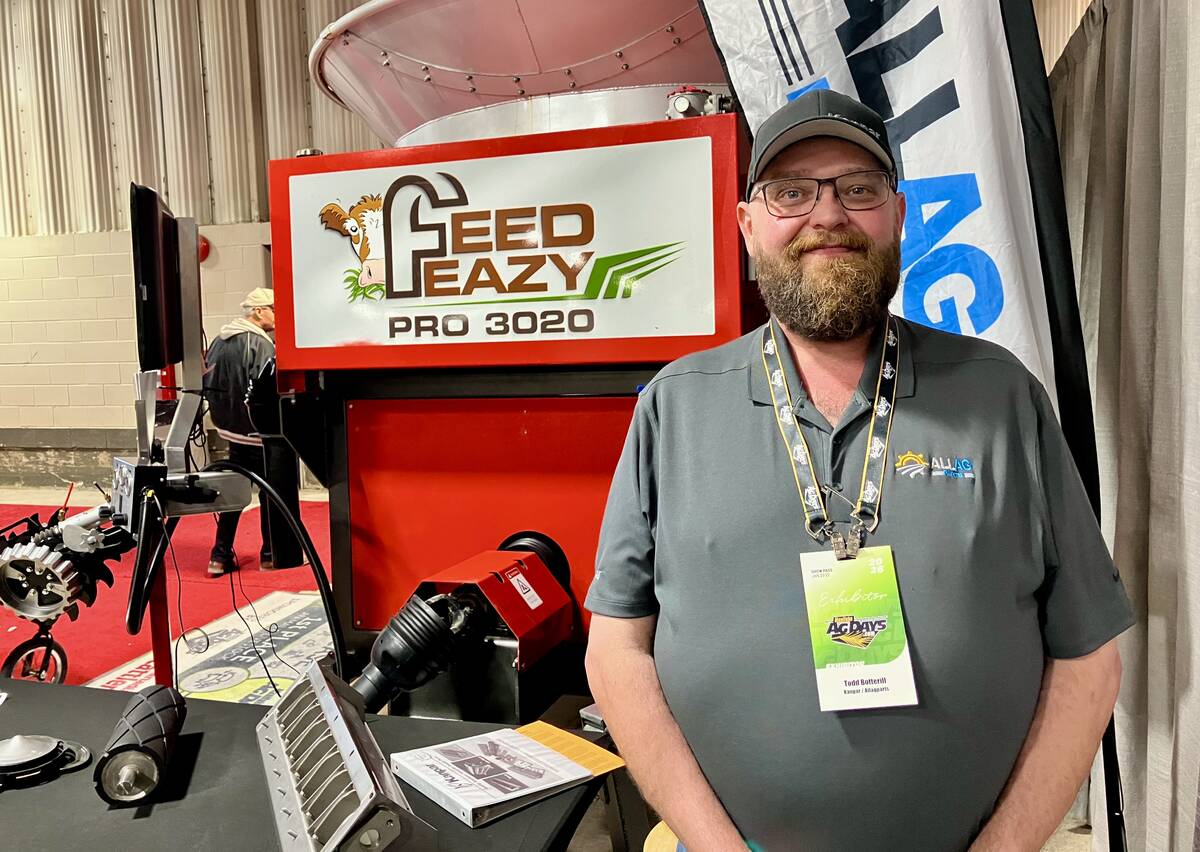
The choice can depend on the size of your operation, but Todd Botterill, a salesperson with AllAgParts, says that’s what he’s seeing and hearing.
Cost aside, Botterill says the Feed Eazy Pro 3020 tub grinder also significantly reduces the time it takes to grind up round bales for feed.
Read Also
Manitoba’s Outstanding Young Farmers built success through diversification
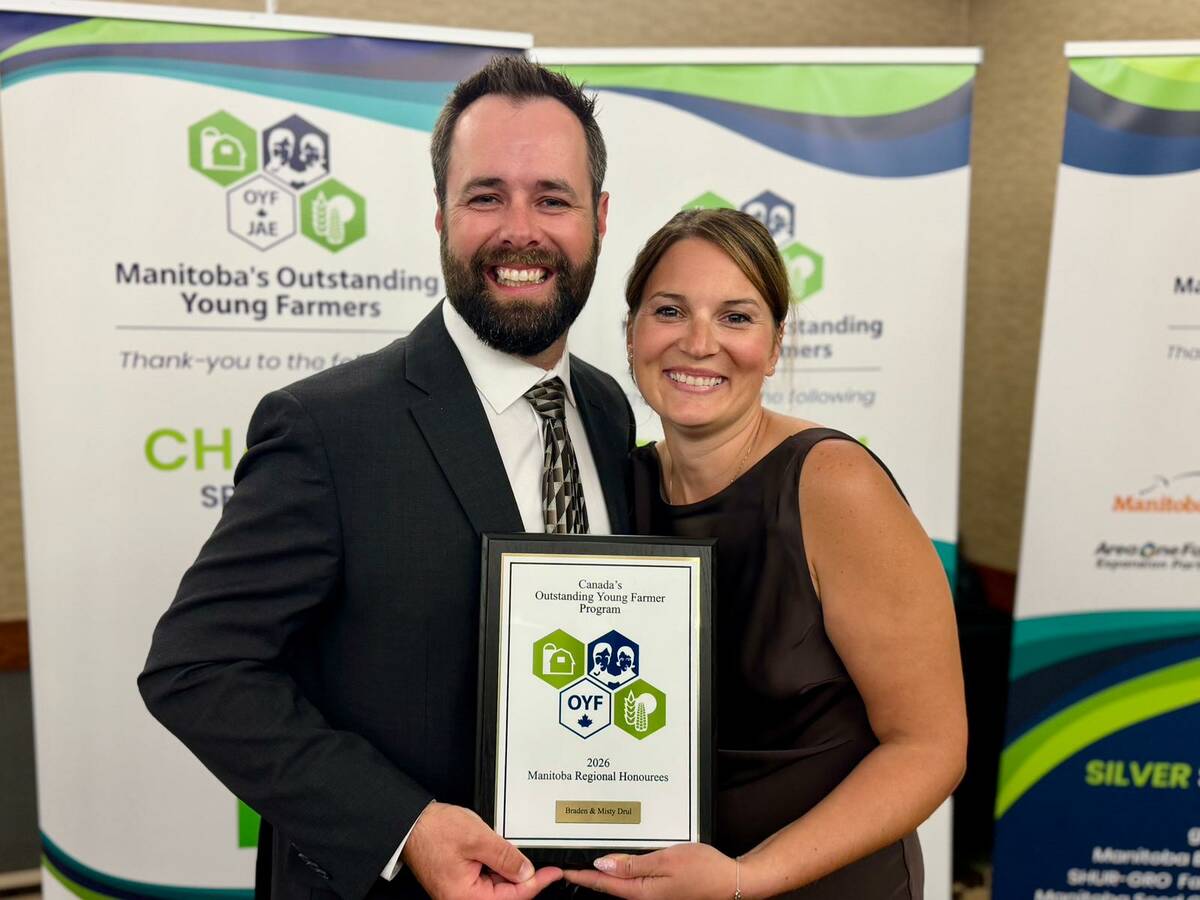
Braden and Misty Drul of Oakburn, Man., earned Manitoba’s Outstanding Young Farmers 2026 award for building a multi-generational operation through diversification. With land prices rising, they launched an equipment assembly business and Pioneer seed dealership to create revenue streams that support two families.
WHY IT MATTERS: Easily availabile equipment that offers an economy of operating cost is important for farms where the economies of scale aren’t top priority.
“What we’ve been finding here lately, the market had really been pushing towards the large TMR mixers,” he says, “but when you start grinding bales with them, quite often, you’re sitting there for an hour, hour and a half using a fairly large tractor … it’s a job that a tub grinder can do in five minutes.”
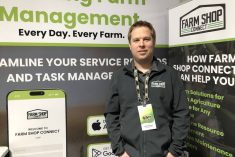
Botterill and his colleagues from AllAgParts were at Manitoba Ag Days in January, talking up the benefits of the Feed Eazy Pro 3020, a first-place winner in the Animal and Livestock category in the farm show’s Innovation Showcase.
The 3020 is the company’s mid-size machine, capable of grinding hay bales, silage bales or straw bales, Botterill said, although operators are not limited to these types.
The company produces a smaller and larger version of the 3020 as well.
“We can actually put in an attachment to grind grain as well for people who want to add grain to their mix,” Botterill says.
Livestock producers have been looking for alternative systems to speed up bale processing time and reduce operating costs, he says.
“They may still put (feed) in the TMR,” he says. “Some guys are actually going back to the less-expensive horizontal mixers, so it allows guys to reduce the cost of the machinery they’re using.”
Keeping costs low was key to making the Feed Eazy accessible to producers.
To achieve that, the 3020 unit is imported from overseas for finishing at Winkler, Man.
“Overseas production has allowed us to reduce a lot of the costs involved in getting the machine put together, but it hasn’t sacrificed any quality,” Botterill says.
The company they work with has a lot of experience working with North American companies and building to North American standards, he adds. Wear parts such as bearings or hydraulics can be easily sourced within North America when the time comes for replacement.
The result is a machine that’s tougher than its competitors, with a significant price advantage as well, Botterill says.
“There’s not a lot of fancy pieces in it,” he adds.
“I think (for) the majority of the guys we’re dealing with in Manitoba, this unit would be ideal.”