Blue-green algae is bad news for livestock and wild ecosystems. However, researchers at Brandon University wonder if they might have found a tool to stop contamination before it starts: snails.
WHY IT MATTERS: Farmers on the Prairies have unfortunately become familiar with livestock watering issues, given the pattern of dry spells in recent years.
Biology professor Barry Madison has been studying a freshwater snail that feeds by filtering tiny particles from the water. That includes Microcystis, the group of cyanobacteria known for putting out toxins and rendering dugouts and other water sources unusable for livestock and wildlife, killing fish and threatening drinking water.
Read Also

Tariffs, biosecurity lead discussion at Manitoba Pork AGM
Trade and biosecurity concerns led discussion at Manitoba Pork’s AGM, with CUSMA, tariffs, African swine fever preparedness and wild pig control all in focus.
Manitoba’s warm and dry summers have raised the risk. There’s also nutrient loading in waterways, which feed algae in general, cyanobacteria included.
“Our freshwater resources are under immense pressure, and toxic algae blooms are becoming increasingly more common,” Madison said.
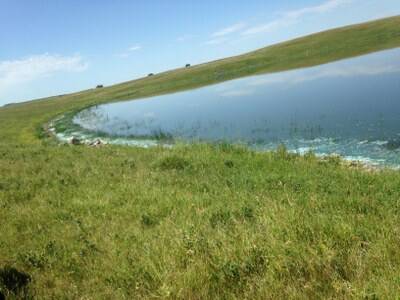
Small snail, big solution?
Madison and his team have found that an Asian freshwater snail from the Viviparidae family, called Sinotaia aeruginosa, naturally filters algae into small pellets that the snails can eat or which are bound up and pushed out as waste.
“This means once the algae has been processed by the snail, there is less opportunity for colony-forming Microcystis to aggregate into blooms,” he said.

“It’s actually quite surprisingly successful when you scale it up.” Barry Madison
Brandon University
His research suggests that, by breaking up algae early, these filter feeders can delay bloom formation during peak conditions, effectively delaying harmful algal blooms.
“This … gives the ecosystem, and people working to protect it, more time before a bloom becomes dangerous,” Madison said.
The snails in Madison’s study are not native to Manitoba, but similar local species do exist, he noted. The hope is that they might have a comparable effect.
Making it work in a dugout
The snail has already been used, and scaled up to treat large ponds, in China, Madison noted.
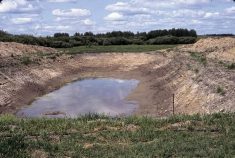
The key is giving snails access to where blooms form, at the water’s surface.
“An easy way of doing this is just (installing) some kind of incline near the edges of your pond,” Madison said. “The snails … can access freely the surface where those blooms are. It’s actually quite surprisingly successful when you scale it up.”
Madison’s team is continuing this work, exploring designs for small habitats that could be deployed in ponds to give snails better access.
Building habitat for solutions
Armand Bélanger, the manager of the East Interlake Watershed District, agreed. He said farmers should flag the lesson about building the kind of dugouts and wetlands where natural solutions to production problems already thrive.
Algal blooms are becoming more frequent and more intense, said Bélanger, who has lived along the shores of Lake Winnipeg his entire life.
These include large fall blooms and more frequent summer ones.
“There was one interesting day within the Gimli harbour when there was an algal bloom in the morning, and then in the afternoon, thousands of feeder fish were washing up offshore,” he said. “That micro-environment can kind of show you the potential of what could happen on the whole lake system.”
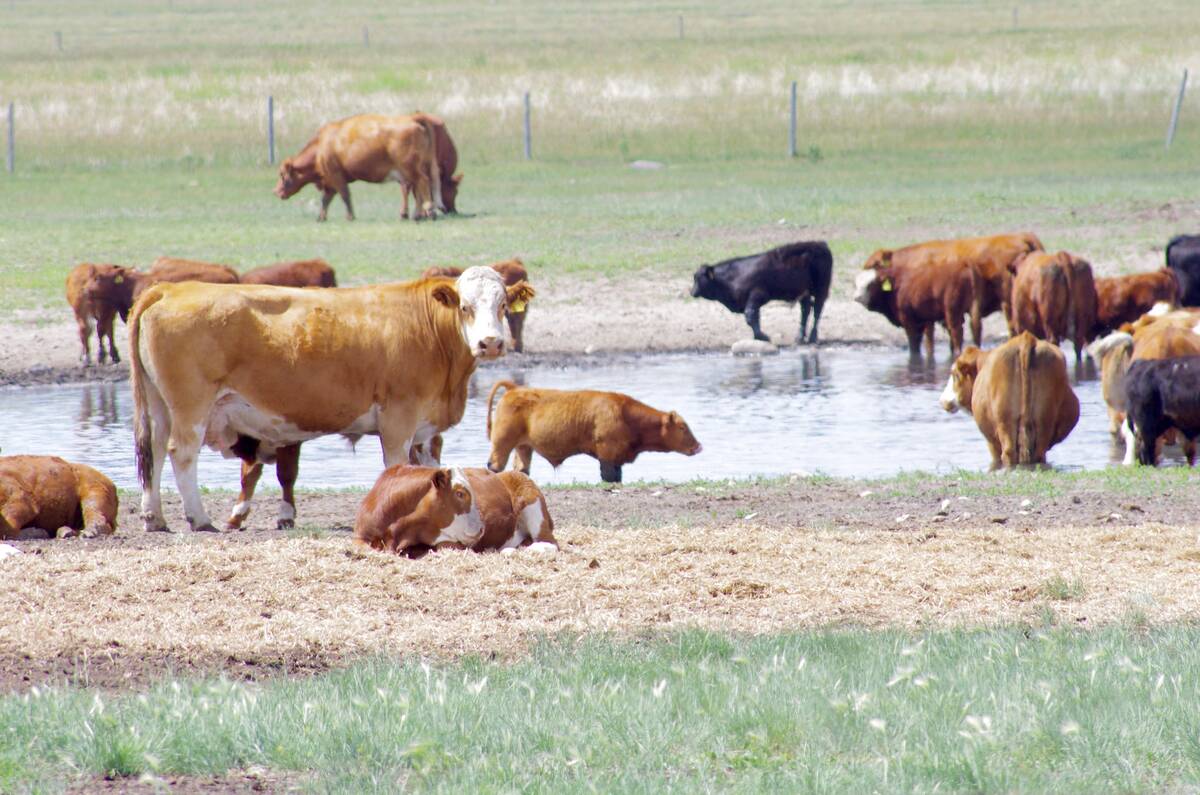
Watershed districts are already working with farmers to reduce nutrients entering water sources through nature-based solutions, especially where cattle have historically been drinking directly from creeks or dugouts.
“One thing we’ll offer is repairing fencing to establish a riparian area, which will slow down the nutrient setting in the water,” Bélanger said.
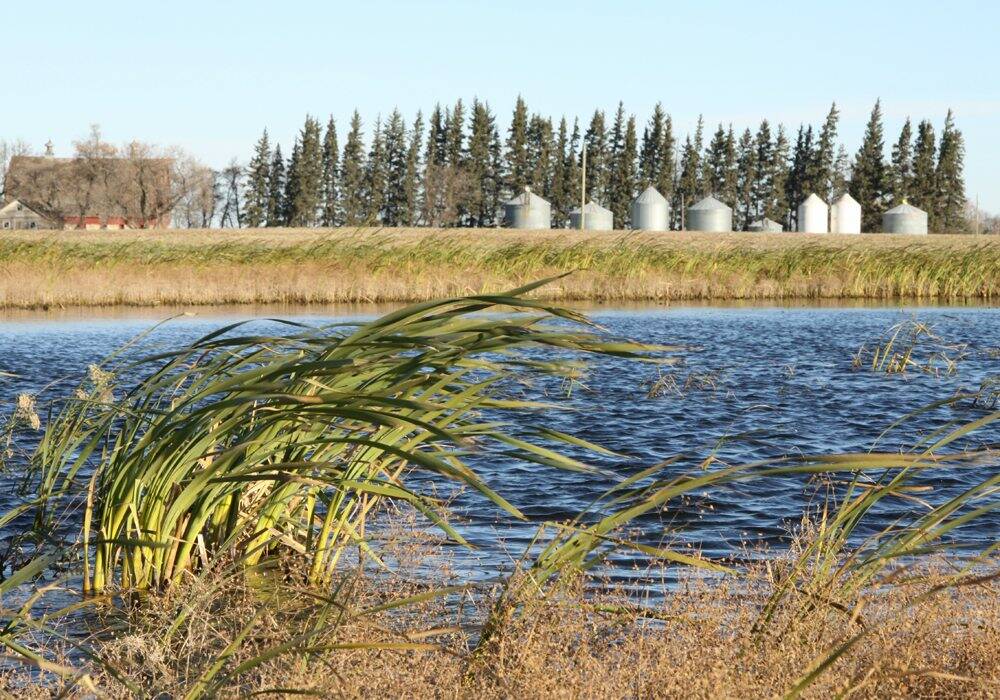
From there, districts look at upgrades that allow wetlands to do more of the work. This includes putting in cattails, which Bélanger calls the “workhorse of the wetland.”
As well as acting as filters themselves, Bélanger argued, cattails and riparian create habitat for the microorganisms and invertebrates, such as snails, that naturally break down excess nutrients.
“Bring in the habitat … and then the organisms will just kind of follow,” Bélanger said.